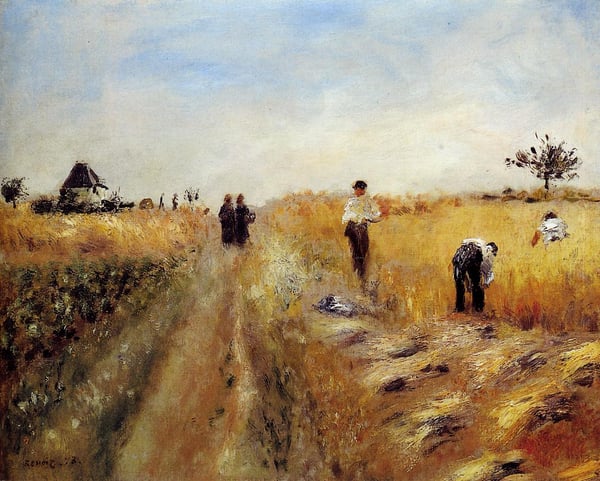
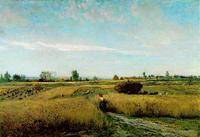
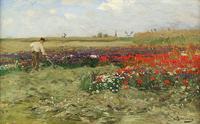
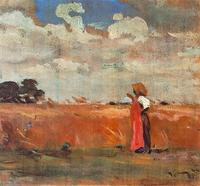
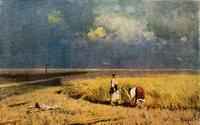
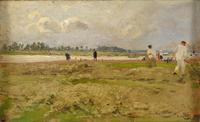
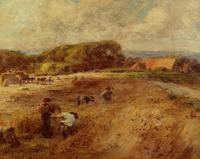
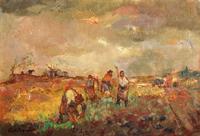
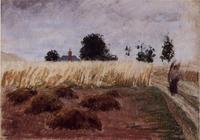
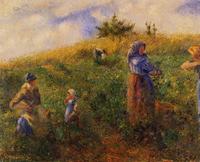
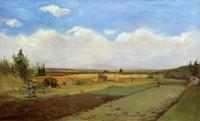
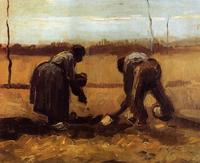
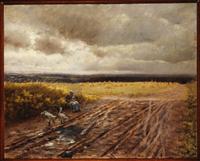
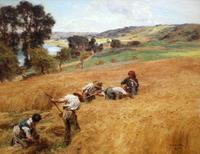
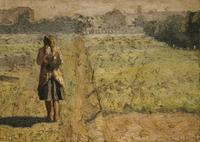
"The Harvesters" by Pierre-Auguste Renoir exemplifies the Impressionist commitment to capturing the fleeting effects of light and atmosphere in a rural landscape. Painted during his later period, after a phase of more linear, Ingres-inspired work, this piece marks a return to the soft, feathery brushwork and vibrant palette that define his most celebrated Impressionist scenes. The significance lies in how Renoir synthesizes the core tenets of the movement—broken color, outdoor light, and the depiction of modern life—with a timeless, almost classical composition of laborers in the field. Unlike earlier Impressionist works that often focused on leisure or urban subjects, "The Harvesters" elevates agricultural work to a lyrical, sun-drenched vision, where the shimmering heat and golden wheat are rendered through dappled strokes of yellow, orange, and green. This painting is a testament to Renoir’s unwavering focus on the beauty of the observable world, and within the Impressionist canon, it stands as a harmonious blend of sensory immediacy and enduring formal structure.