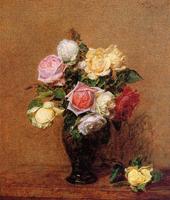
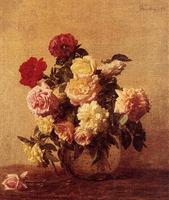
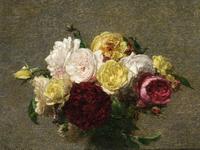
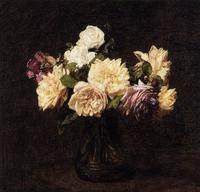
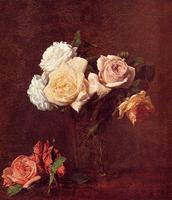
Analysis of "Roses in a Stemmed Glass" by Henri Fantin-Latour
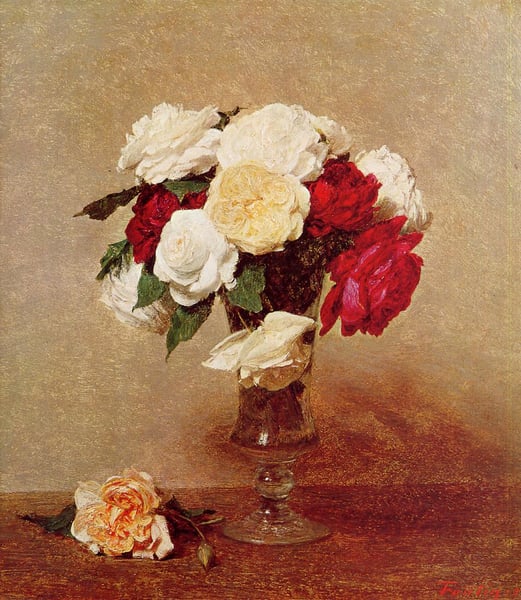
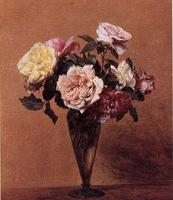
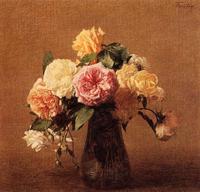
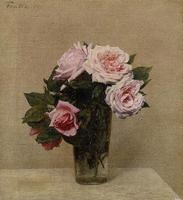
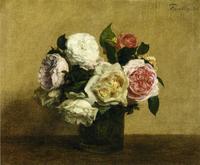
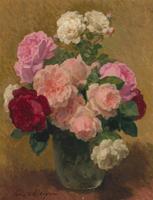
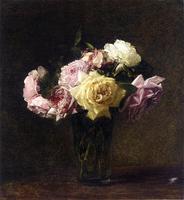
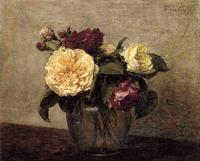
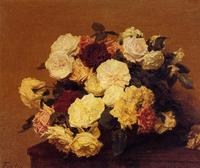
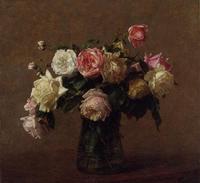
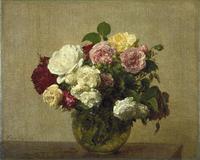
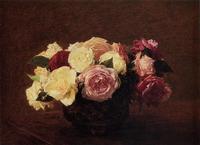
Henri Fantin-Latour’s Roses in a Stemmed Glass exemplifies the Realist still-life tradition while elevating the humble flower painting to a study of perceptual truth. Executed in the Realist style, the work rejects idealization in favor of faithful observation—each petal, leaf, and stem is rendered with meticulous attention to light, texture, and placement. The genre of flower painting, often dismissed as decorative, becomes here a vehicle for demonstrating the artist’s mastery of composition and subtle tonal harmonies.
The significance of this piece lies in Fantin-Latour’s ability to merge the intimacy of a domestic subject with a rigorous, almost scientific approach to realism. Unlike earlier floral still lifes that prioritized symbolic meaning (vanitas, transience), his focus is purely optical: the way light catches the glass, the soft gradation of pink and white, the precise silhouette of the bouquet. This commitment to direct visual experience places him within the broader Realist movement’s challenge to academic conventions, yet his quiet, luminous palette and controlled brushwork also foreshadow the refined sensibility of later Symbolist still lifes.
In the context of 19th-century art, Roses in a Stemmed Glass represents a high point of Realist flower painting—a genre that Fantin-Latour helped redeem from mere ornamentation, demonstrating that even the most commonplace object, when observed with exacting perception, can achieve timeless aesthetic significance.