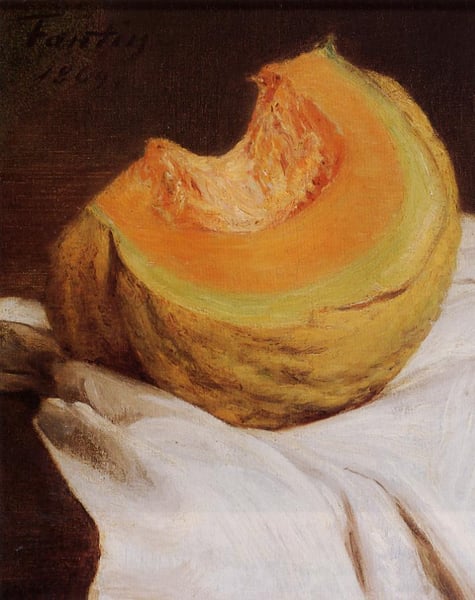
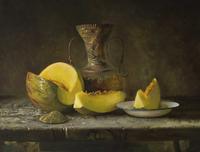
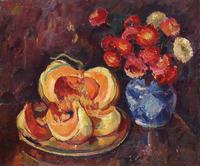
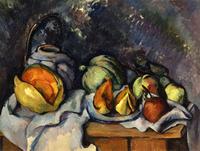
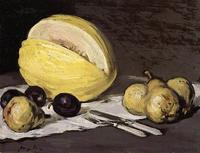
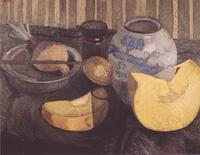
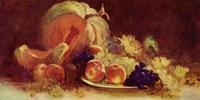
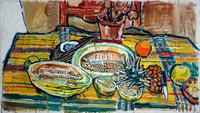
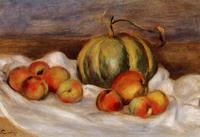
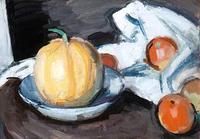
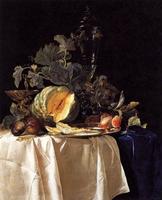
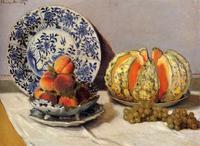
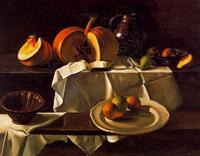
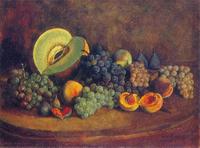
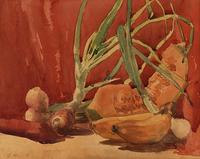
Henri Fantin-Latour’s Still Life exemplifies the Realist commitment to precise, unidealized representation. The work’s significance lies in how Fantin-Latour elevated the humble still-life genre to a vehicle for intense visual truth, rejecting romantic or narrative embellishment. His meticulous attention to texture, light, and spatial relationships—hallmarks of Realism—treats ordinary objects with the same seriousness afforded to history painting. This painting also reflects Fantin-Latour’s role as a bridge between Realism and later movements: his clarity of form and subdued, tonal harmonies anticipated developments in modern still life, while his dedication to direct observation aligned him with contemporaries like Courbet. By focusing purely on the material presence of everyday items, he asserts that beauty and significance reside in the accurate rendering of the visible world.