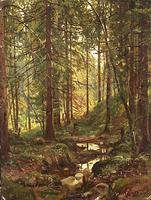
Expert Analysis: "In the forest at autumn" by Isaac Levitan
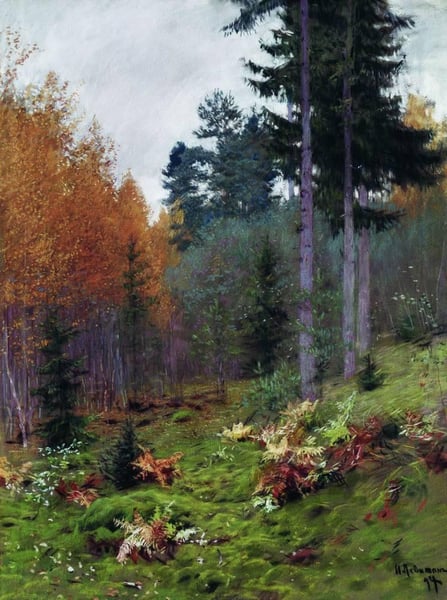
Isaac Levitan stands as one of the most profound figures in Russian Realism, and In the forest at autumn exemplifies his exceptional ability to transform a natural scene into a vessel of deep emotional resonance. Painted during a period when landscape art in Russia was evolving from mere topography to a medium for expressing the national soul, this work demonstrates the core tenets of Realism—meticulous observation of nature—while transcending them through a palpable sense of mood.
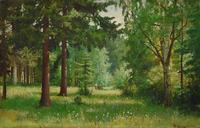
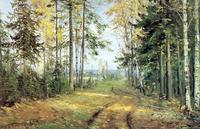
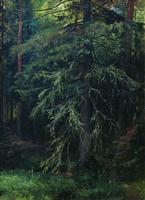
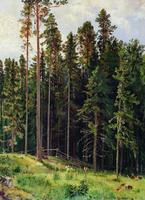
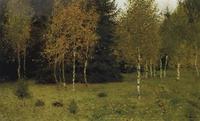
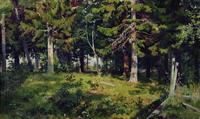
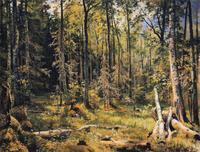
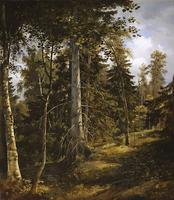
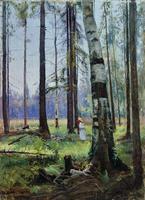
The painting captures a transitional moment: the vibrant yet melancholic shift from summer to winter. Levitan’s handling of autumn’s palette is masterful—the golden yellows and russet tones of the foliage are tempered by the cool, muted light filtering through the trees. This interplay of warm and cool hues does more than depict seasonal change; it evokes a quiet, introspective atmosphere, a hallmark of Levitan’s style. The forest path, a recurring motif in his oeuvre, draws the viewer’s eye inward, inviting contemplation of nature’s solitude and the passage of time.
What makes this work significant is how it embodies the Russian Realist tradition’s move toward psychological depth. Unlike earlier, more literal landscapes, Levitan’s forest is not simply a record of a place—it is a mood. The careful selection of viewpoint and the soft, diffused light transform the ordinary woods into a poetic meditation. This painting, like much of Levitan’s later work, influenced the generation of Russian landscape painters who sought to infuse natural scenes with lyrical emotion, bridging Realism with the emerging symbolist sensibilities. In the forest at autumn remains a quintessential example of how Realist technique, when combined with a profound sensitivity to nature’s inner life, can elevate a landscape to a timeless, universal expression.