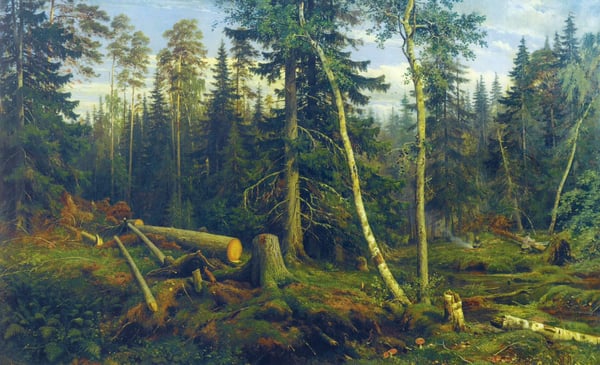
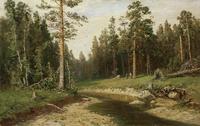
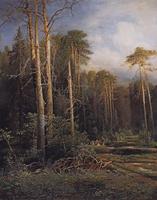
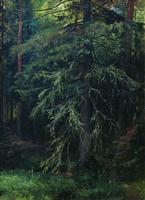
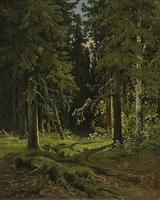
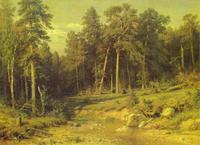
As an expert art historian, I will provide an analysis of "Logging" by Ivan Shishkin based solely on the supplied structured facts: Style: Realism; Genre: Landscape.
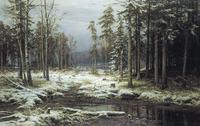
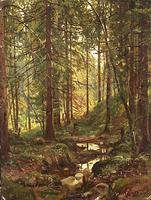
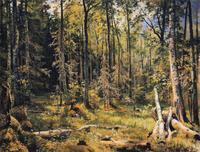
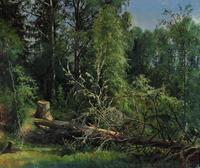
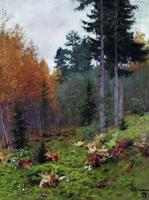
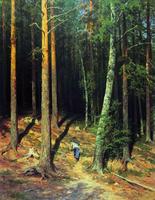
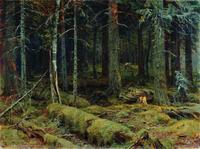
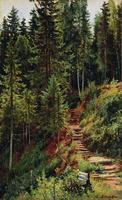
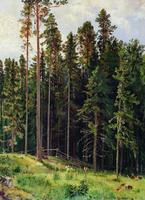
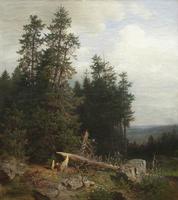
Within the framework of Realism, this artwork is significant for its uncompromising dedication to the truthful, unidealized depiction of the natural world. As a landscape painting, "Logging" does not present nature as a pristine, untouched paradise. Instead, it captures a moment of human intervention, focusing on the labor of timber harvesting. The significance lies in Shishkin's application of the Realist ethos: he treats the rugged, felled trees, exposed stumps, and the textural detail of bark and forest debris with the same objective, meticulous attention that a portraitist might grant a human subject.
By choosing a working forest as his subject, Shishkin blends the landscape genre with a social document. The absence of heroic figures or dramatic lighting emphasizes a factual, almost scientific observation of nature under duress. This approach marks a departure from Romantic idealized landscapes; here, the raw, physical reality of the logging site—the broken branches, the cut timber, the interplay of light through a thinned canopy—becomes the central protagonist. For a practitioner of Realism, this intersection of human industry and natural environment is a profound subject, making "Logging" a key example of how Shishkin elevated a mundane, labor-intensive scene into a monumental and honest reflection of the 19th-century relationship with the land.