Raphael の Gregory IX Approving the Decretals の専門的な分析
スタイル:High Renaissance · ジャンル:history painting
Expert Analysis: “Gregory IX Approving the Decretals” by Raphael
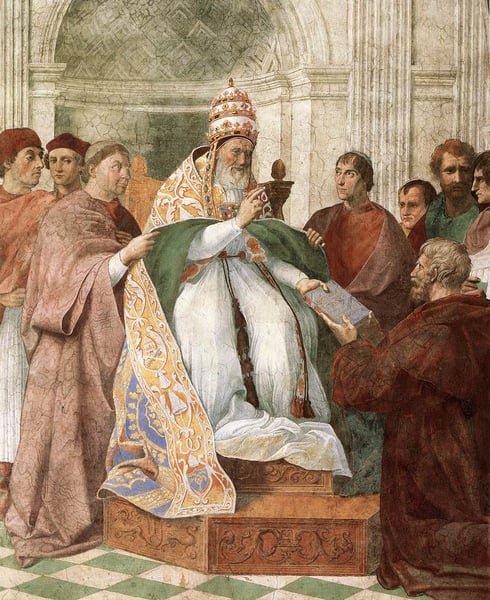
As a quintessential High Renaissance history painting, Raphael’s Gregory IX Approving the Decretals (ca. 1511, fresco, Stanza della Segnatura, Vatican) holds profound significance for its seamless integration of classical ideals, theological authority, and humanistic clarity. The work belongs to Raphael’s celebrated series of frescoes in the papal apartments, specifically the wall dedicated to Jurisprudence (or Civil and Canon Law). Its importance lies in three key areas:
-
Synthesis of Sacred and Secular Power
The scene depicts Pope Gregory IX (r. 1227–1241) formally approving the Decretals—the foundational compilation of medieval canon law. Raphael elevates a historical legal act into a timeless allegory of papal authority and justice. The composition mirrors the adjacent frescoes (Theology, Poetry, Philosophy), creating a unified philosophical program in the Stanza della Segnatura. Here, law is presented as both a divine and rational human construct, embodying the High Renaissance belief in harmonious order. -
Mastery of High Renaissance Composition and Physiognomy
Raphael employs a balanced, pyramidal arrangement: Pope Gregory sits enthroned at the apex, flanked by cardinals and jurists, while the Decretals are handed to a kneeling figure. The spatial construction is clear and monumental, with architectural framing that recalls ancient Roman reliefs. Raphael’s figures are idealized yet individualized—notably the pope’s aged, authoritative face—demonstrating the High Renaissance ability to merge naturalism with dignified grace. The vibrant color palette and soft chiaroscuro enhance the scene’s solemnity. -
Theological and Cultural Significance
The fresco was executed during the papacy of Julius II, who commissioned the Stanza to assert the supremacy of Church law. By placing Gregory IX in a classical architectural setting with a celestial backdrop, Raphael links the pope’s authority to both divine mandate and the Renaissance revival of ancient Roman jurisprudence. This reflects the period’s belief that wisdom flows from a synthesis of faith, reason, and historical precedent—a core Humanist ideal. The work is thus not merely a historical illustration but a visual argument for the enduring legitimacy of canon law in a rapidly changing world.
In short, Gregory IX Approving the Decretals is significant as a paradigm of High Renaissance thought, where painting becomes a vehicle for intellectual and theological synthesis. Raphael’s ability to render complex legal and spiritual themes with clarity and beauty marks this fresco as a cornerstone of Western art’s engagement with authority, history, and humanist ideals.
Museum / Gallery
視覚的に類似
構図やパレットが近い作品 20 件
Submission of Frederick Barbarossa before Pope Alexander III during the signing of the Treaty of Venice (detail)
Francesco de' Rossi (Francesco Salviati), "Cecchino"
The ordination of St. Lawrence
Fra Angelico
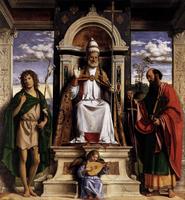
St. Peter Enthroned with Saints
Cima da Conegliano
St. Jerome (detail from Virgin Enthroned with Saints)
Luca Signorelli
St. Augustine Reading Rhetoric and Philosophy at the School of Rome (detail)
Benozzo Gozzoli
Virgin Enthroned with Saints
Luca Signorelli
St. Peter Consacrates St. Lawrence as Deacon
Fra Angelico
The Confirmation of the Olivetan Order by the Bishop of Arezzo
Il Sodoma
Madonna and Child with Saints
Luca Signorelli
St. Bonaventure at the Council of Lyons
Francisco de Zurbaran
Presentation in the Temple
Vittore Carpaccio
Saints Augustin and Francis, a Bishop Saint, and Saint Benedict
Filippo Lippi
Madonna of Mercy
Domenico Ghirlandaio
Dream of Innocent III and the Confirmation of the Rule (detail)
Benozzo Gozzoli
The Story of St. Barbara and St. Alvise
Lorenzo Lotto
St. Thomas in Glory between St. Mark and St. Louis of Toulouse
Vittore Carpaccio
Virgin and Child with Saints from the Altarpiece of San Barnabas
Sandro Botticelli
Saint Lawrence Receiving the Treasures of the Church from Pope Sixtus II
Fra Angelico
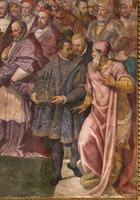
Submission of Frederick Barbarossa before Pope Alexander III during the signing of the Treaty of Venice (detail)
Francesco de' Rossi (Francesco Salviati), "Cecchino"
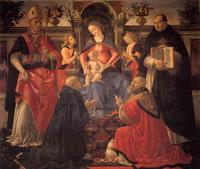
Madonna and Child enthroned with St. Dionysius, Aeropagita, Domenic, Clement and Thomas Aquinas
Domenico Ghirlandaio