
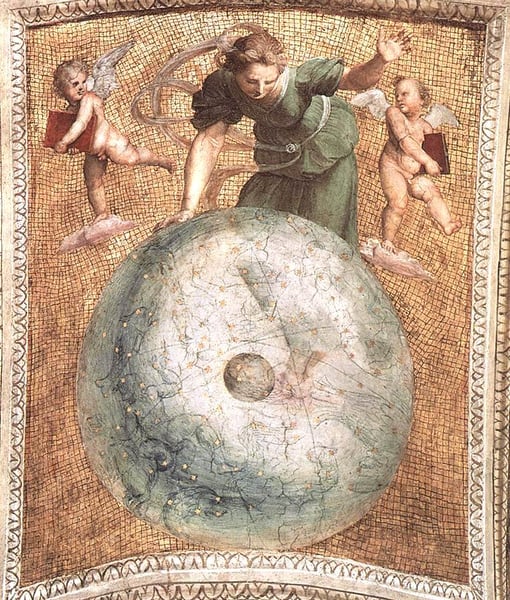
Analisi esperta di Prime Mover, from the 'Stanza della Segnatura' di Raphael
Stile: High Renaissance · Genere: allegorical painting
This artwork—likely referring to the allegorical figure of the Prime Mover (the Aristotelian or Neoplatonic divine force) as personified in Raphael’s fresco cycle for the Stanza della Segnatura—is a quintessential example of High Renaissance synthesis. While the Stanza contains no single fresco titled Prime Mover, the concept permeates the room’s program: in the Disputation of the Holy Sacrament, the Trinity (God the Father as ultimate Prime Mover) crowns the celestial hierarchy, while in The School of Athens, Aristotle’s upward gesture toward the heavens symbolizes the unmoved mover of physics and metaphysics.
Significance within the High Renaissance & Allegorical Tradition:
-
Harmonious Integration of Antiquity and Christianity: Raphael seamlessly fuses pagan philosophical ideas (Aristotle’s Prime Mover, Plato’s Forms) with Christian theology, embodying the Renaissance ideal of concordia mundi—a unified vision of truth. The allegorical figure (if depicted as a commanding, bearded patriarch or a radiating light) stands as the visual anchor for this synthesis.
-
Compositional Unity and Centered Focus: In typical High Renaissance fashion, Raphael organizes space around a central vanishing point, directing the viewer’s eye toward the Prime Mover as the source of order. This optical clarity reinforces the allegorical meaning: the Prime Mover is the rational, divine principle that governs all motion and thought.
-
Idealized Naturalism: The figure’s anatomy, drapery, and gesture reflect Raphael’s mastery of disegno and sfumato—a balance between lifelike presence and idealized grace. The calm majesty of the figure expresses the Neoplatonic notion that physical beauty mirrors divine intellect.
-
Rhetorical Gesture: The painting’s rhetorical power lies in its ability to make an abstract philosophical concept (the unmoved mover) emotionally and intellectually accessible. Raphael achieves this through a combination of classical contrapposto, clear spatial logic, and a serene, commanding expression that invites contemplation.
-
Context in the Stanza: The Stanza della Segnatura—the papal library and private study of Julius II—was designed as a programmatic allegory of knowledge: theology, philosophy, poetry, and jurisprudence. The Prime Mover links these disciplines by representing the divine source of all truth. Without this central figure, the room’s iconography would lose its transcendent anchor.
In summary, the significance of Raphael’s depiction of the Prime Mover lies not only in its technical brilliance but in its role as a unifying symbol of High Renaissance humanism—a visual statement that truth is one, and that art can embody the highest principles of reason and faith.
Museum / Gallery
Genere
Stile
Visivamente simili
20 opere con composizione e palette affini
The Judgment of Solomon
Raphael
Philosophy, from the 'Stanza della Segnatura'
Raphael
Adam and Eve, from the 'Stanza della Segnatura'
Raphael
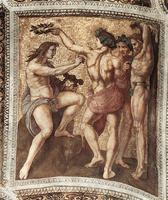
Apollo and Marsyas, from the 'Stanza della Segnatura'
Raphael
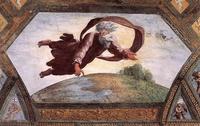
The Separation of Land and Water
Raphael

Justice, from the 'Stanza della Segnatura'
Raphael
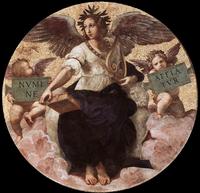
Poetry, from the 'Stanza della Segnatura'
Raphael
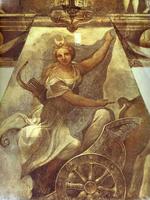
Diana
Correggio
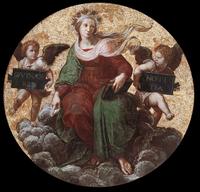
Theology, from the 'Stanza della Segnatura'
Raphael
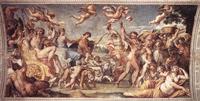
Triumph of Bacchus and Ariadne
Annibale Carracci
Aphrodite Anadyomene from Pompeii (detail)
Apelles
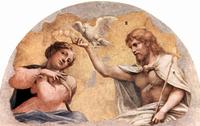
Coronation of the Virgin
Correggio
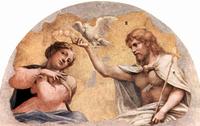
Coronation Scene
Correggio
Tethys Immerses Achilles in the Waters of the Styx
Francesco Hayez
Presentation of Mary in the Temple
Francesco de' Rossi (Francesco Salviati), "Cecchino"
Nemesis
Paolo Veronese
The Queen of Heaven and angels pla (Frescoes in the Palazzo Quirinale, Cappella dell'Annunciata, vault fresco scene)
Guido Reni
Madonna della Scala
Correggio
Chance Crowning a Sleeping Man
Paolo Veronese
Annunciation
Francesco de' Rossi (Francesco Salviati), "Cecchino"