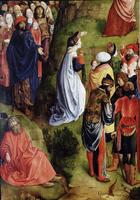
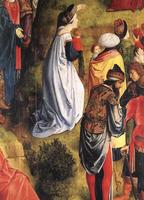
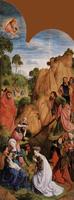
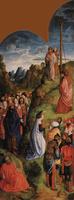
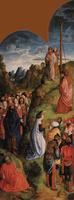
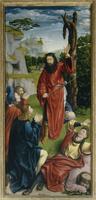
Based solely on the provided facts, the analysis of "Saint John the Baptist Preaching" by Raphael focuses on its significance within the High Renaissance style and the religious painting genre.
As a High Renaissance work, the painting exemplifies the period's pursuit of idealized harmony, balanced composition, and naturalistic human form. Raphael, a master of this style, elevates the religious subject through serene clarity and a calm, monumental dignity. The artwork is significant because it transforms a biblical narrative—the preaching of Saint John the Baptist—into a timeless scene of human and spiritual grace, showcasing the High Renaissance ideal of fusing classical beauty with sacred meaning. This combination of genre and style makes the piece a quintessential example of how religious art during this era aimed to inspire both intellectual admiration and devotional contemplation.