Expert Analysis: "The Blinding of Elymas" (Cartoon for the Sistine Chapel) by Raphael
Style: High Renaissance
Genre: Religious painting
Significance within the High Renaissance:
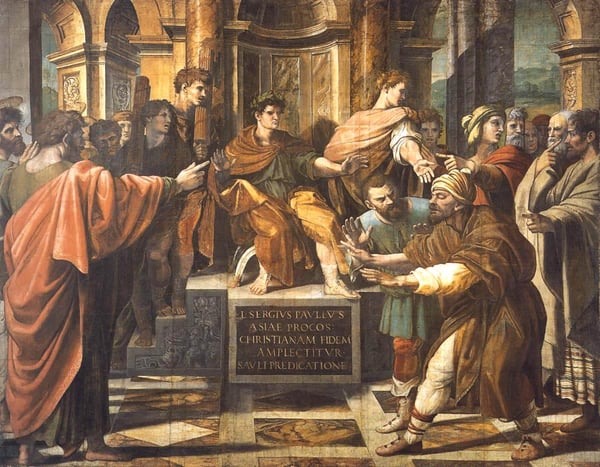
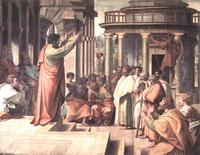
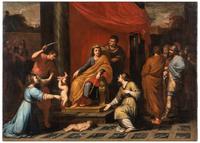
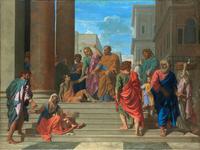
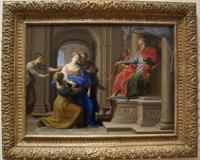
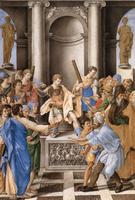
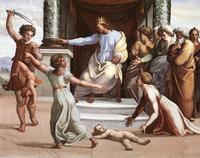
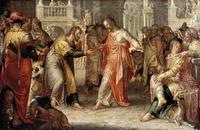
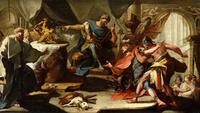
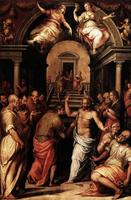
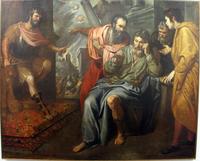
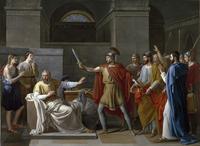
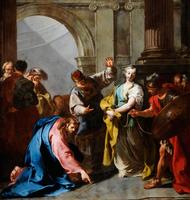
This work exemplifies the High Renaissance ideals of clarity, balance, and narrative drama. As a full-scale cartoon for the Sistine Chapel tapestries, Raphael demonstrates his mastery of disegno (draftsmanship) and composition, translating a biblical scene into a theatrical, emotionally charged moment. The grouping of figures—ranging from the stricken Elymas to the astonished onlookers—showcases Raphael’s ability to orchestrate complex interactions while maintaining a harmonious, pyramidal structure typical of the period. The use of chiaroscuro and rich drapery enhances the psychological impact, directing the viewer’s eye to the central miracle of divine justice.
Religious and Contextual Importance:
The cartoon’s function as a preparatory design for a tapestry destined for the Sistine Chapel underscores its liturgical and papal significance. Raphael’s interpretation of the Acts of the Apostles (the blinding of the sorcerer Elymas by St. Paul) reinforces themes of faith triumphant over falsehood—a message resonant with the Church’s Counter-Reformation emphasis on doctrinal purity. The work is a testament to Raphael’s ability to fuse classical grandeur with spiritual intensity, cementing his legacy as a defining artist of the High Renaissance.