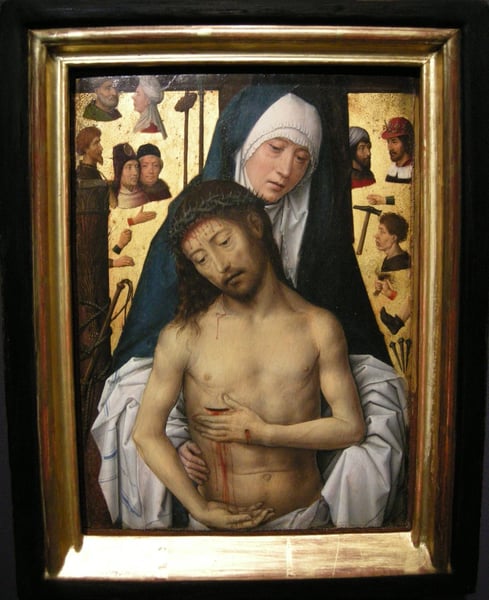
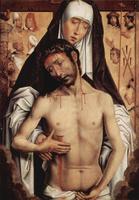
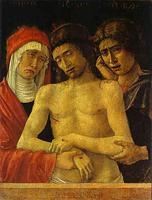
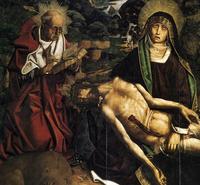
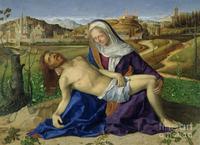
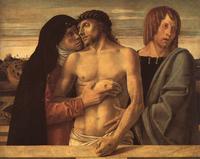
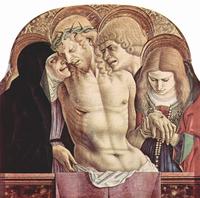
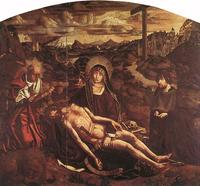
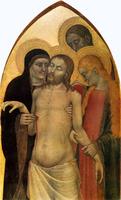
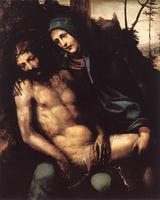
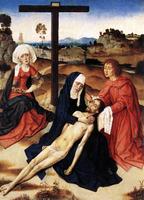
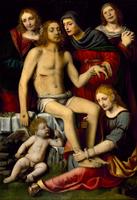
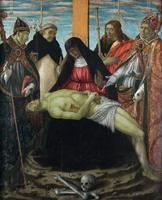
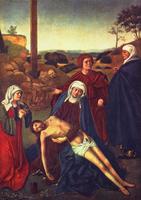
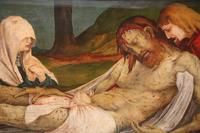
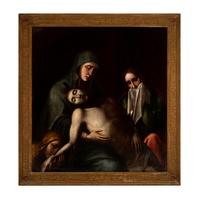
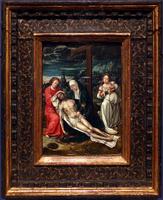
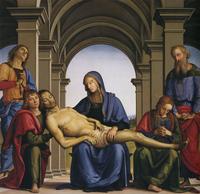
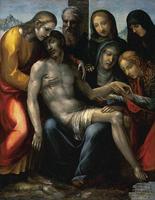
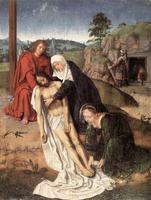
This work, Ecce Homo in the arms of the virgin by Hans Memling, is a profound example of the Northern Renaissance’s ability to fuse intricate realism with deep religious emotion. As a religious painting, its significance lies in Memling’s masterful blending of two iconic biblical moments—the presentation of the suffering Christ (Ecce Homo) and the tender embrace of the Virgin—into a single, intimate devotional scene.
The Northern Renaissance style is evident in the precise, almost microscopic detail of textures, fabrics, and facial expressions. Memling’s composition draws the viewer into a quiet, sorrowful encounter, emphasizing the human vulnerability of Christ and the maternal grief of Mary. This fusion not only heightens the drama but also invites personal meditation, a hallmark of Northern European religious art. The artwork’s significance is thus in its ability to make the divine feel palpably human, using meticulous naturalism to underscore a timeless theological message of sacrifice and compassion.