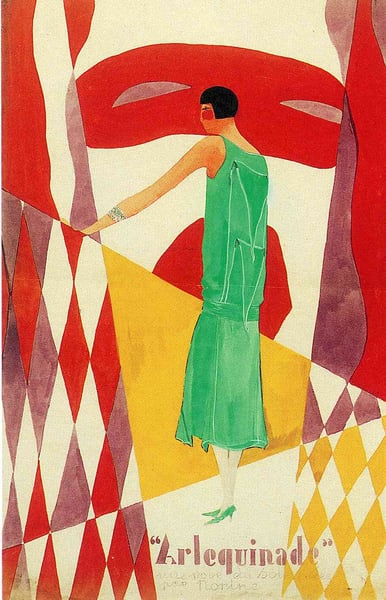
Advertisment for "Norine"
Details
Expert analysis of Rene Magritte’s Advertisment for "Norine"
Style: Art Deco · Genre: advertisement
Expert Art Historical Analysis: "Advertisment for 'Norine'" by René Magritte
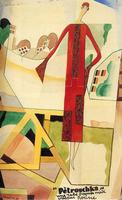
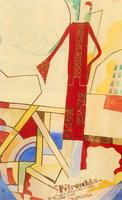
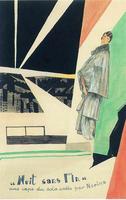
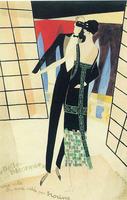
René Magritte’s Advertisment for "Norine" is a fascinating early work that bridges the gap between commercial graphic design and the artist’s burgeoning surrealist vision—while adhering to the formal elegance of the Art Deco style. Created during Magritte’s formative years, this piece is significant for several reasons.
Context and Stylistic Hybridity
Although Magritte is universally celebrated as a pioneer of Surrealism, this advertisement reveals his deep engagement with the prevailing design ethos of the 1920s: Art Deco. The sleek, geometric lines, stylized lettering, and streamlined composition reflect Deco’s emphasis on modernity, luxury, and precision. Yet within this commercial framework, Magritte begins to plant the seeds of his signature visual paradoxes. The piece stands as a rare example of a major Surrealist working within a strictly commercial, commissioned format—demonstrating that even in his early career, Magritte could infuse a promotional image with the uncanny potential that would later define his oeuvre.
Significance in Magritte’s Early Period
This work is a crucial document of Magritte’s pre-Surrealist experimentation. Before he fully embraced the irrational juxtapositions of Surrealism (e.g., The Treachery of Images, The Son of Man), he honed his graphic skills through commercial art. Advertisment for "Norine" shows his mastery of Art Deco’s decorative economy: clean silhouettes, balanced negative space, and a fashionable, cosmopolitan air. The subject—a fashionable woman or a mode of dress—is rendered with a cool, almost impersonal elegance, hinting at the later Magrittean fascination with disguise, concealment, and the ambiguity of identity.
The Advertisement as an Artifact
In the context of Art Deco, the piece is a prime example of how “machine-age” aesthetics were harnessed for consumer culture. The bold typography and stylized imagery would have appealed to an audience captivated by speed, glamour, and modernity. Today, it offers art historians a rare glimpse into the commercial roots of an artist who would later turn the world of objects and images upside down. It also underscores that Magritte’s genius extended beyond painting to the graphic arts—a fact often overshadowed by his surrealist masterpieces.
Conclusion
Advertisment for "Norine" is significant because it exemplifies the intersection of two seemingly disparate worlds: the polished, rational world of Art Deco advertising and the emerging, irrational sensibility of Surrealism. For Magritte, this work was not merely a job but a laboratory where he could practice the visual rhetoric of mystery—deploying clarity of form to suggest hidden meanings. It stands as an essential early step on his path to becoming one of the 20th century’s most influential image-makers.
Visually similar
20 works with related composition and palette
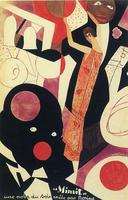
Advertisment for "Norine"
Rene Magritte
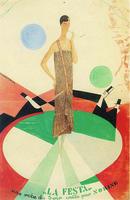
Advertisment for "Norine"
Rene Magritte
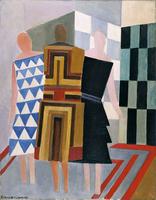
Simultaneous Dresses (Three Women, Forms, Colours)
Sonia Delaunay
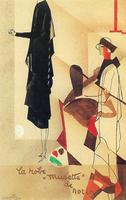
Advertisment for "Norine"
Rene Magritte
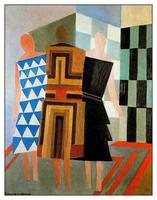
Three Women dressed simultaneously
Sonia Delaunay
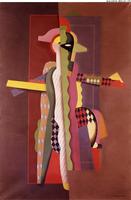
Arlequin Dansant
Georges Valmier
Harlequin
Pablo Picasso
Lazarus
Louis le Brocquy
Advertisment for "Norine"
Rene Magritte
Advertisment for "Norine"
Rene Magritte
Personnage
Gaston Chaissac
Pierrot
Juan Gris
Advertisment for "Norine"
Rene Magritte
Advertisment for "Norine"
Rene Magritte
Harlequin with violin
Pablo Picasso
The Dancer Moa
Egon Schiele
Bullfighter
Juan Gris
Untitled
Artin Demirci
Bushbaby
Jasper Johns
Both Sides Like Chanel
Ahmed Mhennaoui