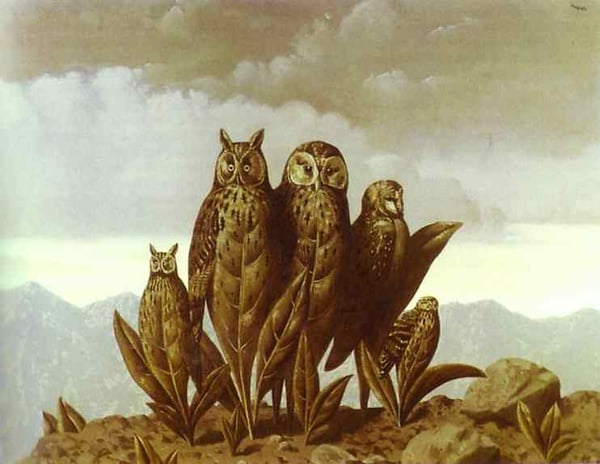
Companions of Fear
詳細
Rene Magritte の Companions of Fear の専門的な分析
スタイル:Surrealism · ジャンル:symbolic painting
Analysis of "Companions of Fear" by René Magritte
Painted during the tumultuous Brussels pre-war and war years, Companions of Fear exemplifies Magritte’s Surrealist project of destabilizing everyday reality. The work belongs to his symbolic mode, where ordinary objects are stripped of their familiar associations and rearranged into unsettling, dreamlike tableaux.
What makes it significant:
-
Magritte’s signature dislocation – True to his style, the painting likely presents an incongruous grouping: perhaps bowler-hatted men (his iconic “everymen”) or vaguely anthropomorphic forms that seem to hover or drift in a placid, nondescript space. The title itself hints at a collective anxiety—fear rendered as companions, not as monsters but as eerily calm presences. This aligns with Magritte’s method of making the familiar strange, forcing the viewer to question the boundary between the visible and the hidden.
-
Political and psychological undercurrents – Created against the backdrop of rising fascism and the outbreak of World War II, the work can be read as a visual metaphor for the pervasive unease of the era. Yet Magritte avoids direct depiction of war; instead, he channels dread through the silence and isolation of his figures. The “fear” here is not explosive but ambient, a quiet suffocation that warps everyday objects into companions of the psyche.
-
Challenge to perception – As in his best-known works (The Son of Man, The Lovers), Magritte insists that things are not what they seem. Companions of Fear likely employs his trademark technique of visual paradox—a sky interrupted by solid forms, shadows that contradict light, or figures that face away from the viewer. This refusal to satisfy the gaze is central to his Surrealist inquiry: fear, Magritte suggests, resides not in overt horror but in the inability to fully comprehend what we see.
-
Place in his pre-war and wartime output – This period saw Magritte move away from the more biomorphic, fantastic Surrealism of Dalí and towards a “magic realism” grounded in precise, matter-of-fact painting. Companions of Fear exemplifies this shift, using academic technique to describe utterly irrational scenes—a calculated seduction of the rational mind that remains one of the most enduring strategies of Surrealist painting.
In essence: Companions of Fear is significant because it distills Magritte’s great theme—the treachery of images—into a meditation on collective dread. It does not scream “war”; it whispers “uncanny,” making the familiar feel like a threat. That quiet, philosophical tension is what elevates the work within the Surrealist canon and marks its resonance for any age of anxiety.
視覚的に類似
構図やパレットが近い作品 20 件
Eagle Owl
Toshi Yoshida
Two Owls
Gustave Dore
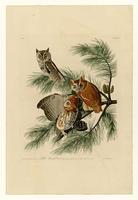
Plate 97 Little Screech Owl
John James Audubon
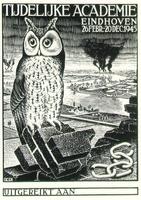
Temporary Academy Diploma
M.C. Escher
Untitled (Grand Owl Habitat)
Joseph Cornell
Untitled (Owl)
Georges Ribemont-Dessaignes
Short Eared Owl
Guy Joseph Coheleach
October
Alex Colville
Reunion Owl
Billy Childish
Susanna and the Elders
William Holbrook Beard
Owls
Rudolf Láng
Quiador
Remedios Varo
Two Owls
Toshi Yoshida
Island of Treasures
Rene Magritte
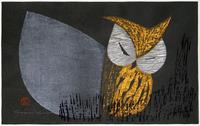
Owl
Kaoru Kawano
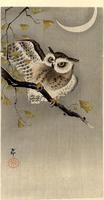
Owl on ginkgo branch (Scops owl under crescent moon)
Ohara Koson
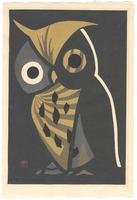
The Big Owl
Kaoru Kawano
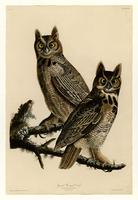
Plate 61. Great Horned Owl
John James Audubon
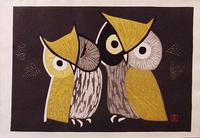
Three Eyes
Kaoru Kawano
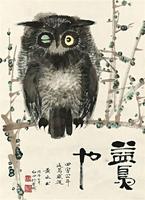
Owl
Huang Yongyu