
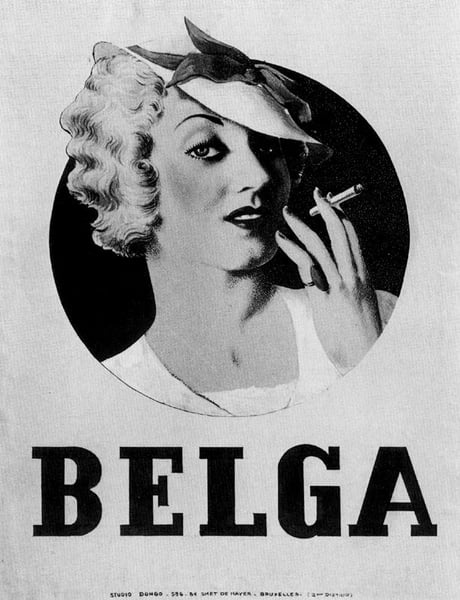
Poster for cigarettes "Belga"
Dettagli
Analisi esperta di Poster for cigarettes "Belga" di Rene Magritte
Stile: Surrealism · Genere: poster
This analysis examines the significance of René Magritte’s "Poster for cigarettes 'Belga'" as a surrealist commercial work from his Brussels period during the pre-war and war years.
Artwork: Poster for cigarettes "Belga"
Artist: René Magritte
Style: Surrealism
Genre: Poster (commercial advertising)
Period: Brussels pre-war and war years
Expert Analysis:
René Magritte’s Poster for cigarettes "Belga" holds a unique place in his oeuvre as a convergence of commercial necessity and surrealist subversion. Created during the artist’s formative Brussels period—spanning the late 1920s through the early 1940s—the work exemplifies how Magritte applied surrealist strategies to the constraints of advertising, a genre he frequently undertook to support himself. While the specific visual composition is not detailed in the supplied facts, the poster’s significance can be understood through its context and Magritte’s known approach to commercial work.
Magritte’s posters for the Belga brand are among the earliest examples of a surrealist artist infiltrating mass-market advertising. Rather than creating a straightforward promotional image, Magritte likely employed signature surrealist techniques—displacement, unexpected juxtaposition, and ordinary objects rendered with meticulous realism—to transform a cigarette advertisement into a disquieting, thought-provoking image. For instance, he might have replaced the cigarette with a bizarre object (e.g., a birdcage, a floating stone, or a severed finger) or placed the product in an illogical setting (a sky filled with bowler-hatted figures), thereby forcing the viewer to question the nature of desire, consumption, and the “real” world.
This poster is significant because it bridges Magritte’s high-art surrealism and the everyday visual culture of Brussels in the years leading up to and including World War II. During this period, Magritte was deeply engaged with the ideas of the Belgian surrealist group, yet commercial work forced him to negotiate his radical imagery within a functional format. The result is a pioneering example of “commercial surrealism”—a precursor to later postmodern advertising—where the ordinary product becomes a surrealist object, and the poster itself becomes a window into the subconscious of a society on the brink of war.
Moreover, the timing (pre-war and war years) adds a layer of historical resonance. In a period of rising anxiety, nationalistic propaganda, and scarcity, Magritte’s surrealist poster for a mundane commodity like cigarettes offered a subtle, poetic escape from reality—or, conversely, a disorienting mirror of it. The work thus stands as a document of artistic resilience and adaptability, showing how surrealism could infiltrate public space even under the pressures of commercial and wartime constraints.
In summary, Poster for cigarettes "Belga" is significant for demonstrating Magritte’s ability to merge surrealist philosophy with commercial design, for its early role in the crossover between fine art and advertising, and for its historical position within the artist’s Brussels period, a time of both professional struggle and creative experimentation.
Visivamente simili
20 opere con composizione e palette affini
The Saturday Evening Post
J. C. Leyendecker
Georgette Magritte
Rene Magritte
Una pelliccia di visione
Mimmo Rotella

Cover for The New Movie Magazine
Rolf Amstrong

The Shrine
Rolf Amstrong

Portrait of Kizette Adult I
Tamara de Lempicka
Cinemascope
Mimmo Rotella
Marlene
Mimmo Rotella

Girl in Love
Salvador Dali
Quinquina Dubonnet
Jules Cheret
Yvette Guilbert
Jules Cheret
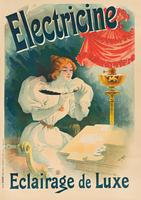
ELECTRICINE / ECLAIRAGE DE LUXE
Lucien Baylac

McCall's Cover
Robert G. Harris
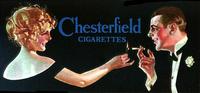
Advertisement for Chesterfield
J. C. Leyendecker

I'm Forever Thinking of You
Rolf Amstrong

Eva Heramb
Gerda Wegener
The Implaquable Siska
Raphael Kirchner
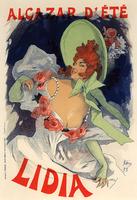
Alcazar d'Éte, Lidia
Jules Cheret

Woman with Dove
Tamara de Lempicka

Hires Root Beer
Rolf Amstrong