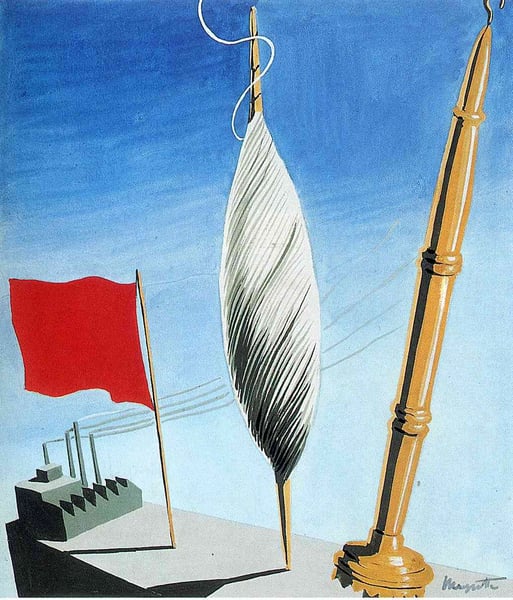
Project of poster "The center of textile workers in Belgium"
Dettagli
Analisi esperta di Project of poster "The center of textile workers in Belgium" di Rene Magritte
Stile: Surrealism · Genere: poster
Expert Analysis:
René Magritte’s Project of poster "The center of textile workers in Belgium" stands as a revealing intersection of Surrealist visual language and political propaganda during the tense pre-war and war years in Brussels (roughly 1935–1945). While Magritte is celebrated for his enigmatic, dreamlike canvases, this commissioned poster offers a rare glimpse into his engagement with organized labor and social messaging—a facet often overshadowed by his more private, philosophical works.
Significance within Surrealism
Surrealism typically rejected direct political utility, favoring the irrational and the subconscious. Yet Magritte here adapts his signature technique—the dislocation of familiar objects and the juxtaposition of scale—to a pragmatic, commercial purpose. The poster likely features a stark, monumental object (perhaps a loom or a stylized worker’s hand) placed in an incongruous, theatrical space, echoing the “uncanny” effect of his paintings like The Treachery of Images but now harnessed to rally textile workers. This fusion of surrealist dislocation with agitprop demonstrates Magritte’s belief that the revolutionary potential of Surrealism could serve concrete social causes.
Historical and Period Context
Belgium’s textile industry was a backbone of its economy, and during the pre-war years (especially the late 1930s), labor movements were gaining strength amidst rising fascism and economic instability. By 1939–1940, with the Nazi occupation looming, any poster for a “center of textile workers” would carry implicit resistance. Magritte’s choice to work in the poster genre—a medium of mass communication—signals a deliberate step away from the elite art market. The work’s significance lies in its bridging of high Surrealism and proletarian struggle, a move that parallels the anti-fascist alliances of European avant-garde artists.
Stylistic Observations
Though we lack the exact visual elements, one can infer Magritte’s use of precise, realistic rendering combined with irrational scale or placement—hallmarks of his Brussels period. The poster would likely avoid overt symbolism (no hammers or sickles) in favor of a disquieting, thought-provoking image that compels the viewer to question reality, mirroring the workers’ need to challenge their own exploitation. The “project” status suggests it may never have been printed, making it an unrealized utopian vision—a perfect Surrealist artifact.
Conclusion
This poster is significant not as a typical Magritte composition but as a rare political application of Surrealist strategies. It illustrates how the movement’s core method—making the familiar strange—could be weaponized for class consciousness and collective action. In the context of Brussels’ war years, it also stands as a poignant document of artistic resistance before the darkness of occupation fully descended.
Museum / Gallery
Visivamente simili
20 opere con composizione e palette affini
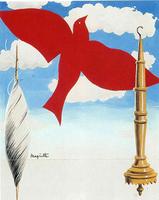
Project of poster "The center of textile workers in Belgium"
Rene Magritte
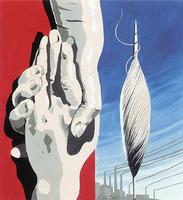
Project of poster "The center of textile workers in Belgium"
Rene Magritte
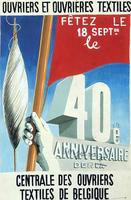
Project of poster "The center of textile workers in Belgium (celebration on 18th september)"
Rene Magritte
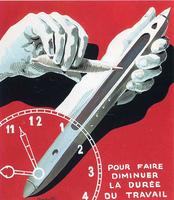
Project of poster "The center of textile workers in Belgium (to reduce working hours)"
Rene Magritte
Mama, Papa is Wounded!
Yves Tanguy
Floats and Afloat
Edward Wadsworth
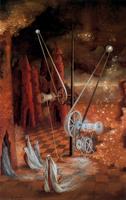
Premonition
Remedios Varo
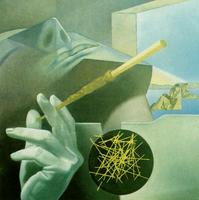
The Sleeping Smoker
Salvador Dali
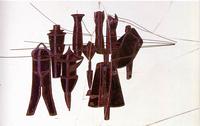
Nine malice moulds
Marcel Duchamp
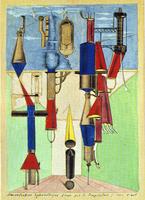
Hydrometric Demonstration
Max Ernst
Illustration from The Love Story of Ursula Wolcott
Ethel Reed
Untitled
Judith Scott
Figurines in Space: Study for the Triadic Ballet
Oskar Schlemmer
Fantomy (Phantom)
Toyen
Enigma (Triptych)
Enrico Pinardi
I Saw Three Cities
Kay Sage
Monuments and Observers
Vladimir Kolosov
A famous man
Rene Magritte
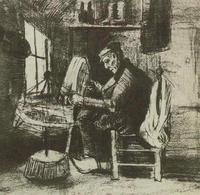
Old Man Reeling Yarn
Vincent van Gogh
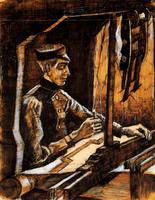
Weaver
Vincent van Gogh