
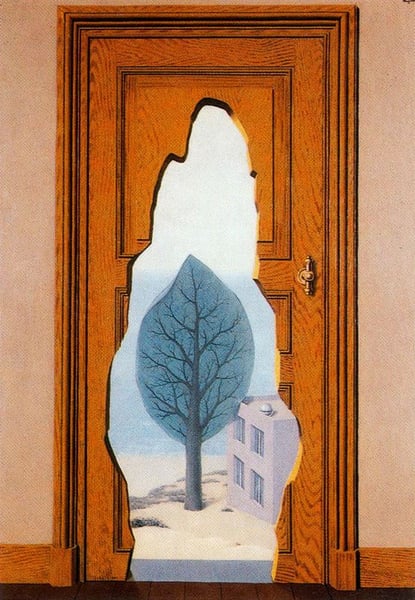
The amorous perpective
Details
Expert analysis of Rene Magritte’s The amorous perpective
Style: Surrealism · Genre: symbolic painting
Expert Analysis: "The Amorous Perspective" by René Magritte
Context and Period Significance
Created during Magritte's Brussels pre-war and war years (late 1930s–early 1940s), "The Amorous Perspective" exemplifies the intellectual and psychological depth that defined Surrealism at its peak. This period was marked by growing global tension, and Magritte’s work often served as a quiet rebellion against rationalism and the looming darkness—using everyday objects to destabilize the viewer’s understanding of reality. The painting belongs to the genre of symbolic painting, where Magritte’s signature motifs (windows, frames, bodies, or landscapes) become hieroglyphs for hidden desires and philosophical puzzles.
Surrealist Techniques and Symbolic Vocabulary
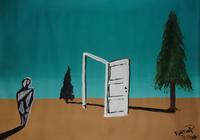
In true Surrealist fashion, Magritte subverts conventional perspective—the very tool that traditionally grounds a viewer in a logical spatial world. Here, the word “perspective” is doubly charged: it refers both to an optical system and to a personal viewpoint on love or longing. Likely employing his characteristic juxtaposition of familiar objects in uncanny contexts, Magritte collapses the boundary between interior and exterior, self and other. A window or doorway might reveal not a landscape but an intangible emotional state—or a pair of lovers rendered as abstract forms, each isolated yet connected by the act of looking. This aligns with Magritte’s fascination with the trompe-l’œil and the “treachery of images”: the painting does not represent a scene so much as it stages a philosophical riddle about desire and perception.
Significance Within Surrealism
What makes "The Amorous Perspective" significant is its rigorous exploration of the Surrealist goal to “resolve the previously contradictory conditions of dream and reality.” Magritte avoids the chaotic dreamscapes of Dalí; instead, he uses the precise, almost academic style of commercial illustration to create a paradox. The “amorous” element ties love not to sentiment but to the act of seeing—to the distance that separates two gazes, or the impossibility of truly possessing another through sight alone. This intellectualization of desire anticipates later postmodern concerns with the gaze and representation.
Relevance to the Brussels War Years
During the Nazi occupation of Belgium (1940–1944), Magritte’s work became more introspective and allegorical. "The Amorous Perspective" may reflect a longing for connection in a time of enforced separation, or a meditation on how political realities distort personal relationships. The painting’s title, with its hint of desire mediated by vision, resonates with the Surrealist belief that art can re-enchant a disenchanted world—offering a secret, symbolic space where perspective itself becomes an act of resistance.
In summary, this work stands as a quintessential Magrittean puzzle: calm in execution, radical in implication, and timeless in its challenge to how we see—and how we love.
Museum / Gallery
Visually similar
20 works with related composition and palette
Unexpected answer
Rene Magritte
Early morning
Rene Magritte
The open door
Nikos Hadjikyriakos-Ghikas
Painting
Francis Bacon
Enter, Exit
Max Ernst
La casa fantasmal
Angel Planells
The victory
Rene Magritte
La ville
Leopold Survage
Christina Olson
Andrew Wyeth
Ruin with Head of Medusa and Landscape
Salvador Dali
Untitled
Dominique Appia
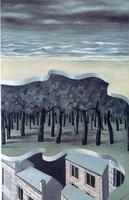
Popular panorama
Rene Magritte
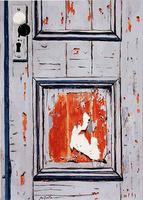
Door in Need of Fresh Paint
Burhan Dogancay
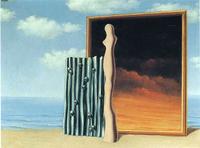
Composition on a seashore
Rene Magritte
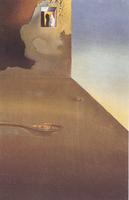
The Meeting of the Illusion and the Arrested Moment - Fried Eggs Presented in a Spoon
Salvador Dali
Untitled
Zdzislaw Beksinski
The doorway
Will Barnet
Imp of the Perverse
Rene Magritte
The double secret
Rene Magritte
El pino
Martin Pereira