Expert Analysis: "The Art of Conversation" by René Magritte
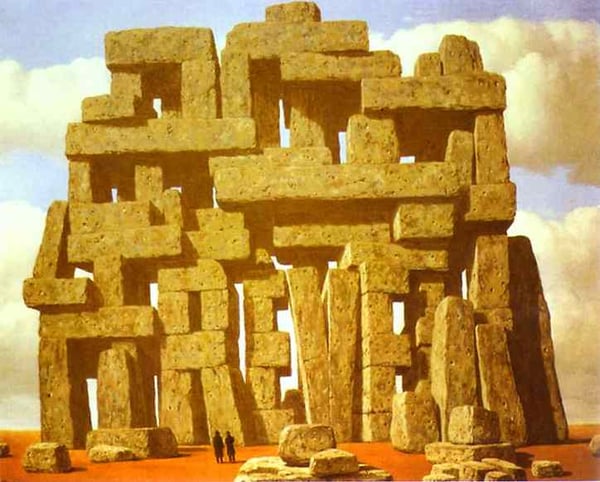
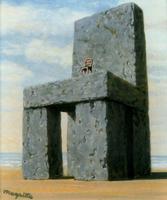
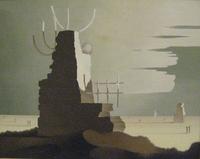
Within the framework of Surrealism’s mature period, Magritte’s The Art of Conversation stands as a defining example of symbolic painting—a genre in which the artist transforms ordinary objects into enigmatic signifiers, inviting contemplation beyond surface appearances. The work’s significance lies in its masterful deployment of Surrealist strategies: the juxtaposition of familiar elements in unfamiliar contexts, the suspension of logical relations, and the evocation of paradox.
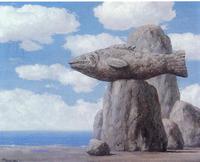
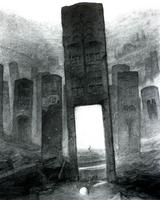
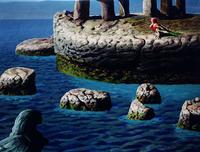
As a product of Magritte’s Mature Period, the painting demonstrates the artist’s refined ability to distill complex philosophical ideas into stark, meticulously rendered imagery. The title itself hints at a central Surrealist concern: the limits and possibilities of communication. Rather than depicting a literal conversation, Magritte presents a symbolic scene where words, objects, and space engage in a silent dialogue—challenging the viewer to decode meaning from incongruity. The ambiguous relationship between the elements (a typical Surrealist device) disrupts conventional narrative, forcing a direct confrontation with the subconscious.
The work’s symbolic nature aligns with Magritte’s broader project: to reveal the hidden relationships between things that reason denies. In The Art of Conversation, the very act of “conversation” becomes a visual riddle, questioning how meaning is constructed and how language can fail. This makes it a pivotal piece within Surrealism’s exploration of dream logic and the irrational, and a testament to Magritte’s lasting contribution to symbolic painting—where the ordinary becomes extraordinary through the quiet violence of dislocation.