
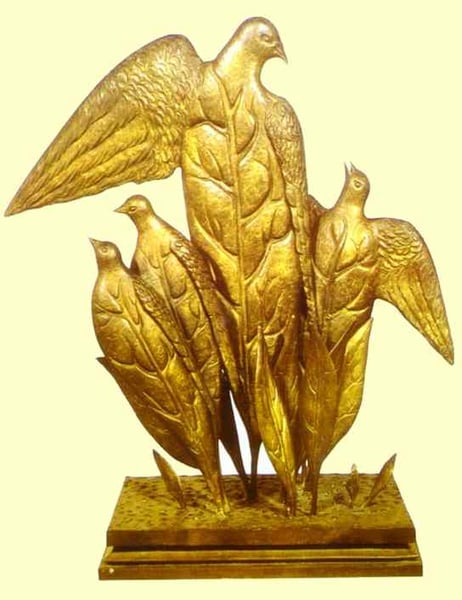
Rene Magritte sanatçısının The natural graces eseri hakkında uzman analizi
Tarz: Surrealism · Tür: sculpture
Analysis of The Natural Graces by René Magritte
Style: Surrealism | Genre: Sculpture | Period: Later Period
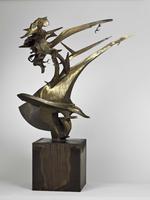
René Magritte’s The Natural Graces stands as a pivotal example of the artist’s later shift from two-dimensional painting to three-dimensional sculpture, a move that allowed him to literalize the visual paradoxes central to Surrealism. While Magritte is primarily celebrated for his painted enigmas, this bronze work embodies his mature interest in objecthood and the unsettling transformation of familiar forms.
The sculpture presents a tree trunk whose organic structure is interrupted by the unmistakable features of the female body—most notably, breast-like protrusions that merge wood and flesh. This hybridization of nature and humanity echoes Surrealism’s core aim: to dissolve the boundary between the conscious and unconscious, the natural and the constructed. Unlike many Surrealist sculptures that rely on disorienting juxtapositions (e.g., Meret Oppenheim’s fur-covered teacup), Magritte’s The Natural Graces achieves its power through seamless fusion. The tree is not replaced by a body; rather, its grain and bark become part of the figure, so that one cannot tell where plant ends and person begins. This ambiguity forces viewers to question the very categories they use to define life, identity, and art.
The work gains further significance within Magritte’s later period (c. 1950s–1960s). During these decades, he frequently returned to motifs from his earlier paintings—such as the levitating man, the apple, and the bird—but now rendered them as autonomous sculptures. The Natural Graces belongs to this late-career exploration of “objectified” Surrealism, where the illusionistic tricks of painting become tangible physical presences. By casting the piece in bronze, Magritte also nods to classical sculpture, yet subverts its tradition: instead of idealized marble nudes, he offers a grotesque yet beautiful chimera that refuses to be either wholly nature or wholly art.
Moreover, the title The Natural Graces carries irony. The “Graces” of Greek mythology were goddesses of charm and beauty; Magritte’s sculpture retains that elegance of line, but its “natural” grace is twisted into something uncanny. The tree leg emerges gracefully from its base, yet the viewer’s recognition of breasts on a trunk provokes unease. This tension between the familiar and the alien is the hallmark of Magritte’s genius—and makes The Natural Graces a cornerstone of his later sculptural practice, demonstrating that Surrealism could move beyond the canvas to inhabit real space, challenging our perception of the world itself.
Museum / Gallery
Görsel olarak benzer
İlişkili kompozisyon ve renk paletine sahip 20 eser
Victoria
Paul Wunderlich
The natural graces
Rene Magritte
«Gold of the autumn»
Ludwiga Nesterovich
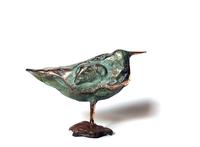
Tak Pa
Amin Aghaei
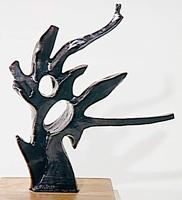
Rockefeller branch
Fernand Leger
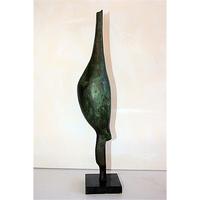
Golden Bird
Constantin Brâncuși
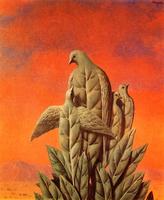
The natural graces
Rene Magritte
Les deux oiseaux
Etienne Hajdu
Cisne
Kalato
«Dormant Sirin»
Ludwiga Nesterovich
Eventide
Henri Laurens
Eagle Hybrid
Richard Hunt
Lying horizontal
Olexandr Archipenko
Le Bourgeon
Etienne Hajdu
«Foggy morning»
Ludwiga Nesterovich
Icône
Le Corbusier
Eclosion
Etienne Hajdu
Bronze figure
Leon Underwood
Ubu
Le Corbusier
Flintlock Fantasy or The Promise of Force
Richard Hunt