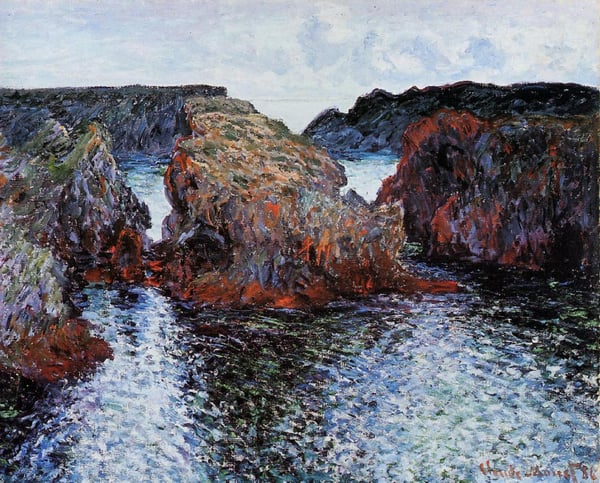
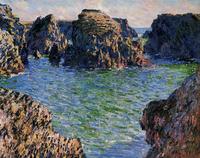
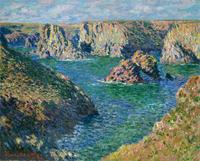
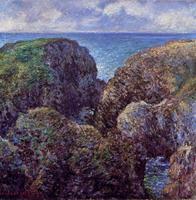
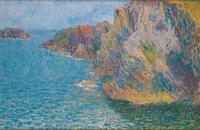
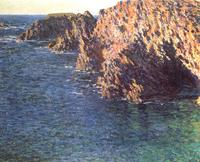
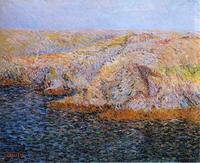
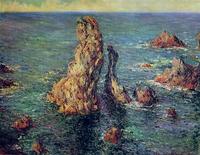
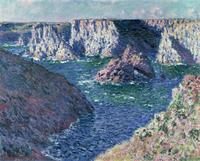
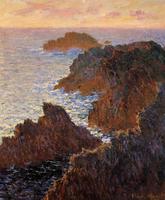
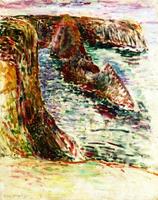
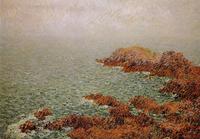
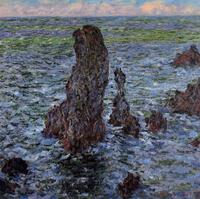
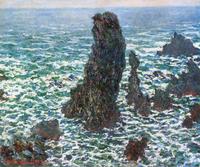
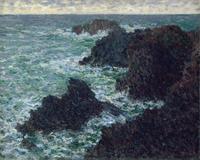
This artwork is significant as a definitive example of Impressionism, a movement that prioritized the depiction of light, atmosphere, and transient natural effects over precise detail. Painted by Claude Monet—a leading figure of the movement—the landscape genre allowed him to explore the rugged coastal terrain of Belle-Île, specifically the dramatic rock formations at Port-Goulphar. The painting’s importance lies in its embodiment of Impressionist principles: capturing a specific moment in time through loose brushwork, vibrant color contrasts, and an emphasis on the interplay of sunlight and shadow on stone and water. Monet’s focus on this single, raw natural subject also foreshadows his later series works, where he would repeatedly paint the same scene under varying conditions to reveal subtle shifts in perception.