
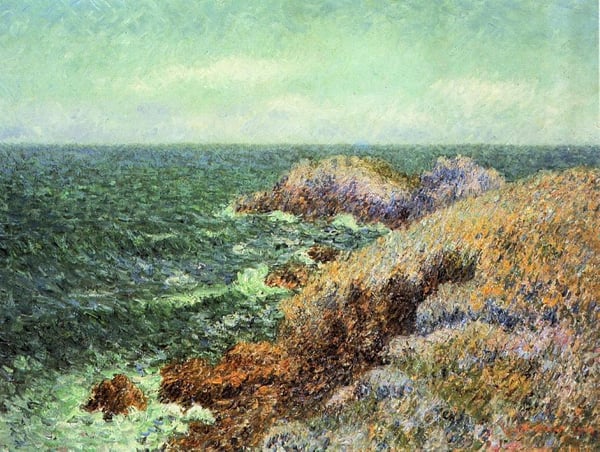
Expert analysis of Gustave Loiseau’s The Rocks of Saint Lunaire
Style: Post-Impressionism · Genre: landscape
Expert Analysis of "The Rocks of Saint Lunaire" by Gustave Loiseau
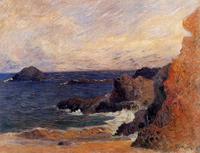
Gustave Loiseau’s The Rocks of Saint Lunaire exemplifies the transition from Impressionism’s fleeting light effects to Post-Impressionism’s structural and emotional intensity. Painted in the coastal town of Saint Lunaire in Brittany, the work captures the rugged Atlantic shoreline through Loiseau’s signature en treillis (trellis-like) brushwork—a disciplined network of short, parallel strokes that build volume and texture in the rock formations. This technique, while indebted to Seurat’s pointillism, is looser and more rhythmic, allowing Loiseau to convey the raw, tactile presence of the granite cliffs without dissolving form into mere light.
The significance of this painting lies in its balancing act: it retains the Impressionist commitment to plein-air immediacy—note the shifting blues and greens of the sea and sky—yet imposes a deliberate compositional order. The rocks anchor the foreground with earthy ochres, purples, and grays, while the distant horizon dissolves into softer tones, creating a palpable sense of atmosphere. Loiseau’s palette is notably heightened, veering toward the decorative, which aligns with the Post-Impressionist tendency to prioritize personal expression over naturalistic accuracy.
Within Loiseau’s oeuvre, The Rocks of Saint Lunaire is a quintessential example of his fascination with Brittany’s coastal geology. It reflects the broader Post-Impressionist interest in regional identity and the sublime power of nature—a theme seen in contemporaries like Gauguin and Bernard. Here, Loiseau does not merely record a landscape; he transforms it into a vibrant tapestry of color and surface pattern, making the familiar coastline feel both monumental and intimately felt. This work stands as a testament to how Post-Impressionism could infuse landscape painting with a new emotional and structural weight, moving beyond mere observation toward a more personal, rhythmic vision of the natural world.
Museum / Gallery
Visually similar
20 works with related composition and palette
The Red Rocks
Gustave Loiseau
Isle of Shoals
Childe Hassam
Rock Cliffs by the Sea in Britain
Gustave Loiseau
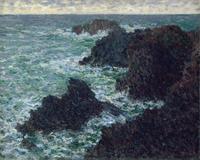
The Cote Sauvate
Claude Monet
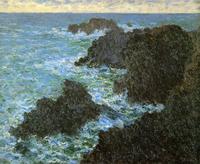
The rocks of Belle-Ile
Claude Monet
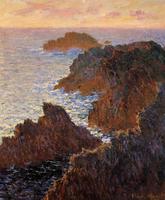
Rocks at Belle-Ile, Port-Domois
Claude Monet
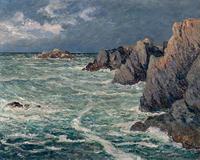
Domois shore (Belle-Ile-en-Mer)
Maxime Maufra
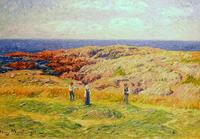
Fenaison en Bretagne
Henry Moret
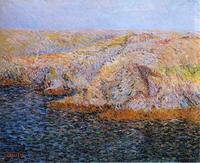
Ice on the Oise river
Gustave Loiseau
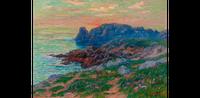
L'île de Ouessant, Le Soir
Henry Moret
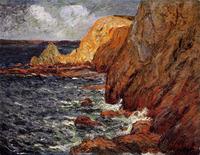
Cliffs
Maxime Maufra
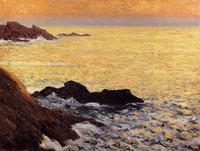
The Golden Sea - Quiberon
Maxime Maufra
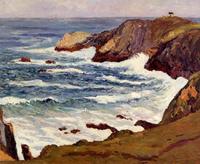
The Cove at Cape Suzon
Maxime Maufra
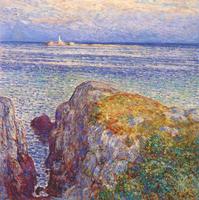
White island light (isles of shoals at sundown)
Childe Hassam
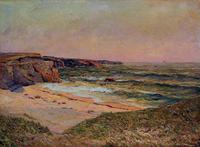
The Dunes of Port Blanc near Ile de Quiberon
Maxime Maufra
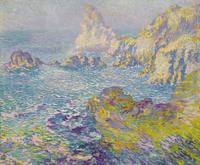
Bord De Mer
Willy Schlobach
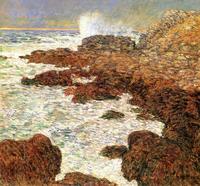
Seaweed and Surf, Appledore
Childe Hassam
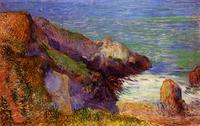
Rocks on the breton coast
Paul Gauguin
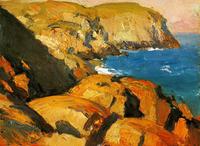
Blackhead, Monhegan
Edward Hopper
Coastal landscape
Paul Gauguin