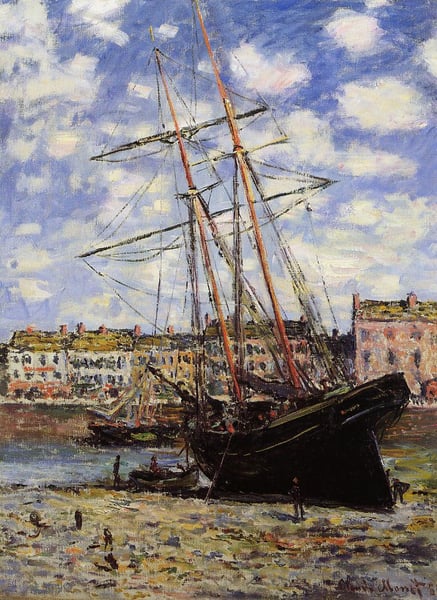
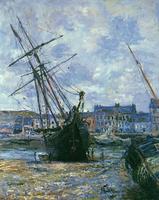
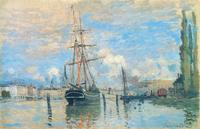
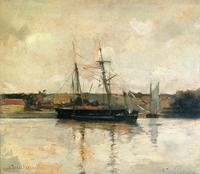
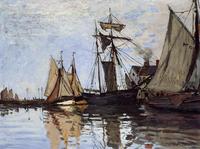
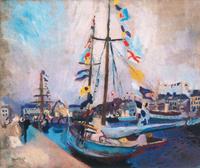
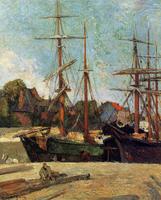
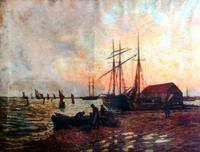
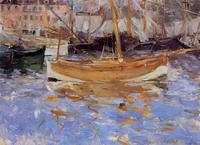
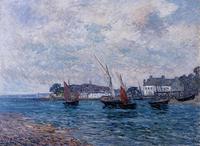
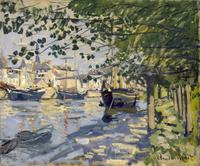
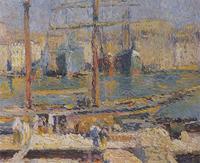
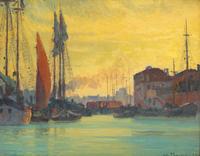
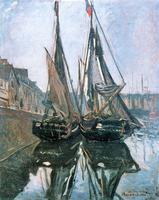
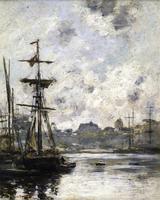
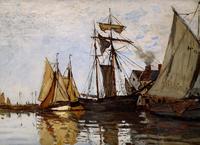
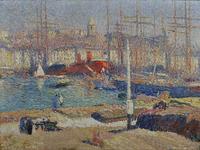
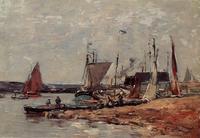
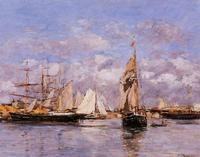
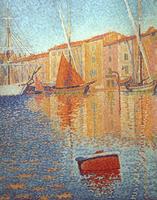
Claude Monet’s “Boat at Low Tide at Fecamp” exemplifies the core ambitions of Impressionism through its treatment of a seemingly mundane cityscape subject. Painted in the port town of Fecamp on the Normandy coast, the work captures a specific, fleeting moment—low tide—when boats rest on exposed sand or mudflats. Monet’s signature broken brushwork and luminous palette transform the harbor into a shimmering study of reflected light and shifting atmosphere, rather than a precise topographical record. The significance of this piece lies in its emphasis on perception over detail: by focusing on the transient effects of tide and sky, Monet elevates an everyday coastal scene into a meditation on how light and weather shape our visual experience. This approach—central to Impressionism—challenged traditional cityscape conventions, which typically prioritized architectural accuracy and enduring civic identity. Instead, Monet’s Fecamp view dissolves solid forms into dappled color, inviting viewers to witness the very process of seeing.