
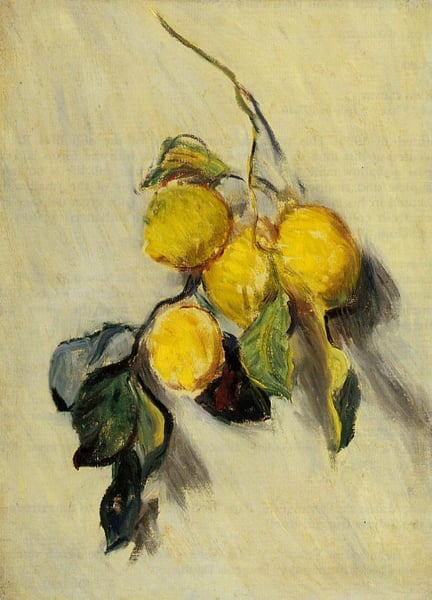
Deskundige analyse van Branch of Lemons van Claude Monet
Stijl: Impressionism · Genre: still life
Expert Analysis of Branch of Lemons by Claude Monet
Monet’s Branch of Lemons is a revealing yet often overlooked work within the Impressionist canon, demonstrating how the movement’s revolutionary principles—light, color, and brushwork—could transform even the most traditional genre: the still life.
Executed in the Impressionist style, this painting moves decisively away from the polished, detailed still lifes of the 19th-century academic salon. Instead of rendering each lemon with meticulous realism, Monet concentrates on the shifting interplay of light across the fruit and leaves. The brushstrokes are short, visible, and broken—building the form of the branch not through smooth blending but through accumulations of pure, vibrant color. This technique captures the fleeting moment rather than the static object, a hallmark of Impressionism.
The significance of Branch of Lemons lies in its defiance of conventional still-life hierarchy. Traditional still lifes often carried moral or symbolic messages (vanitas, abundance) and were executed with precise modeling. Monet subverts this: the subject is simple—a cut branch of lemons against a muted background—but the real subject is optical sensation. The yellow of the lemons is not a single hue; it is a complex mosaic of pale ochres, sharp cadmiums, and even touches of green and violet, reflecting light from the surrounding atmosphere. Shadows are rendered not with black or brown but with complementary colors, intensifying the vibrancy.
Furthermore, this work underscores Monet’s versatility. Best known for his haystacks, water lilies, and cathedral façades, his still lifes are rarer and provide a crucial test of his core beliefs. Here, he proves that the same laws of perception govern a fruit bowl as a landscape. The asymmetrical composition—the branch jutting diagonally across the canvas—borrows from Japanese print aesthetics, a recurring influence on Impressionism, giving the piece a dynamic, casual immediacy.
In summary, Branch of Lemons is significant because it redefines still life for the Impressionist age: no longer a static symbol, but a living record of light in motion, painted with the same radical brushwork and color theory that Monet applied to the open air.
Visueel vergelijkbaar
20 werken met verwante compositie en kleurenpalet
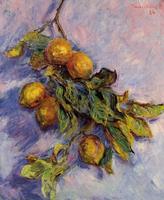
Branch of Lemons
Claude Monet
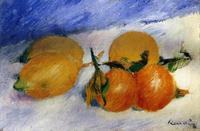
Still Life with Lemons and Oranges
Pierre-Auguste Renoir
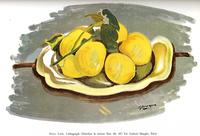
Still life
Georges Braque
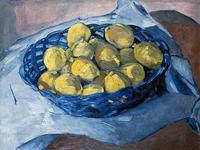
Lemons in a Blue Basket
Christopher Wood
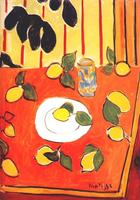
Black Philodendron and Lemons
Henri Matisse
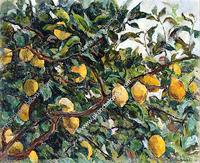
Italy. Lemons on the branches.
Pyotr Konchalovsky
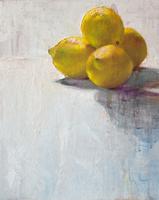
Limones #2
Luis Álvarez Roure
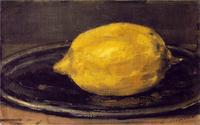
The Lemon
Edouard Manet
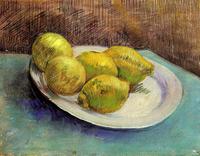
Still Life with Lemons on a Plate
Vincent van Gogh
Limones #1
Luis Álvarez Roure
Seville oranges
Nikolaos Lytras
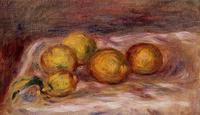
Lemons
Pierre-Auguste Renoir
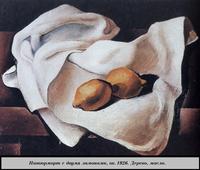
Still Life with Two Lemons
Salvador Dali
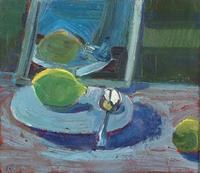
Untitled (Still Life with Lemon)
Theophilus Brown
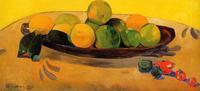
Still life with Tahitian oranges
Paul Gauguin
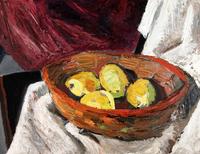
Lemon in a Basket
Jack Bush
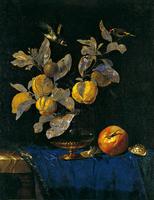
Still Life with Fruit
Willem van Aelst
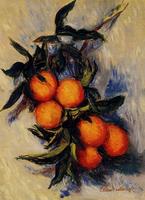
Branch of Orange Bearing Fruit
Claude Monet
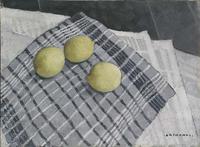
The Lemons
Felice Casorati
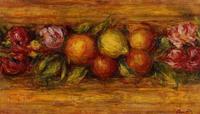
Garland of Fruit and Flowers
Pierre-Auguste Renoir