
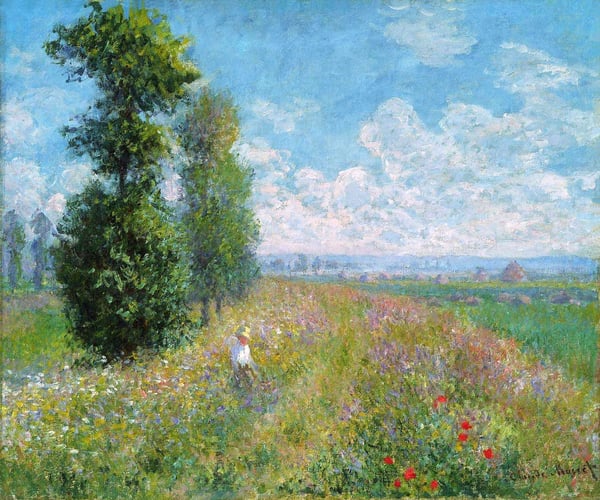
Expert analysis of Claude Monet’s Meadow with Poplars
Style: Impressionism · Genre: landscape
Based solely on the provided facts—Claude Monet’s Meadow with Poplars, an Impressionist landscape—the work’s significance lies in how it epitomizes the core innovations of Impressionism. As a landscape by the movement’s foremost practitioner, it would prioritize the transient effects of natural light and atmosphere over meticulous detail. The subject (a meadow with poplars) is typical of Monet’s interest in rural scenes that allowed him to capture shifting colors and reflections, using broken brushwork and pure, unmixed pigments to convey a sense of immediacy. Within the Impressionist period, such a work is significant because it demonstrates the radical shift from academic conventions: instead of a finished, idealized view, Monet presents a fleeting moment of perception, essentially “painting the air” between the viewer and the landscape. The very choice of a simple, unheroic motif—a meadow and trees—reinforces Impressionism’s democratic embrace of everyday nature as a worthy subject for high art.
Visually similar
20 works with related composition and palette
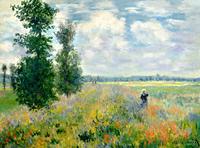
Poppy Field, Argenteuil
Claude Monet
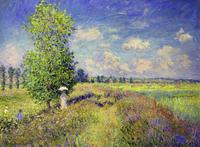
The Summer, Poppy Field
Claude Monet
View Of Méréville
Maximilien Luce
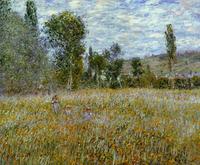
Meadow
Claude Monet
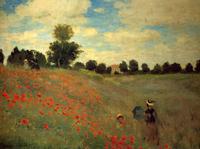
Field of Poppies
Claude Monet
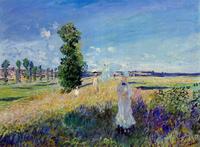
The Promenade, Argenteuil
Claude Monet
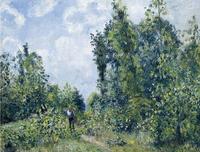
Wanderer near the Wood
Camille Pissarro
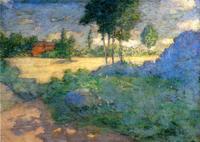
The Farmer's Lawn
Julian Alden Weir
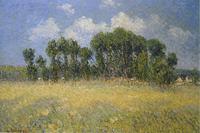
Landscape with Poplars
Gustave Loiseau
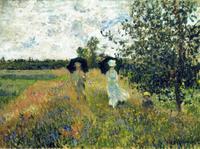
The Promenade near Argenteuil
Claude Monet
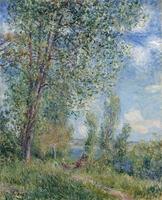
Windy Afternoon in May
Alfred Sisley
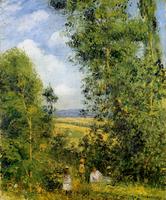
Resting in the woods Pontoise
Camille Pissarro
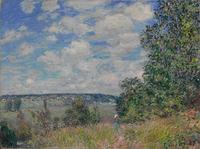
Landscape
Alfred Sisley
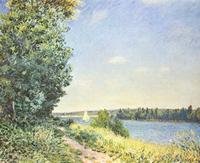
Normandy, the water path, in the evening at Sahurs
Alfred Sisley
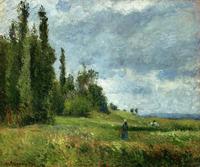
A part of Groettes, Pontoise, Gray Weather
Camille Pissarro
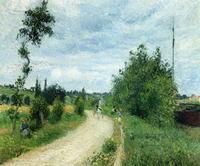
The Auvers Road, Pontoise
Camille Pissarro
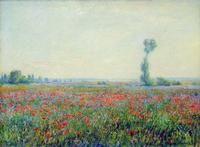
Poppy Field
Claude Monet
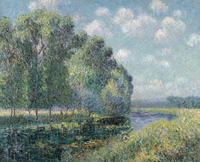
By the Eure River in Spring
Gustave Loiseau
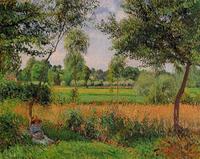
Morning, Sun Effect, Eragny
Camille Pissarro
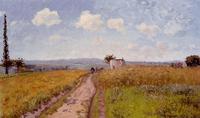
June Morning, View over the Hills over Pontoise
Camille Pissarro