
Expertenanalyse zu Alfred Sisleys Windy Afternoon in May
Stil: Impressionism · Genre: landscape
Expert Art Historical Analysis: Windy Afternoon in May by Alfred Sisley
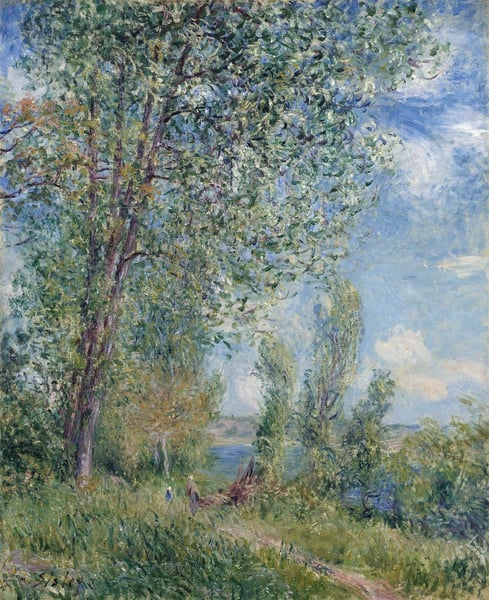
Alfred Sisley’s Windy Afternoon in May exemplifies the core aspirations of Impressionism: the direct, sensory recording of a fleeting moment in nature. As a landscape painter, Sisley specialized in capturing the subtleties of atmosphere, light, and weather, and this work stands as a quintessential example of his mastery.
Significance within Impressionism
-
Dynamic Atmosphere and Weather Effects: The painting’s title explicitly references wind and the specific time of year. Unlike static, studio-composed landscapes, Sisley here translates the invisible force of wind into visible pictorial energy. The sky is likely charged with scudding clouds, and the vegetation—trees, grasses, or leaves—appears set in motion through rapid, broken brushstrokes. This focus on ephemeral weather conditions was a hallmark of Impressionist practice, elevating the ordinary experience of a breezy afternoon to the level of high art.
-
Color and Light in Transition: The month of May in the French countryside offered a soft, fresh palette—the bright greens of new leaves, the pale blues of a spring sky, and the warm whites of clouds lit by afternoon sun. Sisley, often considered the most consistent plein-air Impressionist, would have worked directly from nature to capture these nuances. His touch is delicate yet energetic, applying complementary colors side by side to create a vibrant, luminous surface that seems to shimmer.
-
Emphasis on Transience: The greatest significance of Windy Afternoon in May lies in its celebration of the fleeting. For Sisley, a landscape was not a fixed object but a continuous state of change. The wind, the shifting light, and the rustling leaves are all moments that will pass. By freezing this instant on canvas, Sisley does not simply depict a place—he invites the viewer to experience the perceptual thrill of a single, wind-swept afternoon. This is the very essence of Impressionism’s revolutionary message: that beauty is found not in monumental subjects, but in the passing poetry of light and air.
Conclusion
Windy Afternoon in May is significant because it demonstrates how Alfred Sisley, a dedicated landscapist, pushed Impressionism beyond mere visual recording into a sophisticated expression of atmospheric dynamics. It serves as a perfect case study of the movement’s commitment to capturing “the flicker of the moment,” where the subject is less the specific scene and more the interplay of wind, weather, and light.
Visuell ähnlich
20 Werke mit ähnlicher Komposition und Farbpalette
Near the Seine at By
Alfred Sisley
By the River
Alfred Sisley
Landscape with a Man Digging
Camille Pissarro
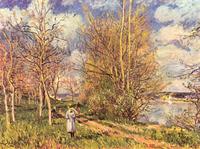
Small Meadows in Spring
Alfred Sisley
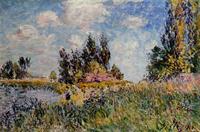
Landscape The Banks of the Loing at Saint Mammes
Alfred Sisley
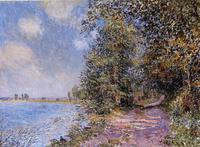
An August Afternoon near Veneux
Alfred Sisley
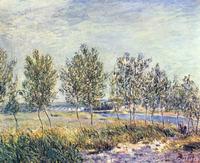
Wiese By
Alfred Sisley
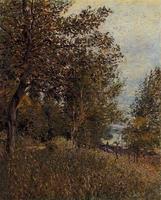
A Corner of the Roches Courtaut Woods, June
Alfred Sisley
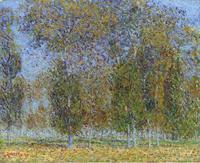
Autumn near Saint Cyr du Vaudreuil
Gustave Loiseau
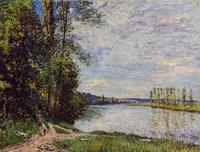
The Path from Veneux to Thomery along the Water, Evening
Alfred Sisley
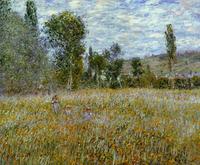
Meadow
Claude Monet
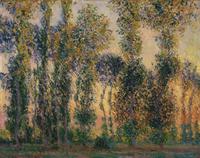
Poplars at Giverny
Claude Monet
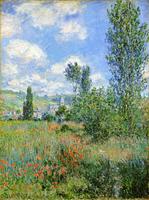
Lane in the Poppy Fields, Ile Saint-Martin
Claude Monet
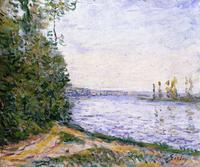
The Seine near By
Alfred Sisley
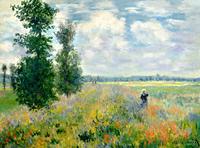
Poppy Field, Argenteuil
Claude Monet
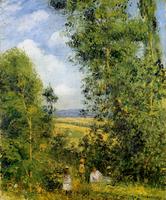
Resting in the woods Pontoise
Camille Pissarro
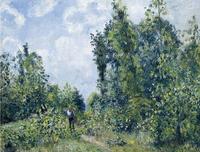
Wanderer near the Wood
Camille Pissarro
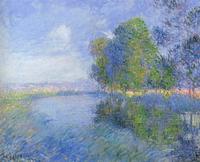
Trees in Bloom
Gustave Loiseau

The Farmer's Lawn
Julian Alden Weir

Sunlight Effect under the Poplars
Claude Monet