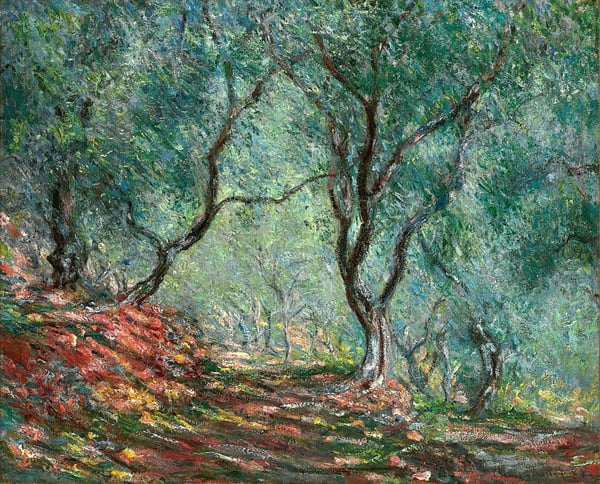
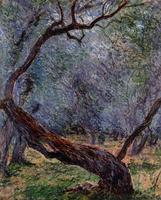
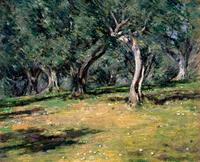
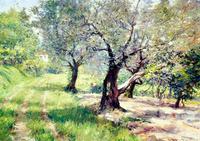
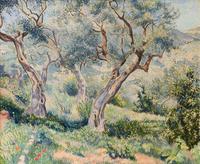
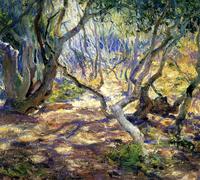
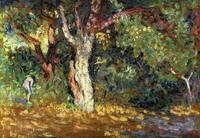
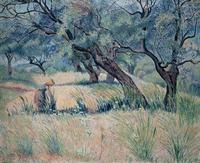
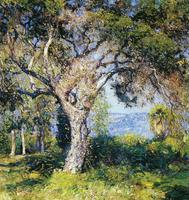
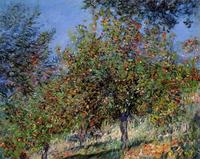
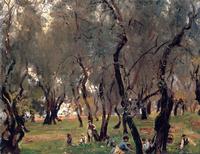
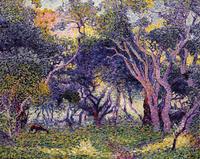
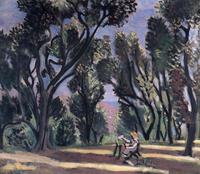
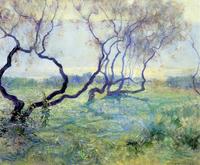
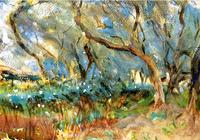
This landscape by Claude Monet, Olive Tree Wood in the Moreno Garden, is a quintessential example of Impressionism. As a work by one of the movement’s founding figures, it demonstrates the core principles that defined the style: a focus on capturing the fleeting effects of light and atmosphere rather than precise, academic detail. The subject—a grove of olive trees in a garden—is typical of Monet’s dedication to painting outdoor scenes directly from nature, a practice central to Impressionist innovation.
What makes this artwork significant is its embodiment of Impressionist technique and philosophy. The “olive tree wood” motif allows Monet to explore the interplay of natural light filtering through leaves and branches, likely rendered with his characteristic broken brushwork and vibrant color contrasts. By choosing an olive grove—a subject rich in textural complexity and subtle tonal shifts—Monet emphasizes the sensory experience of the moment over fixed form. This painting aligns with his broader exploration of series and specific garden settings, reinforcing his lifelong commitment to studying how light transforms a single landscape. As such, it stands as a vital document of Impressionism’s radical break from tradition, prioritizing perception and the ephemeral beauty of the natural world.