Claude Monet sanatçısının Pourville eseri hakkında uzman analizi
Tarz: Impressionism · Tür: landscape
Expert Analysis of Pourville by Claude Monet
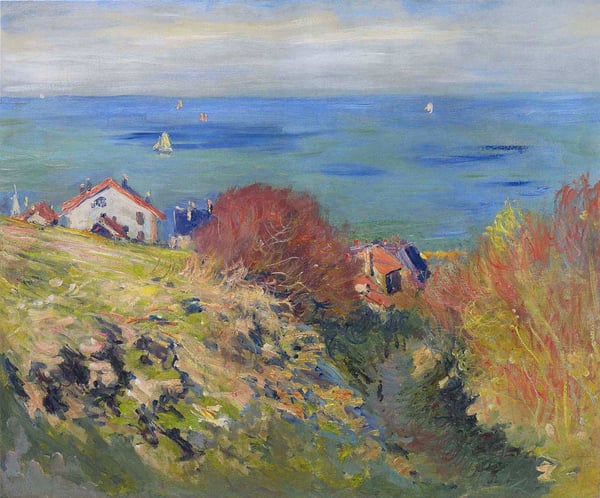
Pourville exemplifies Claude Monet’s quintessential Impressionist landscape practice, a genre he revolutionized through radical observation of light, atmosphere, and momentary perception. As an artwork firmly rooted in the Impressionist style, its significance lies in how Monet translates a specific coastal location into a study of fleeting visual phenomena.
Key Aspects of Significance:
-
Capturing Transient Light and Weather: Impressionism’s core ambition was to record the changing effects of natural light. In Pourville, Monet likely focuses on the interplay of sunlight, clouds, and water at the Normandy coast. By using broken, visible brushstrokes and a high-key palette, he suggests the shimmer of the sea and the movement of air, prioritizing the ephemeral over the permanent.
-
Serial Exploration: Pourville was one of several locations Monet returned to repeatedly (e.g., the Falaise à Pourville series). This serial approach—painting the same motif under different conditions—was a hallmark of his later Impressionist maturity. It demonstrates how a single landscape could yield infinite interpretations based on time of day, weather, or season, reinforcing the movement’s emphasis on subjective visual experience.
-
En Plein Air Innovation: Like all Impressionist landscapes, Pourville was almost certainly painted outdoors (en plein air), allowing Monet to directly respond to the scene before him. This technique abandoned studio conventions, favoring spontaneity and a fresh, uncomposed naturalism that challenged academic landscape traditions.
-
Color and Atmosphere over Detail: Monet dissolves distinct forms—cliffs, water, sky—into patches of color that coalesce optically. This signature Impressionist method asserts that the artist’s perception of light, not the object’s inherent form, is the true subject. Pourville thus becomes not a documentary record but a sensory impression of a moment.
Conclusion: Pourville is significant as a vivid testament to Impressionism’s revolutionary agenda: the celebration of the fleeting, the primacy of perception, and the immersion of the artist in the natural world. It represents Monet’s lifelong pursuit to capture “the instantaneity, the envelope of light,” making it a key work within the movement’s exploration of landscape as a vehicle for pure optical experience.
Görsel olarak benzer
İlişkili kompozisyon ve renk paletine sahip 20 eser
View of the normandy coast near wargemont
Pierre-Auguste Renoir
Customs House
Claude Monet
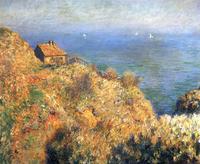
Fisherman's House at Varengeville
Claude Monet
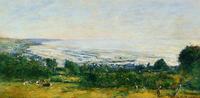
The Trouville Heights
Eugene Boudin
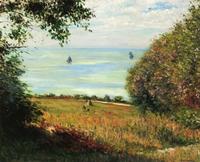
View of the Sea from Villerville
Gustave Caillebotte
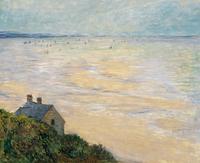
The Hut at Trouville, Low Tide
Claude Monet
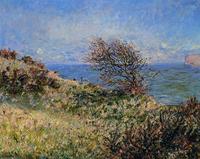
On the Cliff at Fecamp
Claude Monet
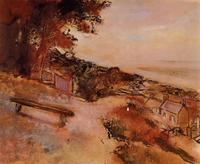
Landscape by the Sea
Edgar Degas
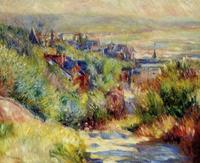
The Hills of Trouville
Pierre-Auguste Renoir
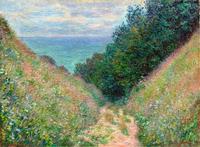
Path at La Cavee, Pourville
Claude Monet
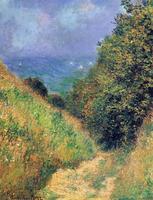
Path at Pourville 02
Claude Monet
On the Cliffs, Langland Bay, Wales
Alfred Sisley
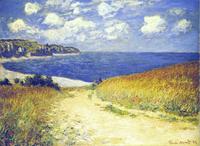
Alley near Pourville
Claude Monet
The Beach at Saint-Adresse
Claude Monet
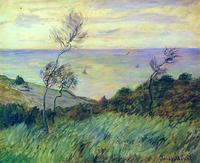
Cliffs of Varengeville, Gust of Wind
Claude Monet
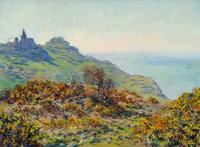
The Church at Varengeville and the Gorge of Les Moutiers
Claude Monet
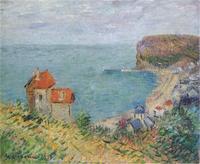
Fecamp
Gustave Loiseau
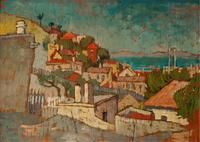
Bo-Kaap
Gregoire Boonzaier
View Of Méréville
Maximilien Luce
The Pink Villa at Trouville
Gustave Caillebotte