
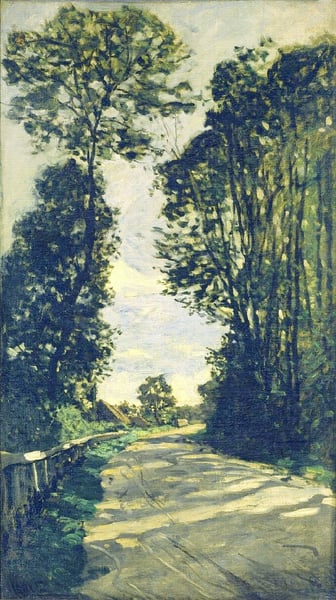
Claude Monet sanatçısının Road to the Saint-Simeon Farm eseri hakkında uzman analizi
Tarz: Impressionism · Tür: landscape
Expert Analysis: "Road to the Saint-Simeon Farm" by Claude Monet
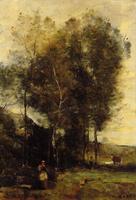
Claude Monet’s Road to the Saint-Simeon Farm (c. 1864) stands as an early and pivotal work within the Impressionist movement. Painted in the genre of landscape, it captures a sun-drenched rural path near Honfleur, leading to the farm that was a gathering place for artists. The painting is significant for several reasons:
1. Transition toward Impressionist techniques
Monet here moves beyond the detailed, polished finish of academic landscape painting. Instead, he employs rapid, broken brushstrokes—particularly in the sky and foliage—to convey the shimmering effects of light and atmosphere. The road itself is treated with broad, sketchy strokes of ochre and white, suggesting dust and sunlight rather than precise form. This approach prefigures the Impressionist emphasis on capturing a fleeting moment.
2. Emphasis on natural light and color
The work demonstrates Monet’s early fascination with plein air painting. The soft blue sky, dappled with white clouds, reflects the cool light of the Normandy coast, while the warm earth tones and green of the trees contrast with the shadows cast across the road. The palette is relatively high-key for its time, anticipating the brighter, more saturated hues of later Impressionist works.
3. Compositional innovation
Monet constructs the scene with a strong diagonal line—the road itself—that guides the viewer’s eye into the depth of the landscape. This is balanced by the verticality of the trees and the horizontal sweep of the fields. Such asymmetry and the cropping of the trees at the edges are departures from traditional balanced compositions, hinting at the influence of Japanese prints that Monet admired.
4. Historical context
The Saint-Simon Farm was a hub for the future Impressionists; Monet painted it alongside colleagues like Frédéric Bazille and Johan Barthold Jongkind. This work, while still retaining some Barbizon school influence (e.g., the careful observation of nature), marks a decisive step toward the looser, more expressive style that would define the first Impressionist exhibition a decade later.
Conclusion
Road to the Saint-Simeon Farm is significant as an embryonic masterpiece of Impressionism. It encapsulates Monet’s drive to render the play of light on a simple, everyday scene, using a technique that privileges optical truth over literal depiction. The painting stands as a testament to the artist’s evolving vision and the birth of a revolutionary approach to landscape art.
Görsel olarak benzer
İlişkili kompozisyon ve renk paletine sahip 20 eser
Beg-Meil at dusk
Maxime Maufra
The Road to the Farm of Saint-Simeon
Claude Monet
A Lane near Flatford
John Constable
Evening. Path.
Isaac Levitan
The Hedge (also known as The Clearing)
Georges Seurat
Shepherd Resting
Camille Corot
Yerres, Path Through the Woods in the Park
Gustave Caillebotte
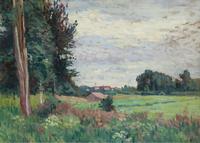
View Of Méréville
Maximilien Luce
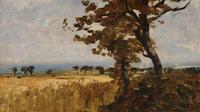
Wheatfield by the Sea
Nathaniel Hone the Younger
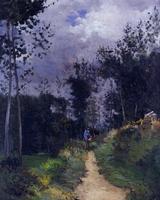
Rural Guardsman in the Fountainbleau Forest
Alfred Sisley
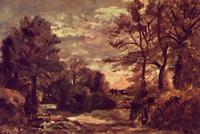
Country road
John Constable
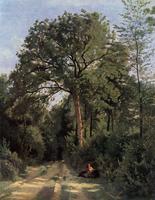
Forest Entrance at Ville d'Avray
Camille Corot
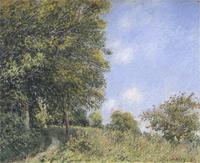
July Afternoon near the Forest
Alfred Sisley
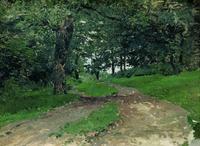
Forest
Isaac Levitan
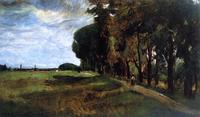
View near Polling
John Henry Twachtman
Wooded Path
Claude Monet
In the forest Saint Cloud II
Paul Gauguin
Landscape
Camille Corot
Cowherd in a Dell, Souvenir of Brittany
Camille Corot
Souvenir of Brittany
Camille Corot