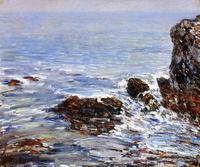
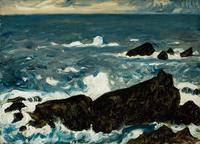
Expert Analysis of "Rocky Point at Port-Goulphar" by Claude Monet
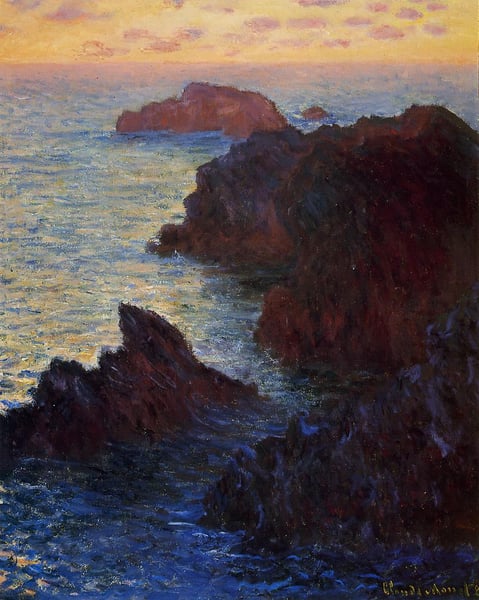
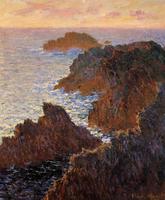
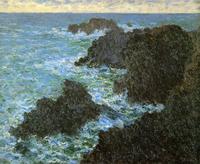
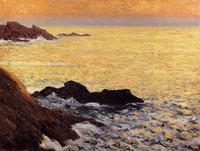
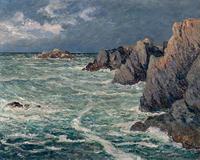
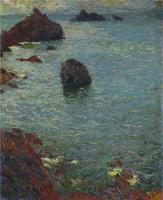
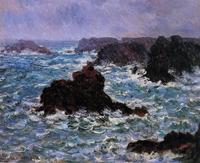
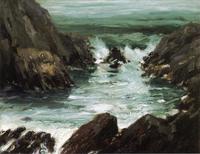
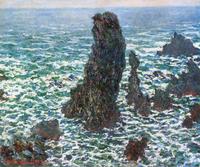
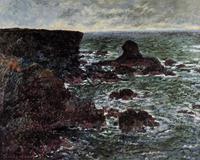
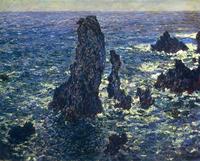
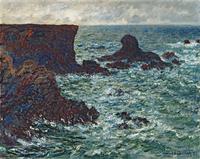
As an Impressionist landscape, Claude Monet’s Rocky Point at Port-Goulphar exemplifies the movement’s revolutionary approach to capturing ephemeral natural phenomena. The work’s significance lies in its departure from academic landscape conventions: instead of detailed, static representation, Monet uses rapid, broken brushstrokes and a vibrant, high‑key palette to convey the shifting interplay of light, atmosphere, and the rugged coastal forms. The painting embodies Impressionism’s core ambition—to record a sensory impression of a particular moment, here the transient effects of sunlight on rock and water. By dissolving solid shapes into patches of color and emphasizing texture over line, Monet transforms a specific geological site into a study of optical perception, making the artwork a key example of how the style redefined landscape painting as a subjective, experiential record rather than a topographical document.