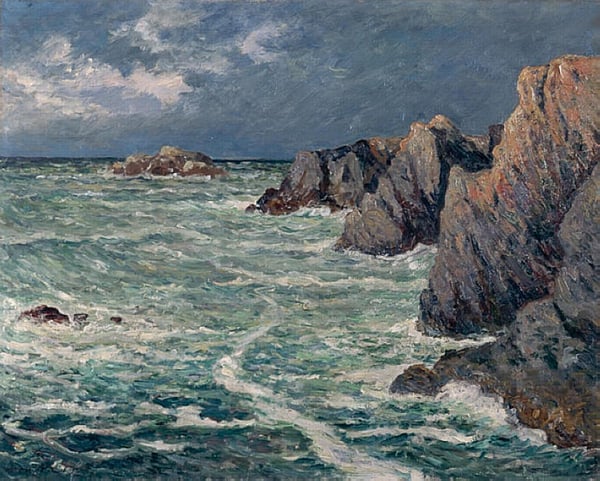
Expert analysis of Maxime Maufra’s Domois shore (Belle-Ile-en-Mer)
Style: Impressionism · Genre: marina
Expert Analysis: "Domois shore (Belle-Ile-en-Mer)" by Maxime Maufra
Maxime Maufra’s “Domois shore (Belle-Ile-en-Mer)” stands as a compelling example of how Impressionism—a movement often associated with the Parisian suburbs and bustling city life—was adapted to capture the raw, untamed beauty of the Breton coast. Painted in the genre of a marina, this work demonstrates Maufra’s ability to translate the fleeting effects of light and atmosphere onto the rugged shoreline of Belle-Île-en-Mer, an island that also famously inspired Claude Monet.
Significance within Impressionism:
-
Expansion of Impressionist Subject Matter: While many Impressionists focused on leisure scenes along the Seine or the English Channel, Maufra deliberately turned to the wild Atlantic coast of Brittany. This painting aligns with the later phase of Impressionism, where artists sought more remote, dramatic landscapes. The jagged rocks and open sea of Domois shore are a deliberate move away from placid waters, emphasizing nature’s power rather than human comfort.
-
Handling of Light and Color: True to Impressionist principles, Maufra likely captures a specific moment of daylight—probable late afternoon or early morning—where the sky and sea merge in a symphony of muted blues, greens, and earthy rock tones. The interplay of light on the water and the textured brushwork on the cliffs reflect the core Impressionist goal of recording optical sensation rather than topographical accuracy.
-
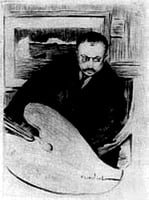
Maufra’s Role in the Movement: Often grouped with the “School of Pont-Aven” as a contemporary of Gauguin, Maufra maintained a more orthodox Impressionist approach, never fully adopting Synthetism. This painting exemplifies his commitment to plein air observation and the transient effects of atmosphere, making it a significant bridge between high Impressionism and the more expressive Post-Impressionist landscape traditions.
Artistic Execution (based on available facts):
As a marina, the composition likely balances the horizontal expanse of the sea against the vertical thrust of the rocky shore. Maufra’s brushwork would be loose but deliberate, with broken color applied in short strokes to suggest the shimmering surface of the water and the rough texture of the cliffs. The title “Domois shore” grounds the work in a specific locale, reinforcing the Impressionist fascination with terroir—the spirit of a place.
In summary, “Domois shore (Belle-Ile-en-Mer)” is significant not only as a high-quality Impressionist landscape but also as evidence of the movement’s geographical and emotional expansion. Maufra uses the technical vocabulary of Impressionism—light, color, atmosphere—to document the sublime solitude of Brittany’s shores, a theme that would later influence Fauvism and Expressionism.
Visually similar
20 works with related composition and palette
Marine with Rocks
Robert Henri
The Cote Sauvate
Claude Monet
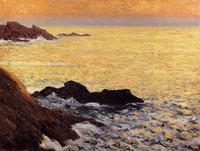
The Golden Sea - Quiberon
Maxime Maufra
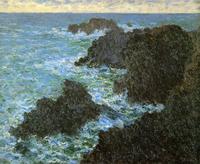
The rocks of Belle-Ile
Claude Monet
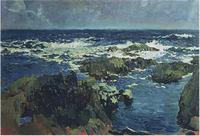
Sea and rocks in San Esteban, Asturias
Joaquín Sorolla
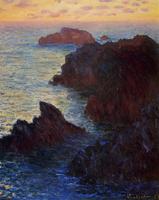
Rocky Point at Port-Goulphar
Claude Monet
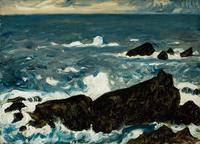
Rocks and Waves (cape Shiono)
Fujishima Takeji
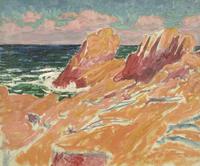
Promontory, Brittany
Roderic O'Conor
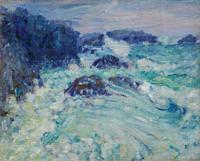
Rough sea, Morestil
John Peter Russell
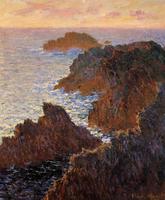
Rocks at Belle-Ile, Port-Domois
Claude Monet
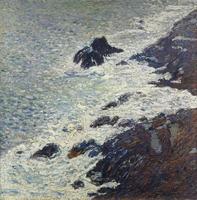
Marine Breton
Henri Martin
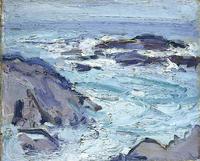
Sea Piece, Barra
Samuel Peploe
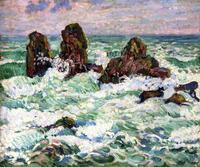
The Rocks
Theo van Rysselberghe
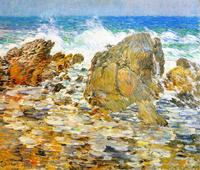
Surf, Appledore
Childe Hassam
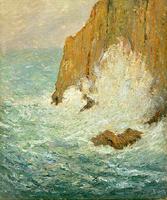
Great Sea
Maxime Maufra
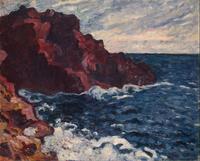
Violet Cliffs
Louis Valtat
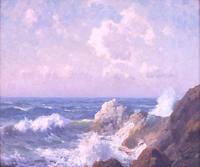
Seascape
Maurice Braun
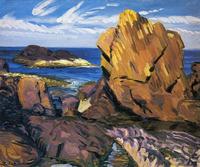
Yellow Rock, Gloucester
John French Sloan
Belle-Ile, Rain Effect
Claude Monet
The Rocks of Saint Lunaire
Gustave Loiseau