
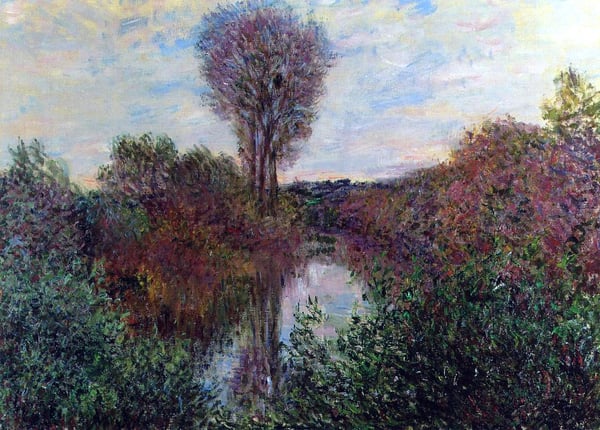
Expertenanalyse zu Claude Monets Small Branch of the Seine
Stil: Impressionism · Genre: landscape
Expert Analysis: "Small Branch of the Seine" by Claude Monet
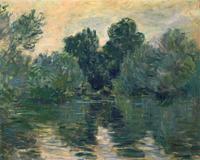
Claude Monet’s Small Branch of the Seine exemplifies the core principles of Impressionism through its ephemeral treatment of light, atmosphere, and the natural landscape. As a quintessential Impressionist landscape, the work captures a fleeting moment along the Seine, where Monet’s revolutionary technique dissolves form into vibrant, broken brushstrokes and shimmering color harmonies.
Significance within the Impressionist Movement
- En Plein Air Execution: Like many of Monet’s Seine paintings, this piece was likely painted outdoors, allowing the artist to directly observe and record the transient effects of sunlight on water and foliage. The result is a spontaneous, atmospheric scene that prioritizes sensory perception over topographical accuracy.
- Innovative Color Theory: Monet employs complementary colors (e.g., blues and oranges) and pure, unmixed pigments to convey the vibrancy of reflected light. The water’s surface is rendered with dabs of blue, green, pink, and lavender, suggesting both the river’s ripples and the sky’s changing hues.
- Dissolution of Form: The title’s “small branch” is subtly integrated into the composition, with willow or poplar trees reduced to gestural strokes. This deliberate ambiguity emphasizes the interplay of light and shadow rather than botanical detail—a hallmark of Impressionist landscape painting.
Artistic and Historical Context
Monet painted numerous views of the Seine throughout his career, from the early 1870s in Argenteuil to later series at Vétheuil and Giverny. While Small Branch of the Seine is less famous than his Rouen Cathedral or Haystacks series, it is significant as a precursor to those serial studies. Here, Monet begins to explore how the same location changes under different weather, seasons, and times of day—a theme he would later perfect.
Why It Matters
This work demonstrates that even “minor” subjects—a quiet riverbank, a slender tributary—could be elevated to profound statements about perception and temporality. In Small Branch of the Seine, Monet reminds us that Impressionism’s true subject is not the landscape itself, but the act of seeing, the flicker of light on water, and the poetry of a passing moment.
Museum / Gallery
Visuell ähnlich
20 Werke mit ähnlicher Komposition und Farbpalette
The Small Arm of the Seine at Mosseaux, Evening
Claude Monet
By the Eure River
Gustave Loiseau
By the Eure River in Autumn
Gustave Loiseau
By the Eure River in Autumn
Gustave Loiseau
By the Eure River
Gustave Loiseau
Trees in Bloom
Gustave Loiseau
By the Eure River in Summer
Gustave Loiseau
River Bend in Normandy
Gustave Loiseau
The Normandy River
Gustave Loiseau
The Banks of The Seine in Autumn
Claude Monet
The River in Autumn
Gustave Loiseau
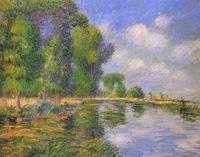
By the River in Autumn
Gustave Loiseau
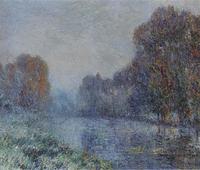
By the Eure River Hoarfrost
Gustave Loiseau
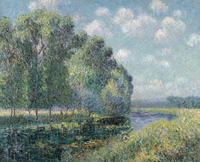
By the Eure River in Spring
Gustave Loiseau
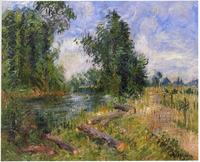
By the Lorne River near Caen
Gustave Loiseau
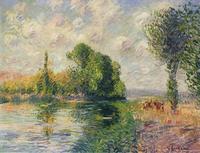
Wood and Fields Near St Cyr Vadreuil
Gustave Loiseau
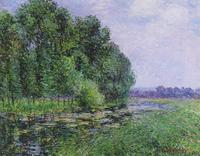
By the Eure River in Summer
Gustave Loiseau
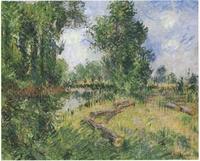
By the Orne River near Caen
Gustave Loiseau
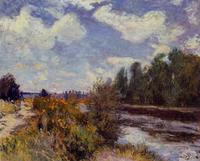
The Seine at Bougival
Alfred Sisley
The Arm of the Seine
Claude Monet