
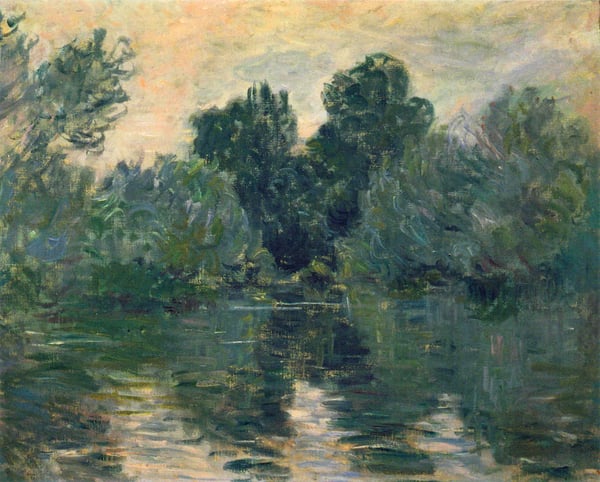
Claude Monet sanatçısının The Arm of the Seine eseri hakkında uzman analizi
Tarz: Impressionism · Tür: landscape
Expert Art Historical Analysis: "The Arm of the Seine" by Claude Monet
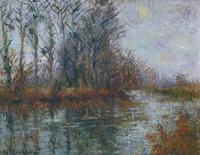
Claude Monet’s "The Arm of the Seine" is a quintessential example of Impressionist landscape painting, a work that encapsulates the movement’s radical departure from academic tradition. Created during the height of Monet’s career, this piece demonstrates the artist’s unwavering commitment to capturing the fleeting effects of light, atmosphere, and the natural world.
Significance Within Impressionism
As an Impressionist landscape, the painting’s significance lies in its rejection of idealized, static representations of nature in favor of a dynamic, sensory experience. Monet’s treatment of the Seine—a subject he returned to obsessively—showcases the core Impressionist tenets:
- Observing Nature En Plein Air: The composition likely reflects Monet’s practice of painting outdoors to record the immediate, transient qualities of light and weather.
- Loose, Visible Brushwork: The application of paint would be rapid and broken, allowing colors to optically blend in the viewer’s eye rather than on the palette. This technique captures the shimmering movement of water and the dappled play of sunlight on leaves.
- Atmospheric Color: Monet abandoned local color for perceptual color, using muted blues, greens, and soft lavenders to evoke the moist, hazy air of a river scene. The “arm” of the Seine—likely a slow-moving branch or inlet—becomes a vehicle for exploring reflections, ripples, and the diffusion of light across a watery surface.
Contextual Relevance
Within Monet’s larger body of work, "The Arm of the Seine" aligns with his series paintings (e.g., Haystacks, Rouen Cathedral) that demonstrate how a single motif changes dramatically under different conditions. Here, the Seine’s arm serves as a natural laboratory for studying the interplay between sky, water, and shore—a hallmark of Impressionist landscape. The painting’s significance also stems from its era: it was created in a period when Monet and his peers were challenging the French Salon’s rigid hierarchies, asserting that a humble river bend could hold as much artistic potential as a history painting.
Conclusion
"The Arm of the Seine" is more than a tranquil depiction of a river; it is a manifesto for Impressionism. Through its emphasis on optical truth over narrative, its celebration of the everyday, and its revolutionary technique, the work stands as a testament to Monet’s role in redefining landscape painting. It invites viewers to see not just a place, but the very pulse of light and atmosphere that makes a moment unique.
Görsel olarak benzer
İlişkili kompozisyon ve renk paletine sahip 20 eser
Islands at Port-Villez
Claude Monet
By the Eure River in Autumn
Gustave Loiseau
The Seine near Giverny
Claude Monet
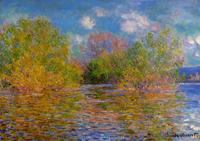
The Seine near Giverny
Claude Monet
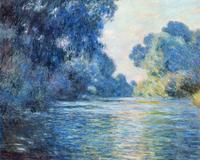
Morning on the Seine at Giverny 02
Claude Monet
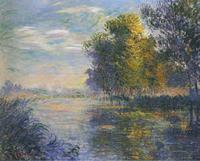
By the Eure River in Autumn
Gustave Loiseau
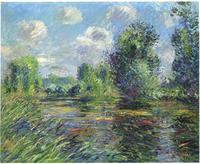
Woods Near Eure River
Gustave Loiseau
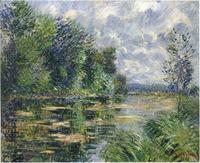
Small Arm of the Seine Near Connelle
Gustave Loiseau
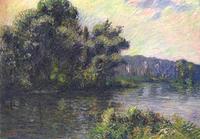
By the Eure River
Gustave Loiseau
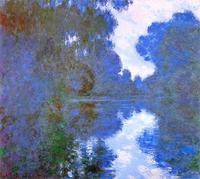
Morning on the Seine, Clear Weather 02
Claude Monet
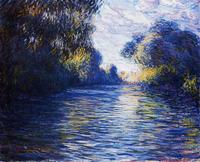
Morning on the Seine
Claude Monet
A Bend in the Eure
Gustave Loiseau
By the River Eure
Gustave Loiseau
Wood and Fields Near St Cyr Vadreuil
Gustave Loiseau
By the Oise River
Gustave Loiseau
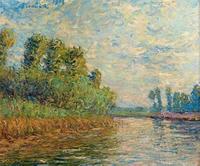
Moret-sur-Loing
Francis Picabia
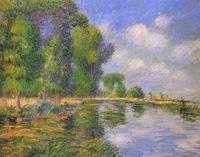
By the River in Autumn
Gustave Loiseau
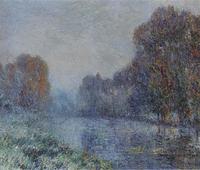
By the Eure River Hoarfrost
Gustave Loiseau
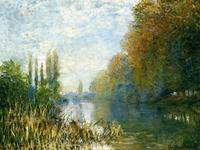
The Banks of The Seine in Autumn
Claude Monet
By the Eure River
Gustave Loiseau