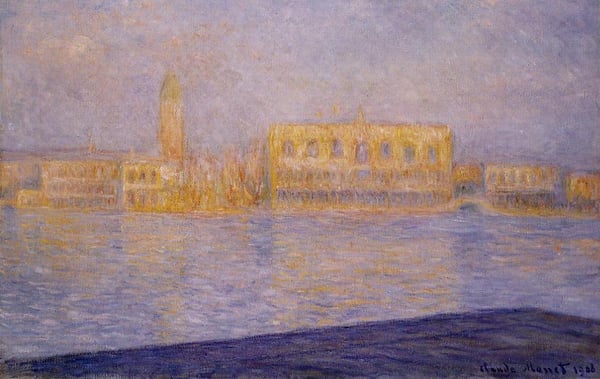
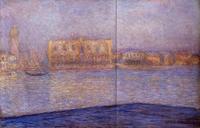
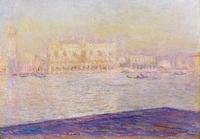
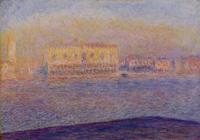
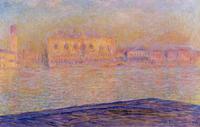
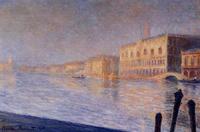
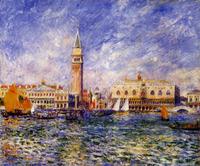
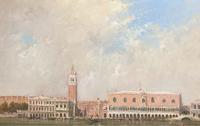
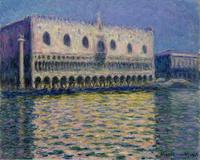
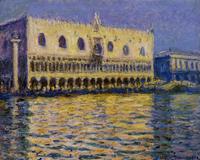
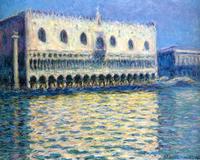
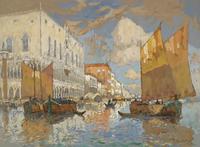
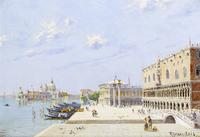
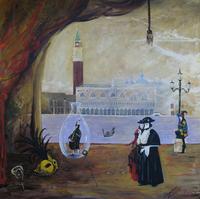
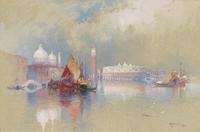
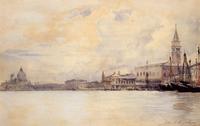
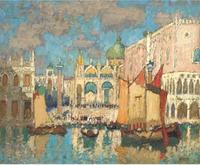
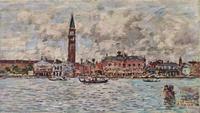
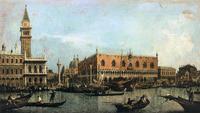
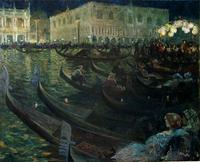
This artwork is a quintessential example of Claude Monet’s Impressionist approach to the cityscape genre. Its significance lies in how it transforms a recognizable architectural landmark—the Doge’s Palace in Venice—into a study of transient light, atmosphere, and color. Monet captures the palace not as a static, detailed structure, but as a shimmering reflection filtered through water and air, using loose, broken brushstrokes and a luminous palette. The painting embodies the Impressionist goal of depicting a fleeting moment—here, the play of sunlight on the palace façade and the rippling surface of the lagoon—rather than a precise topographical record. This work is part of Monet’s renowned series of Venetian views, which demonstrate his obsessive exploration of how the same subject changes under different conditions of light and weather. By elevating the cityscape into a vehicle for pure optical sensation, Monet pushes Impressionism toward its ultimate concern: the artist’s subjective perception of the natural world.