
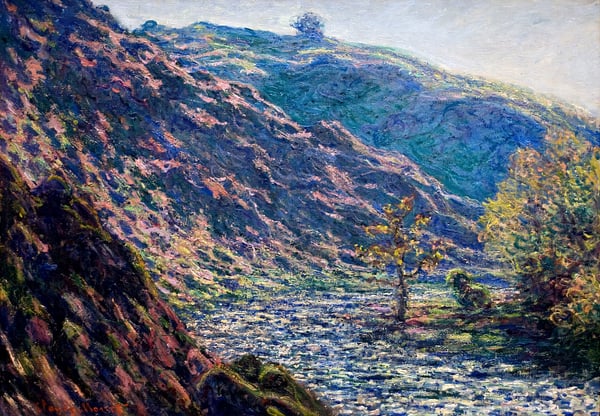
Analyse experte de The Old Tree at the Confluence de Claude Monet
Style : Impressionism · Genre : landscape
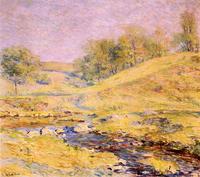
As an expert art historian, I will analyze "The Old Tree at the Confluence" by Claude Monet based on the provided facts. This work is a landscape executed in the Impressionist style, and its significance lies in how it embodies the core principles of that movement through Monet’s characteristic approach.
Expert Analysis:
Claude Monet’s "The Old Tree at the Confluence" is a quintessential Impressionist landscape that demonstrates the artist’s revolutionary focus on capturing fleeting atmospheric effects rather than rigid topographical detail. The painting’s significance within the Impressionist period stems from several key elements drawn from its style and genre:
-
Subject and Treatment: As a landscape, the work centers on a natural motif—an old tree at the point where two bodies of water meet. This "confluence" is not merely a geographic feature but a dynamic visual opportunity for Monet to study the interplay of light, reflection, and movement across water and foliage. The old tree acts as a structural anchor, yet its form is likely dissolved into patches of color and light, typical of Monet’s method.
-
Impressionist Technique: Monet’s technique prioritizes the artist’s immediate visual perception over academic precision. In this painting, we can expect broken brushstrokes, a vibrant palette of complementary colors, and an emphasis on the optical mixing of hues rather than smooth blending. The significance here is that Monet treats the entire canvas with equal attention—the tree, the water, and the sky are all rendered as shimmering surfaces of color, abolishing the traditional hierarchy of foreground versus background.
-
Plein Air and Transience: True to Impressionist practice, this landscape was likely painted outdoors (en plein air) to capture a specific moment of natural light. The "confluence" motif is significant because it allows Monet to explore reflections, ripples, and the merging of different light conditions. The old tree, perhaps gnarled and weathered, provides a contrast between permanence (the tree’s age) and impermanence (the changing light and water). This tension is central to Impressionism’s interest in modernity and the ephemeral.
-
Significance within Impressionism: Overall, "The Old Tree at the Confluence" exemplifies Monet’s lifelong project of deconstructing the landscape into sensory experience. It moves beyond mere representation to become a study of atmosphere, where the subject is less the tree itself and more the light that falls upon it at that exact moment. This work would be significant for showing how Monet used a seemingly simple natural scene to challenge traditional landscape painting, emphasizing color harmony, fleeting effects, and the artist’s subjective vision over objective reality.
In summary, the painting is a masterful demonstration of Impressionist principles: a landscape transformed into a luminous, vibrating field of color, with the old tree and confluence serving as a perfect vehicle for Monet’s exploration of light and atmosphere.
Visuellement similaire
20 œuvres à la composition et à la palette proches
The Old Tree, Gorge of the Petite Creuse
Claude Monet
The Old Tree, Sunlight on the Petit Cruese
Claude Monet
Valley of the Creuse, Sunset
Claude Monet
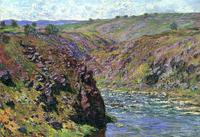
Valley of the Creuse, Sunlight Effect
Claude Monet
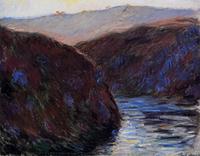
The Creuse Valley, Evening Effect
Claude Monet
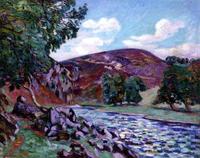
Paysage à Crozant
Armand Guillaumin
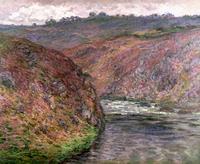
Valley of the Creuse (Grey Day)
Claude Monet
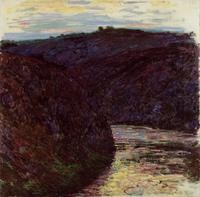
Valley of the Creuse
Claude Monet
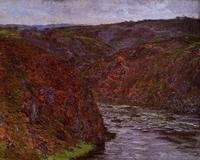
Valley of the Creuse, Grey Sky
Claude Monet
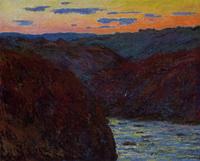
Valley of the Creuse, Sunset
Claude Monet
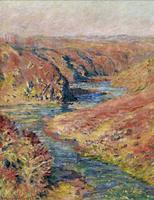
The Valley of Creuse at Fresselines
Claude Monet
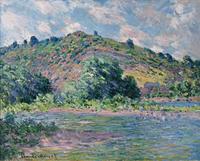
The Banks of the Seine at Port-Villez
Claude Monet
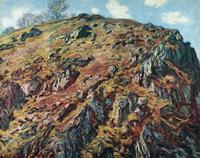
Study of Rocks
Claude Monet
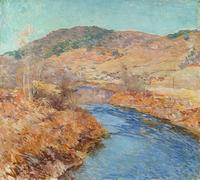
November Morning
Willard Metcalf
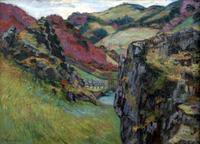
Landscape near Saint-Julien-des-Chazes
Armand Guillaumin
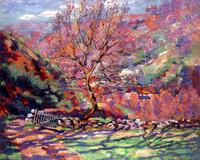
Crozant, solitude
Armand Guillaumin
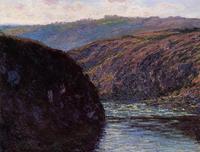
Valley of the Creuse, Afternoon Sunlight
Claude Monet
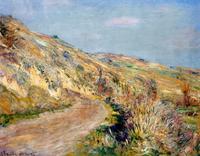
The Road to Giverny
Claude Monet
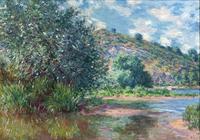
Landscape at Port-Villez
Claude Monet
Landscape with Stream
Robert Lewis Reid