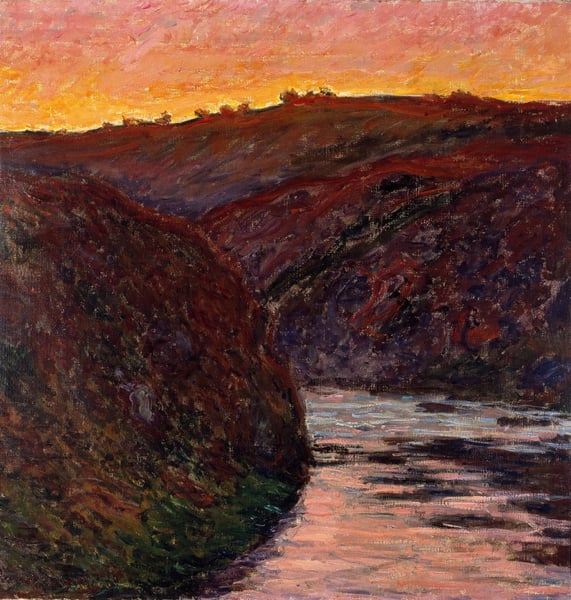
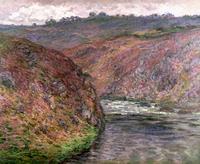
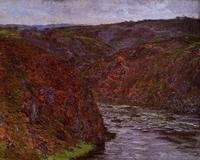
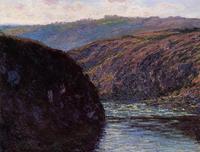
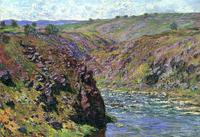
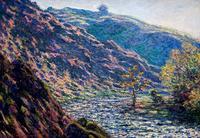
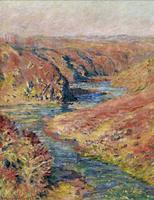
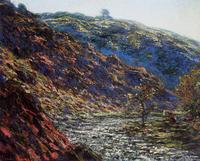
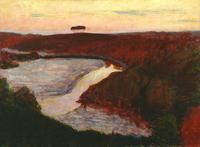
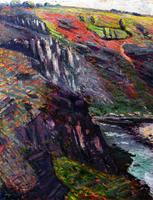
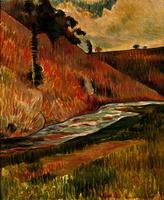
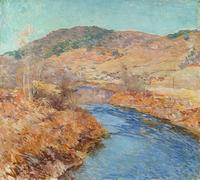
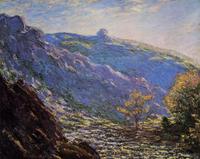
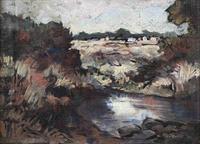
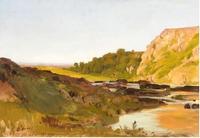
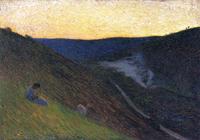
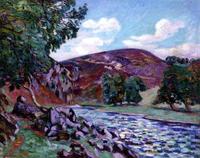
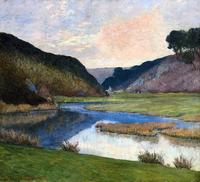
"Valley of the Creuse, Sunset" exemplifies Claude Monet’s mastery of Impressionist landscape painting, capturing a fleeting moment of natural light with remarkable sensitivity. As an Impressionist work, it bridges the movement’s core concerns: the dissolution of rigid form in favor of shifting color and atmosphere, and the direct observation of a specific time of day. Here, the sunset over the Creuse valley is not a static scene but a transient, luminous event—Monet’s loose, broken brushwork translates the vibrating effects of fading sunlight on land and sky. The significance lies in how the painting pushes beyond mere representation; it becomes a record of optical experience, inviting the viewer to perceive the world as a dynamic interplay of light and hue. Within Impressionism, Monet’s series of Creuse Valley works (1889) further refine his approach to capturing temporal change, and this piece stands as a testament to his lifelong dedication to rendering nature’s ephemeral beauty through pure color and gesture.