
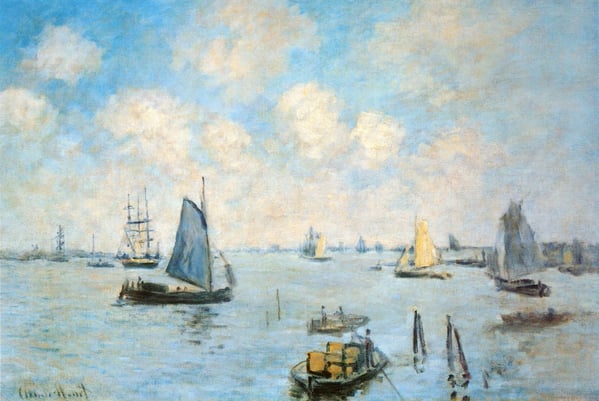
Expert analysis of Claude Monet’s The Sea at Amsterdam
Style: Impressionism · Genre: marina
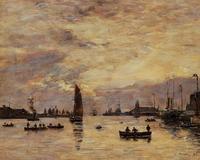
"The Sea at Amsterdam" exemplifies Monet's quintessential Impressionist approach to the marina genre, capturing the fleeting interplay of light and atmosphere on water. The work is significant for how it translates the movement and reflection of Amsterdam's harbor into rapid, gestural brushstrokes, dissolving solid forms into shimmering patches of color. This technique mirrors the Impressionist goal of recording a moment's sensory impression rather than precise topographical detail. Monet's choice of a modern, working waterfront—rather than a romanticized seascape—anchors the painting in the contemporary urban environment, a key theme of the movement. The nearly formless rendering of sea and sky, where water becomes a mirror for light and distant ships emerge as ethereal silhouettes, demonstrates Monet's radical departure from academic conventions. It is a masterful study of transient effects, foreshadowing his later series paintings where atmosphere itself becomes the primary subject.
Visually similar
20 works with related composition and palette
Port De Rotterdam
Maximilien Luce
View of the Voorzaan
Claude Monet
The Port of Trouville
Eugene Boudin
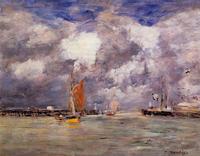
High Tide at Trouville
Eugene Boudin
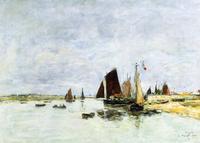
Etaples, Boats in Port
Eugene Boudin
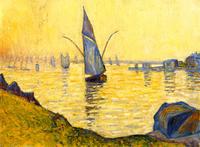
Concarneau (study)
Paul Signac
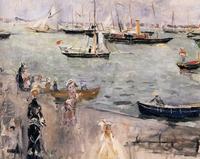
The Isle of Wight
Berthe Morisot
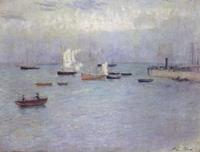
Poole Harbour
Philip Wilson Steer
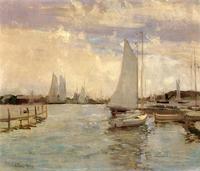
Gloucester Harbor
John Henry Twachtman
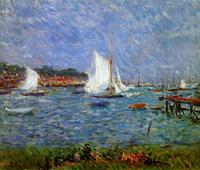
Summer at Cowes
Philip Wilson Steer
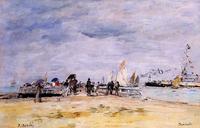
Deauville, the Jetty
Eugene Boudin
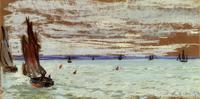
Open Sea
Claude Monet
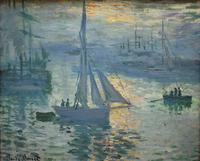
Sunrise, The Sea
Claude Monet
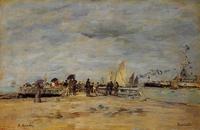
Deauville, the Jetty
Eugene Boudin
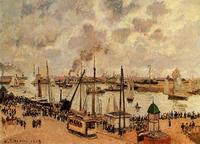
The Port of Le Havre
Camille Pissarro
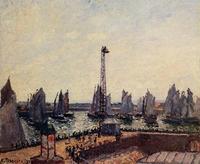
The Inner Port and Pilots Jetty, Havre
Camille Pissarro
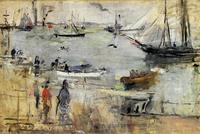
English Seascape
Berthe Morisot
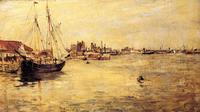
New York Harbor
John Henry Twachtman
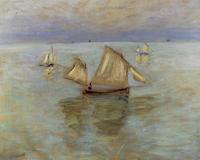
Fishing Boats at Pourville
Claude Monet
Le Havre. Avent Port.
Eugene Boudin