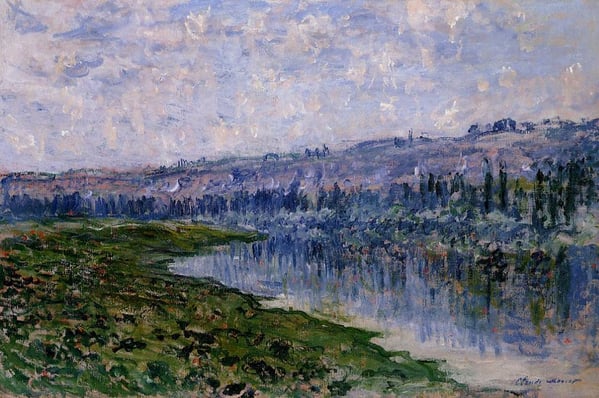
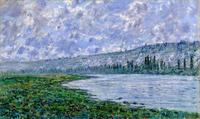
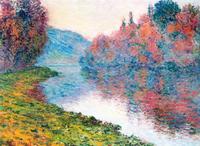
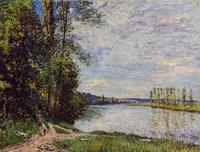
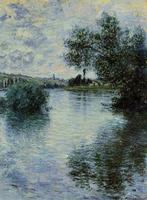
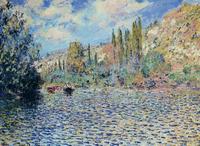
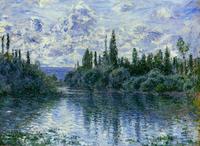
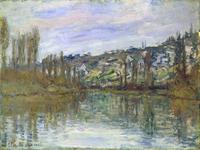
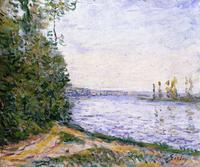
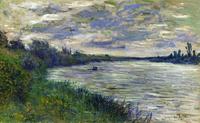
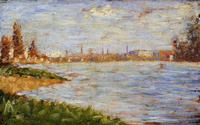
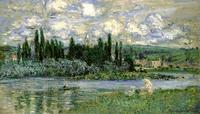
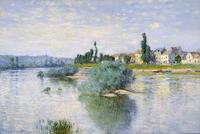
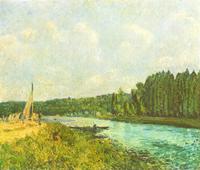
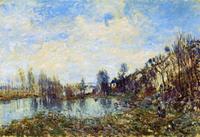
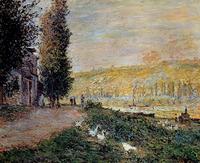
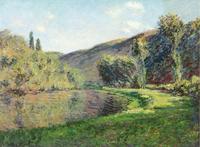
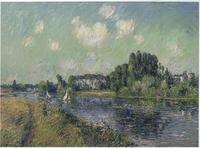
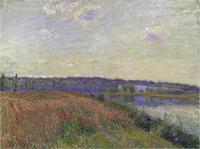
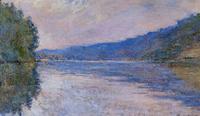
As an Impressionist landscape by Claude Monet, The Seine and the Chaantemesle Hills exemplifies the movement’s revolutionary focus on capturing the transient effects of light and atmosphere. Monet’s treatment of the river and hillside emphasizes shifting color harmonies and loose, visible brushwork—an approach that prioritized sensory experience over precise topographical detail. Within the Impressionist period, such landscapes were significant for challenging academic conventions, elevating everyday scenes like this stretch of the Seine into subjects worthy of serious artistic exploration. The work’s specificity of location (Chaantemesle Hills) also reflects Monet’s practice of painting the same motif under varying conditions, a hallmark of his contribution to the style.