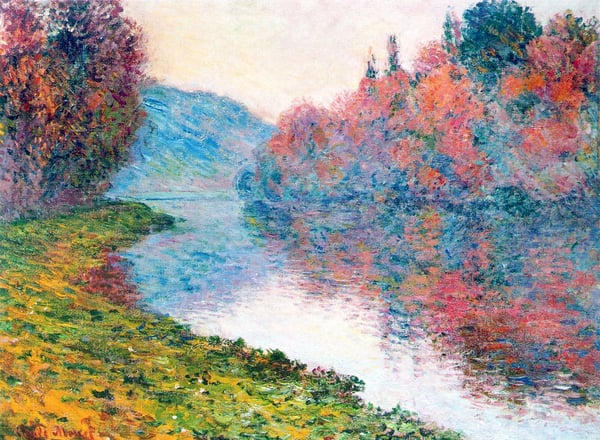
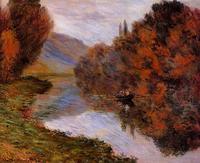
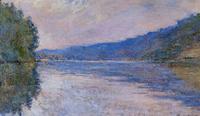
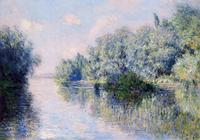
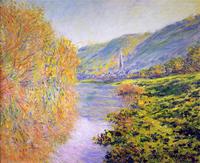
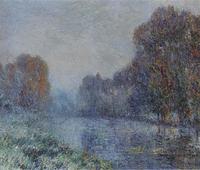
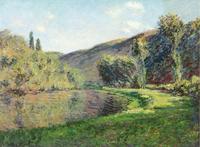
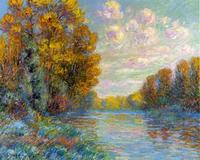
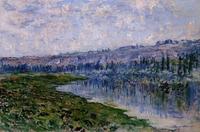
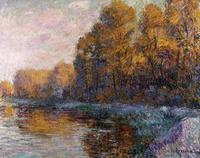
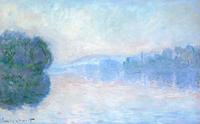
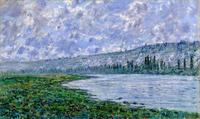
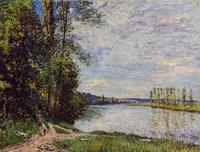
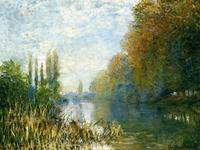
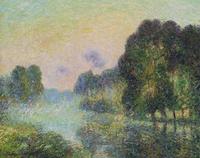
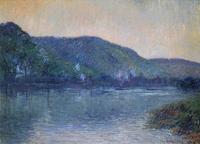
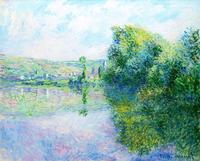
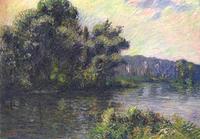
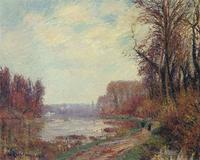
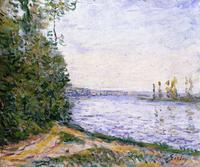
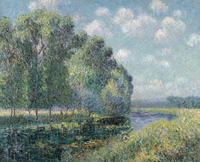
This painting exemplifies the core tenets of Impressionism through Monet's masterful capture of transient atmospheric conditions. The "Clear Weather" specification is key: Monet eschews dramatic narrative or idealized scenery in favor of a direct, spontaneous rendering of light as it interacts with the river, sky, and banks at a specific moment. The loose, visible brushwork—a hallmark of the style—conveys the shimmering effect of sunlight on water and foliage, while the emphasis on pure, unmixed color over local hues reflects the Impressionist revolution against academic convention. As a landscape of the Seine near Jenfosse, it belongs to Monet's relentless exploration of a single motif under varying weather and light, a practice that later culminated in his series like the Haystacks or Rouen Cathedral. Here, the clear, luminous palette and open composition invite the viewer into an immediate perceptual experience, marking the work as a quintessential example of how Impressionism elevated everyday optical truth over historical or literary subject matter.