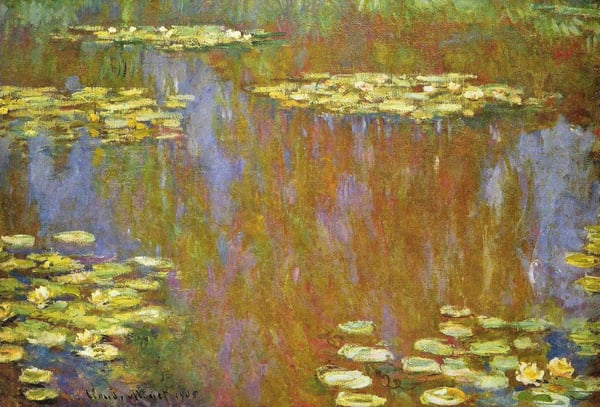
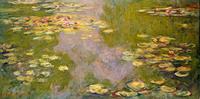
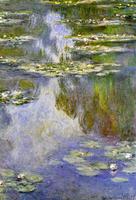
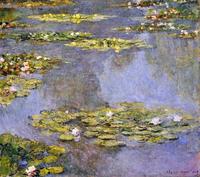
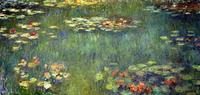
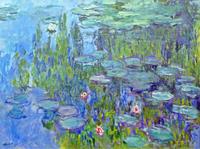
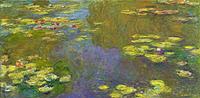
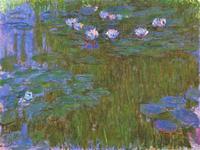
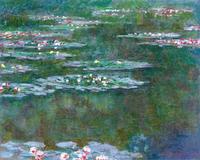
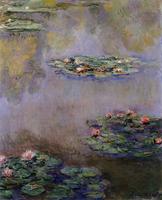
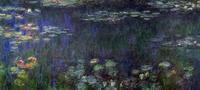
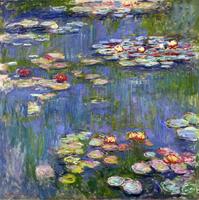
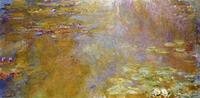
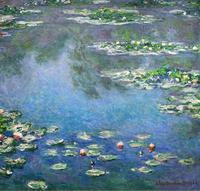
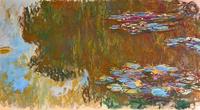
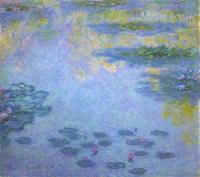
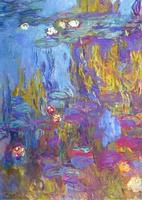
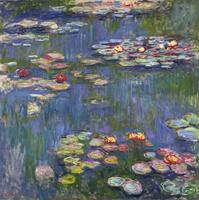
Claude Monet’s Water Lilies is a quintessential example of Impressionism, a movement defined by its emphasis on capturing fleeting light, atmospheric effects, and the subjective experience of a scene. As a flower painting, the work transcends traditional botanical representation: Monet dissolves the surface of the pond into a mosaic of dabs and strokes of pure color, focusing on the reflections of sky, clouds, and willows rather than on literal floral detail. This approach aligns with Impressionism’s radical break from academic finish—here, the subject is not the flower itself but the ever-changing interplay of light and water. The significance of Water Lilies lies in its demonstration of how Impressionism redefined genre painting, turning a humble garden pond into a vehicle for exploring perception, immediacy, and the sensory richness of the natural world.