
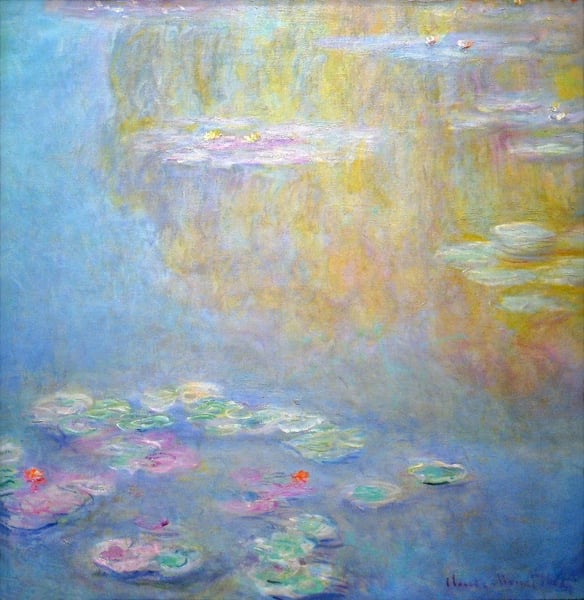
Expert analysis of Claude Monet’s Water Lilies
Style: Impressionism · Genre: flower painting
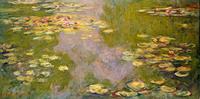
Claude Monet’s Water Lilies stands as a towering achievement of Impressionism, a style that sought to capture fleeting moments of light and atmosphere rather than static, idealized forms. Painted over the final three decades of his life, this series (of which there are approximately 250 individual works) marks the culmination of Monet’s lifelong obsession with perception, color, and the transient effects of nature.
Significance within Impressionism:
Monet’s Water Lilies pushed Impressionist principles to their outer limits. The subject—the artist’s own water garden at Giverny—allowed him to focus entirely on the interplay of light, reflection, and color without the distraction of narrative or human figures. In these paintings, the water’s surface becomes a mirror for the sky, clouds, and surrounding willows, dissolving the boundary between object and reflection. Monet’s brushwork grows increasingly loose and energetic, verging on abstraction, anticipating 20th-century movements like Abstract Expressionism. This radical approach to seeing—where the “subject” is light itself—demonstrates Impressionism’s core belief that art should record the artist’s optical sensation of a given moment.
Significance within Floral Painting:
Traditional flower painting (from Dutch still lifes to Romantic botanicals) typically presented blooms as static, emblematic symbols or decorative specimens. Monet upends this convention by treating the water lilies not as isolated botanical objects but as elements within an immersive, ever-changing environment. He captures them at different times of day, in varied seasons, and under distinct weather conditions—from pale, misty mornings to fiery sunsets. The flowers float amid reflections of clouds and trees, integrating the larger landscape into a single, shimmering field of color. This holistic, atmospheric approach broke decisively with the genre, making the pond itself the true subject—a microcosm of nature in perpetual flux.
Broader Art-Historical Impact:
The Water Lilies series is renowned for its grand scale and enveloping effect, especially the large Grandes Décorations panels donated to the French state and installed at the Musée de l’Orangerie in Paris. These wrap the viewer in a continuous panorama of water, sky, and vegetation, blurring the line between painting and environment. Monet’s radical simplification of form and his investigation of pure color and light directly influenced later artists from Wassily Kandinsky to Jackson Pollock. In essence, Water Lilies represents Impressionism’s ultimate triumph—a near-symphonic meditation on nature, memory, and the act of seeing itself.
Genre
Style
Visually similar
20 works with related composition and palette
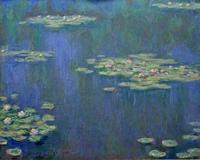
Water Lilies
Claude Monet
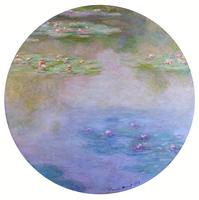
Water Lilies
Claude Monet
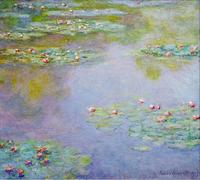
Water Lilies
Claude Monet
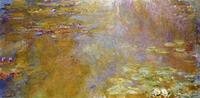
Water Lily Pond
Claude Monet
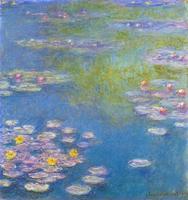
Water Lilies
Claude Monet
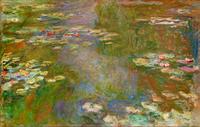
Water Lilies
Claude Monet
Water Lilies
Claude Monet
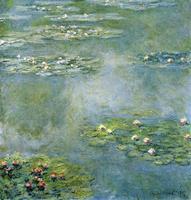
Water Lilies
Claude Monet
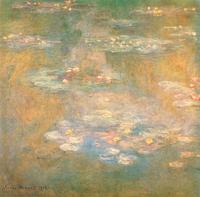
Water Lilies
Claude Monet
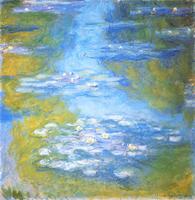
Water Lilies
Claude Monet
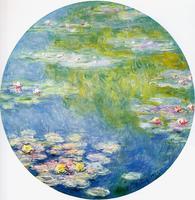
Water Lilies
Claude Monet
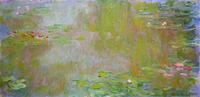
Water Lily Pond
Claude Monet
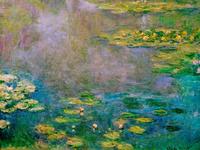
Water Lilies
Claude Monet
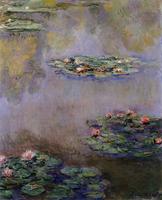
Water Lilies
Claude Monet
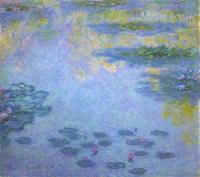
Water Lilies
Claude Monet
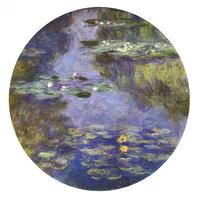
Water Lilies
Claude Monet
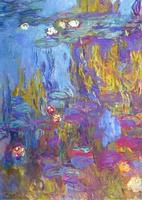
Water Lilies
Claude Monet
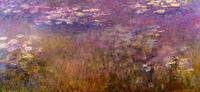
Agapanthus (center panel)
Claude Monet
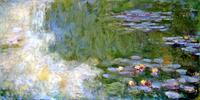
Water Lily Pond
Claude Monet
Water Lilies
Claude Monet