
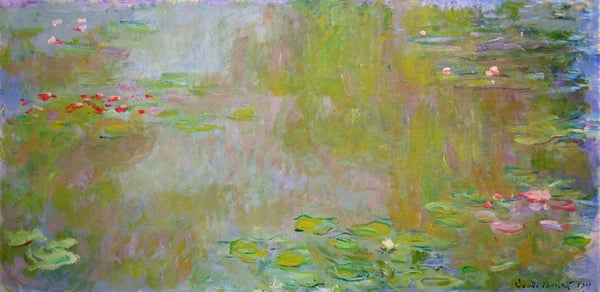
Expert analysis of Claude Monet’s Water Lily Pond
Style: Impressionism · Genre: flower painting
Expert Analysis: "Water Lily Pond" (Claude Monet)
As a cornerstone of Impressionism and a quintessential example of Claude Monet’s late-career obsession with light, atmosphere, and the ephemeral, Water Lily Pond transcends the simple genre of flower painting. Created as part of his legendary series at Giverny, this work captures the artist’s innovative approach to color, brushwork, and the perception of nature.
What Makes It Significant
-
Subversion of Traditional Flower Painting – Rather than emphasizing botanical accuracy or static arrangement, Monet dissolves the boundary between subject and reflection. The water lilies, floating leaves, and willow branches are rendered as patches of vibrant pigment—pink, green, blue, and violet—that merge into a shimmering, almost abstract surface. This redefines the genre by prioritizing sensory experience over literal representation.
-
Mastery of Light and Atmosphere – The “en plein air” technique, central to Impressionism, is pushed to its limit. Monet paints the same pond at different times of day and seasons, capturing how shifting light alters color harmonies. Here, the interplay of direct sunlight, filtered shadows, and rippling water demonstrates his belief that “the subject is not the thing, but the light on the thing.”
-
Revolutionary Brushwork – Quick, broken strokes (often described as “hooked” or “commalike”) build a mosaic of pure color. The viewer’s eye optically mixes these hues, creating a vibrant, unified effect that influenced later Modernist abstraction, particularly the Color Field and Abstract Expressionist movements.
-
Personal Artistic Legacy – The Water Lily series, of which this painting is a celebrated example, occupied Monet for over 25 years. It became a meditation on perception, memory, and the passage of time. His later, large-scale water lily murals (like those in the Musée de l’Orangerie) are considered precursors to 20th-century installation art.
Conclusion
Water Lily Pond is not merely a floral scene; it is a radical investigation into how we see. By dissolving form into atmospheric color and light, Monet expands the boundaries of Impressionism and sets the stage for the non-representational art that followed. Its significance lies in its ability to transform a quiet garden corner into a cosmic, ever-changing universe of sensation.
Visually similar
20 works with related composition and palette
Water Lilies
Claude Monet
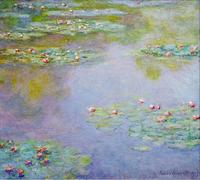
Water Lilies
Claude Monet

Pool with Waterlilies
Claude Monet
Water Lilies
Claude Monet
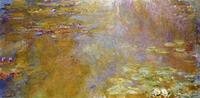
Water Lily Pond
Claude Monet
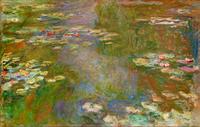
Water Lilies
Claude Monet
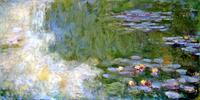
Water Lily Pond
Claude Monet
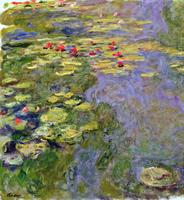
Water Lilies
Claude Monet
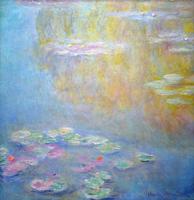
Water Lilies
Claude Monet
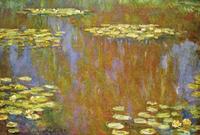
Water Lilies
Claude Monet
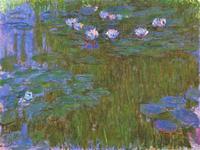
Water Lilies
Claude Monet
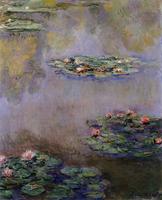
Water Lilies
Claude Monet
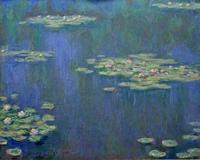
Water Lilies
Claude Monet
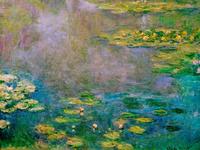
Water Lilies
Claude Monet
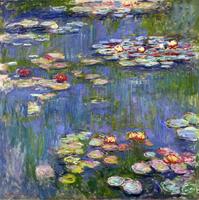
Water Lilies
Claude Monet
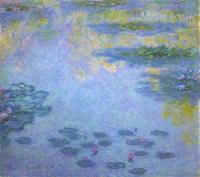
Water Lilies
Claude Monet
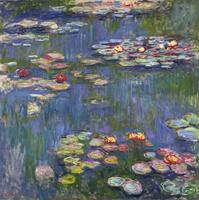
Water Lilies
Claude Monet
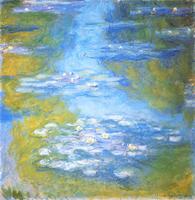
Water Lilies
Claude Monet
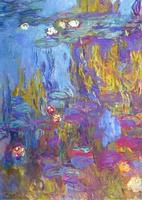
Water Lilies
Claude Monet
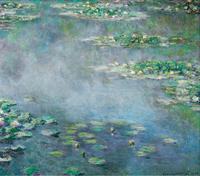
Water Lilies
Claude Monet