
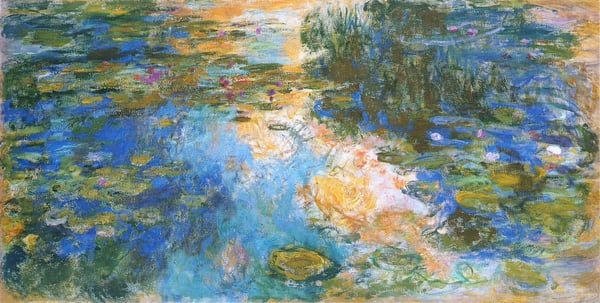
Expert analysis of Claude Monet’s Water Lily Pond
Style: Impressionism · Genre: flower painting
Expert Analysis: "Water Lily Pond" by Claude Monet
As a defining work of Impressionism, Claude Monet's Water Lily Pond exemplifies the movement’s revolutionary approach to capturing light, atmosphere, and the passage of time. Though classified as a flower painting, Monet transcends the traditional still-life or botanical representation by dissolving the boundaries between water, sky, and vegetation. The pond becomes a living surface of shifting reflections and color patches, where lily pads and blossoms float as colored brushstrokes rather than detailed forms.
Significance within Impressionism
This painting is part of Monet’s celebrated series of water lilies, created in his garden at Giverny. The series is significant for several reasons:
-
Serial Exploration of Light and Mood – Monet painted the same motif at different times of day, in varying weather, and across seasons. This systematic study of light’s effects on color and form is a hallmark of Impressionism, pushing the style beyond mere “first impression” into a scientific observation of optical phenomena.
-
Breaking with Traditional Composition – The close-up, cropped view and lack of a conventional horizon line immerse the viewer directly into the pond’s surface. Monet treats the entire canvas as a unified field of vision, where water, sky, and vegetation merge into a shimmering tapestry. This abstraction of space anticipates later developments in modern art, such as color-field painting.
-
Innovative Use of Pure Color – True to Impressionist technique, Monet employs broken brushstrokes of unblended hues—violets, blues, greens, pinks, and whites—applied rapidly to capture the fleeting sparkle of light on water. The “flower” subject is not a botanical portrait but an excuse to explore chromatic vibrations and atmospheric effects.
-
Culmination of Monet’s Lifelong Themes – The water lily series represents the ultimate synthesis of Monet’s obsession with nature, light, and perception. It moves from recording a scene to creating an enveloping environment, inviting the viewer to lose themselves in the sensory experience of color and light.
In summary, Water Lily Pond is significant not just as a beautiful flower painting, but as a radical experiment in perception. It epitomizes Impressionism’s departure from academic realism, its embrace of the ephemeral, and its profound influence on the trajectory of modern art.
Visually similar
20 works with related composition and palette
The Water Lily Pond X
Claude Monet
Water Lily Pond
Claude Monet
Water Lilies
Claude Monet
Water Lilies
Claude Monet
Water Lily Pond
Claude Monet
Water Lilies
Claude Monet
Water Lilies
Claude Monet

Water Lilies
Claude Monet
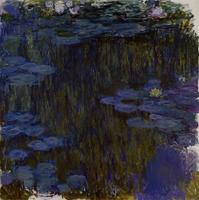
Water Lilies
Claude Monet
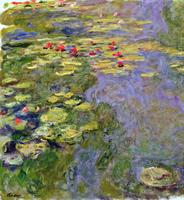
Water Lilies
Claude Monet
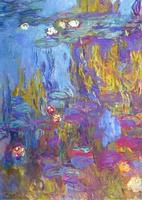
Water Lilies
Claude Monet
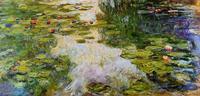
Water Lilies
Claude Monet
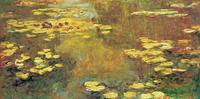
Water Lilies
Claude Monet
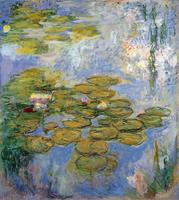
Water Lilies
Claude Monet
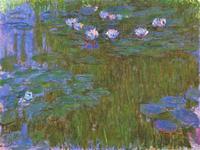
Water Lilies
Claude Monet
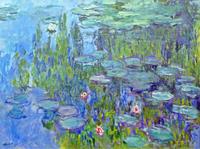
Water Lilies
Claude Monet
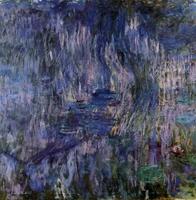
Water Lilies, Reflection of a Weeping Willows
Claude Monet
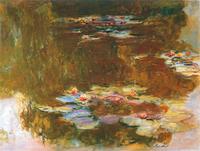
Water Lily Pond
Claude Monet
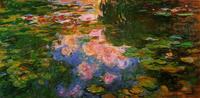
Water Lily Pond
Claude Monet
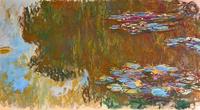
Water Lilies
Claude Monet