Expert analysis of Edgar Degas’s Plowed Field
Style: Impressionism · Genre: landscape
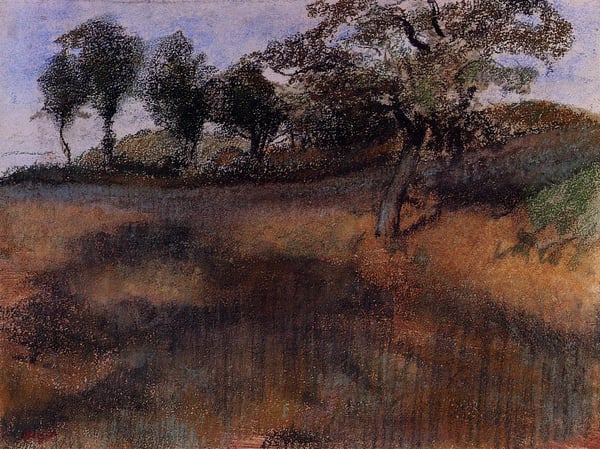
Edgar Degas’s Plowed Field stands as a notable departure within his predominantly figure-focused oeuvre, offering a rare glimpse into his engagement with pure landscape during the height of Impressionism. While Degas is celebrated for his intimate studies of ballet dancers, horse races, and Parisian life, this work underscores his versatility and willingness to experiment with the core Impressionist preoccupations: light, atmosphere, and the fleeting effects of nature.
Significance within Impressionism: In an era when landscape painting became the Impressionist laboratory for capturing transient light and color, Degas’s Plowed Field aligns with the movement’s radical shift from studio-based compositions to plein air observation. The subject—a freshly tilled field—allowed Degas to explore the interplay of earthy browns, muted greens, and shifting shadows, emphasizing the tactile texture of the soil and the rhythm of furrows. This focus on agrarian labor connects Impressionism to the Realist legacy of depicting ordinary rural life, yet transforms it through broken brushwork and a heightened sensitivity to atmospheric effects, much like Monet or Pissarro.
Significance within Degas’s Career: Degas famously distanced himself from the label “Impressionist,” preferring a more structured, line-driven approach. However, Plowed Field reveals his temporary embrace of looser, more coloristic handling. Unlike his signature cropped, off-center compositions of dancers, this landscape adopts a more traditional panoramic format, demonstrating that Degas could command space and depth without human figures as anchors. The work thus expands our understanding of his range, proving that his restless experimentation was not confined to the human form. Moreover, it challenges the common misconception that Degas was indifferent to nature: here, he treats the plowed field with the same rigorous attention to optical truth and momentary sensation that defines his ballet scenes, but transposed onto the quiet grandeur of the rural landscape.
In essence, Plowed Field is significant as a testament to Degas’s adaptability and his contribution to the Impressionist exploration of environment beyond the city—a subtle yet powerful reminder that even the most urban of artists occasionally turned their gaze to the soil, finding in its raw geometry a fresh canvas for fleeting light and enduring form.
Museum / Gallery
Visually similar
20 works with related composition and palette
Summer Landscape
Stefan Dimitrescu
Tulip Tree, Greenwich
John Henry Twachtman
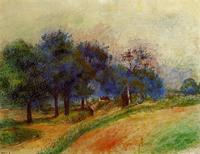
Landscape
Pierre-Auguste Renoir
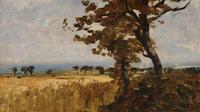
Wheatfield by the Sea
Nathaniel Hone the Younger
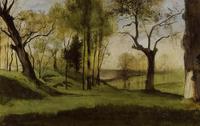
View of the Villa Borthese
Gustave Moreau
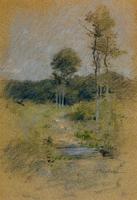
Spring Landscape (also known as Spring in Marin County)
John Henry Twachtman
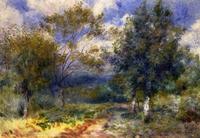
Sunny Landscape
Pierre-Auguste Renoir
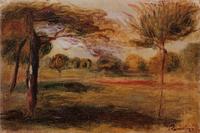
Landscape
Pierre-Auguste Renoir
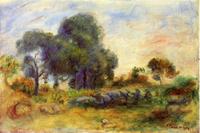
Landscape
Pierre-Auguste Renoir
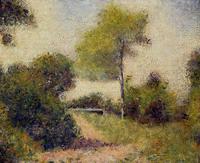
The Hedge (also known as The Clearing)
Georges Seurat
Landscape
Paul Gauguin
The Ledges
John Henry Twachtman
Landscape in the Sun
Pierre-Auguste Renoir
Branchville
John Henry Twachtman
Evening
David Davies
Lonesome Valley
Camille Corot
Landscape
Pierre-Auguste Renoir
Landscape
Xavier Martinez
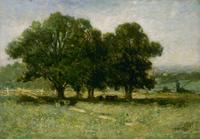
Landscape
Edward Mitchell Bannister
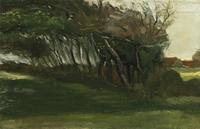
Landscape with windswept trees
Vincent van Gogh