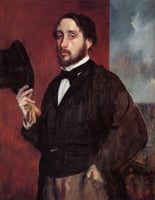
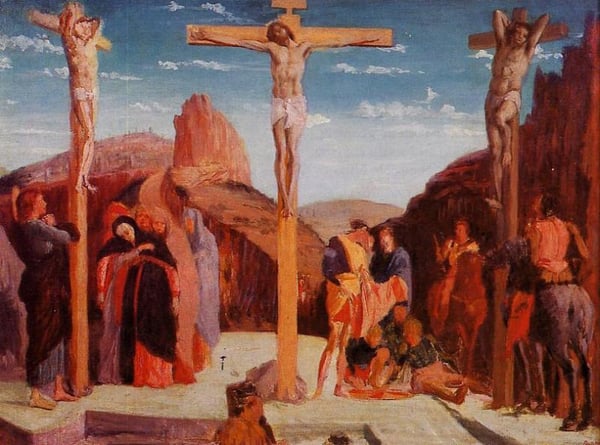
Edgar Degas の The Crucifixion (after Mantegna) の専門的な分析
スタイル:Impressionism · ジャンル:religious painting
Expert Analysis of The Crucifixion (after Mantegna) by Edgar Degas
Although usually celebrated as a quintessential Impressionist painter of modern life—ballet dancers, racetracks, and café scenes—Edgar Degas also produced this rare religious work. The Crucifixion (after Mantegna) is significant precisely because it reveals Degas’s deep engagement with art historical tradition, even as he embraced Impressionist techniques.
Key Points of Significance:
-
A Dialogue with the Old Masters: The painting is a direct homage to Andrea Mantegna’s 15th‑century Crucifixion (from the San Zeno Altarpiece). By copying and re‑interpreting Mantegna, Degas demonstrates his rigorous academic training and his lifelong reverence for draftsmanship and linear perspective—qualities that set him apart from many of his Impressionist peers, who prioritized loose brushwork and atmospheric color.
-
Impressionism Meets Religious Subject Matter: At a time when Impressionists were famously turning away from historical, mythological, and religious themes in favor of ordinary, contemporary scenes, Degas’s choice of a Crucifixion is striking. This work underscores the breadth of Impressionist practice: it was not a rigid dogma but a set of tools (unconventional vantage points, emphasis on drawing, and nuanced handling of light) that could be applied to any subject. Here, Degas uses those tools not to shock, but to re‑animate a traditional icon with a new, almost archaeological clarity.
-
Draftsmanship and Composition: Even within Impressionism, Degas remained a “painter of line.” In this work, the angular, almost sculptural arrangement of the three crosses—directly borrowed from Mantegna—is rendered with precise contours and a muted, earthy palette. The emotional weight of the scene is carried by the stark, sloping landscape and the restrained gestures of the figures, rather than by dramatic color or visible brushstrokes. This fusion of Renaissance structure with Impressionist sensitivity to momentary light and atmosphere makes the painting a singular bridge between academic tradition and avant‑garde innovation.
Conclusion:
The Crucifixion (after Mantegna) matters because it defies easy categorization. It is a religious painting by an Impressionist, a copy that is also an original transformation, and a testament to Degas’s belief that modernity and tradition could coexist. In this work, Degas proves that Impressionism was not a rejection of history, but a conversation with it.
Museum / Gallery
視覚的に類似
構図やパレットが近い作品 20 件
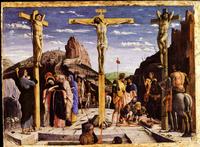
Calvary, central predella panel from the St. Zeno of Verona altarpiece
Andrea Mantegna
The Crucifixion
Luca Signorelli
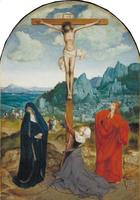
Crucifixion
Quentin Matsys
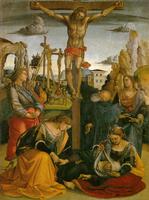
Crucifixion of St. Sepulchre
Luca Signorelli
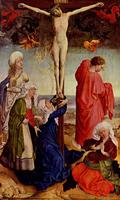
Crucifixion
Robert Campin
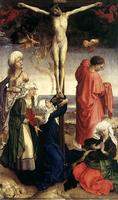
Crucifixion and Pietа Representations
Rogier van der Weyden
The Crucifixion
Luca Signorelli
The Small Crucifixion
Matthias Grünewald
The Crucifixion (detail from the Isenheim Altarpiece)
Matthias Grünewald
Deposition
Giovanni Bellini
Crucifixion
Jan Provoost
The Crucifixion
Francesco Botticini
Calvary Triptych
Hugo van der Goes
The Crucifixion with St. Mary Magdalen
Luca Signorelli
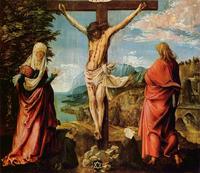
Crucifixion scene, Christ on the Cross with Mary and John
Albrecht Altdorfer
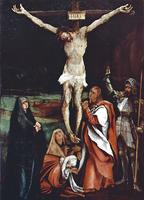
Calvary
Matthias Grünewald
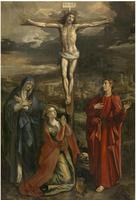
Calvary
Maarten de Vos
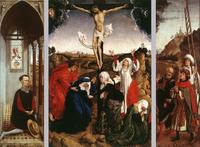
Abegg Triptych
Rogier van der Weyden
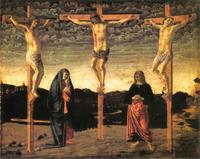
Crucifixion
Andrea del Castagno
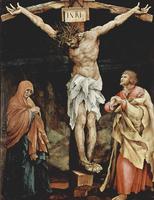
The Crucifixion
Matthias Grünewald