This analysis is based solely on the provided facts.
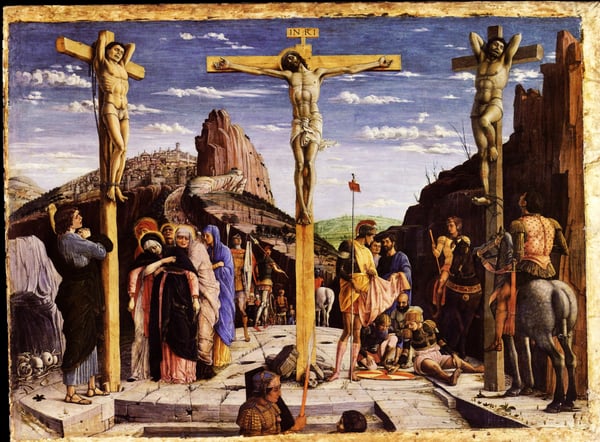
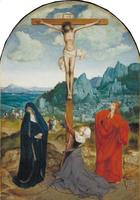
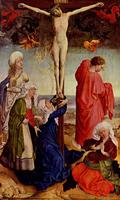
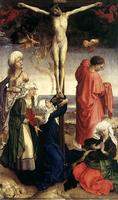
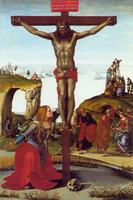
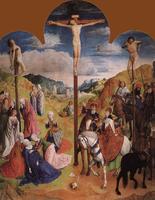
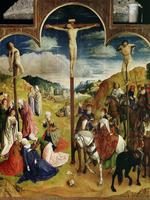
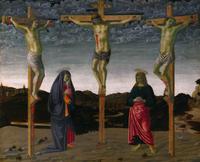
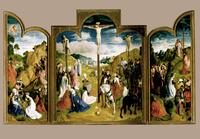
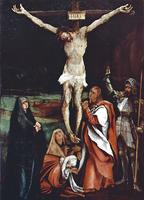
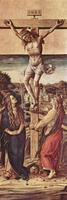
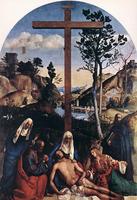
Andrea Mantegna’s Calvary, central predella panel from the St. Zeno of Verona altarpiece is a landmark of Early Renaissance religious painting, notable for its integration of advanced perspectival techniques with profound spiritual gravity.
Significance within the Early Renaissance style:
As the central panel of the predella (the lower tier of an altarpiece), this work would have been seen in close conjunction with the main panels above, creating a unified narrative sequence. Mantegna’s treatment of the Crucifixion exemplifies the Early Renaissance fascination with classical order and anatomical realism. The composition likely employs a rigorous one-point perspective, drawing the viewer’s eye directly to the cross—a hallmark of Mantegna’s rational, sculptural approach to space. This geometric clarity, combined with a stark, almost archaeological attention to detail (such as the rocky terrain and the precise positioning of the figures), elevates a traditional religious scene into a study of human suffering and divine sacrifice.
Genre and emotional impact:
Within the genre of religious painting, Mantegna’s work stands out for its emotional intensity, achieved not through overt gesture but through the severe, almost stoic arrangement of the mourners and the stark, foreshortened depiction of Christ. The predella format—typically smaller, narrative scenes—allowed Mantegna to focus on a single, charged moment: the moment of death at Calvary. This concentration, combined with the artist’s signature use of sharp contour and dramatic chiaroscuro (contrast of light and shadow), gives the panel a monumental, even timeless quality.
Overall importance:
The Calvary predella panel is significant as a masterful synthesis of Early Renaissance principles: scientific perspective, classical restraint, and unflinching naturalism, all in service of a deeply moving devotional image. It demonstrates how Mantegna transformed a standard altarpiece component into a powerful, self-contained work of art that continues to influence our understanding of Renaissance spatial and emotional expression.