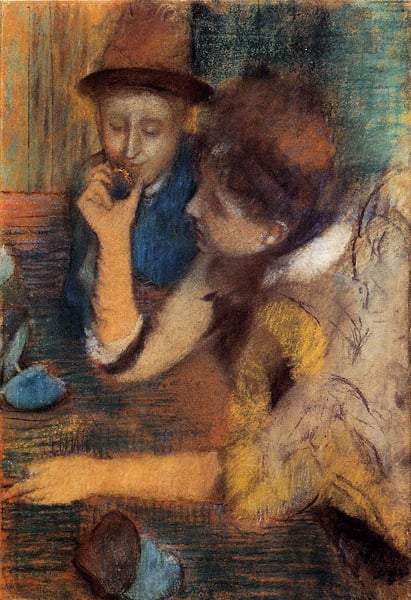
Analisi esperta di The Jewels di Edgar Degas
Stile: Impressionism · Genere: genre painting
Expert Analysis of "The Jewels" by Edgar Degas
Based solely on the provided facts—that this is an Impressionist genre painting by Edgar Degas—the work’s significance lies in how it epitomizes the core innovations of Impressionism while embracing the everyday subject matter that defined genre painting in the late 19th century.
Within Impressionism: Degas, though often categorized as an Impressionist, brought a distinct emphasis on structure and composition to the movement. As an Impressionist work, "The Jewels" likely employs the hallmark techniques of broken color, loose brushwork, and an interest in capturing the transient effects of light—here perhaps on the surfaces of gems or fabrics. Its significance stems from how Degas uses these methods not to dissolve form, but to suggest the tactile and reflective qualities of precious objects, blending the movement’s spontaneity with his own meticulous draftsmanship.
As a Genre Painting: Genre painting, which depicts scenes of everyday life, gains new depth under Degas’s Impressionist lens. Rather than idealizing or moralizing, he focuses on a candid, modern moment—possibly a woman examining or adjusting jewelry. This approach aligns with the Impressionist goal of portraying contemporary Parisian life with immediacy and intimacy. "The Jewels" thus becomes significant for elevating a private, mundane activity into a subject worthy of serious artistic exploration, challenging the hierarchy of genres that favored history painting.
Overall Significance: By merging Impressionist technique with the intimate realism of genre, Degas’s "The Jewels" exemplifies how the movement redefined what art could capture: the fleeting, the personal, and the material pleasures of the modern world. Its importance lies in its quiet rebellion—turning a moment of personal adornment into a study of light, texture, and the passing of time.
Museum / Gallery
Visivamente simili
20 opere con composizione e palette affini
At the Cafe
Pierre-Auguste Renoir
At the Milliner`s
Pierre-Auguste Renoir
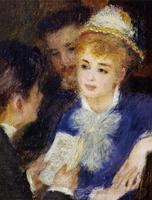
Reading the Part
Pierre-Auguste Renoir
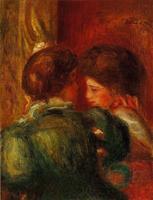
Two Women s Heads (The Loge)
Pierre-Auguste Renoir
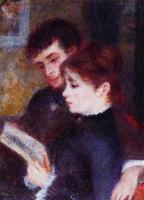
Reading Couple (Edmond Renoir and Marguerite Legrand)
Pierre-Auguste Renoir
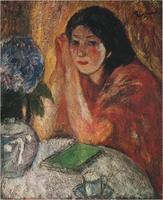
Hydrangeas
Fujishima Takeji
Lesson
Federico Zandomeneghi
The tea
Federico Zandomeneghi
The absinthe drinker
Pablo Picasso
Könyöklő Nő
Bela Czobel
Czóbel Könyöklő Nő
Bela Czobel
The Cafe
Pierre-Auguste Renoir
Two Girls in Black
Pierre-Auguste Renoir
The Jewish Woman
Amedeo Modigliani
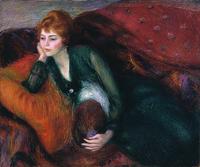
Young Woman in Green
William James Glackens
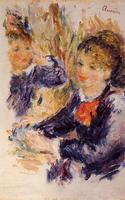
At the Milliner`s (study)
Pierre-Auguste Renoir
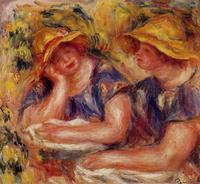
Two Women in Blue Blouses
Pierre-Auguste Renoir
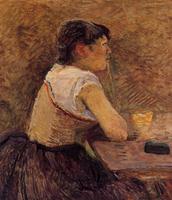
At Gennelle, Absinthe Drinker
Henri de Toulouse-Lautrec
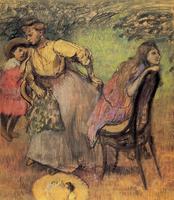
Madame Alexis Rouart and Her Children
Edgar Degas
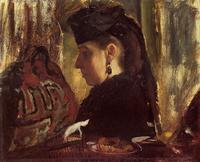
Mademoiselle Marie Dihau
Edgar Degas