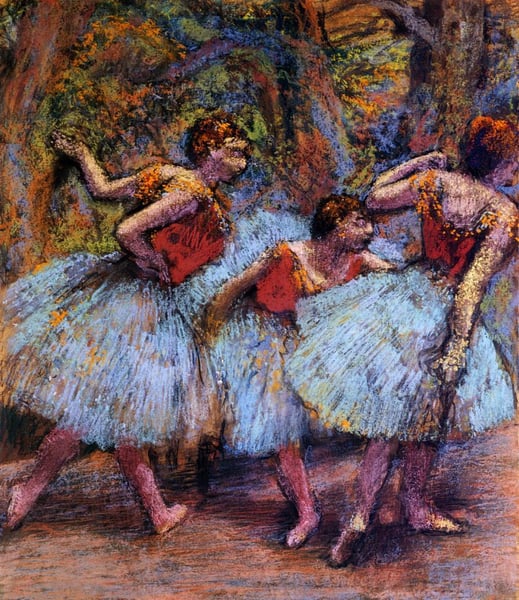
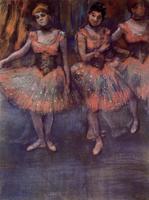
Expert Analysis: "Three Dancers, Blue Skirts, Red Blouses" by Edgar Degas
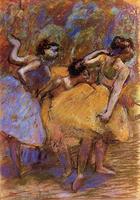
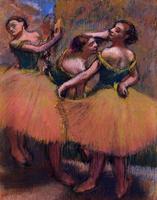
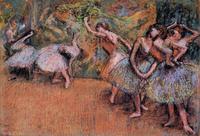
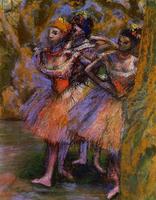
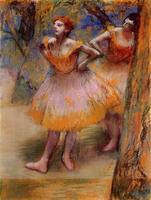
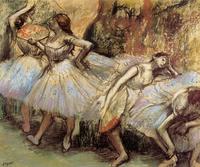
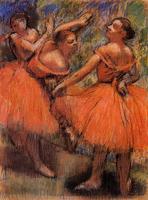
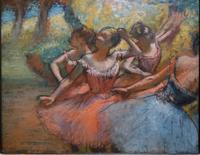
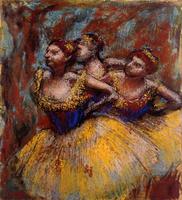
As an Impressionist genre painting, Edgar Degas’s Three Dancers, Blue Skirts, Red Blouses exemplifies the movement’s revolutionary focus on capturing fleeting moments of modern life. Degas is celebrated for his intimate, often behind-the-scenes portrayals of ballet dancers, and this work is significant for its candid, unposed composition—a hallmark of Impressionist spontaneity. The vivid juxtaposition of blue skirts and red blouses demonstrates Degas’s masterful use of color to create rhythmic visual tension, while the cropping of figures and unconventional angles reflect his debt to photography and Japanese prints. Rather than depicting a formal performance, Degas presents a slice of backstage reality, emphasizing the everyday physicality and grace of the dancers. This piece underscores Impressionism’s break from academic tradition by focusing on ordinary subjects in ordinary light, elevating a momentary gesture into a timeless study of movement and color.