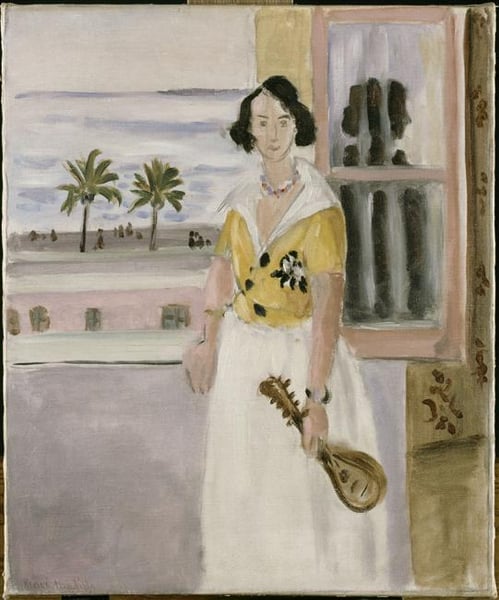
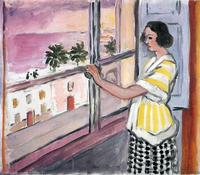
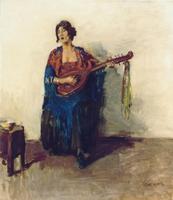
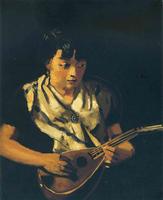
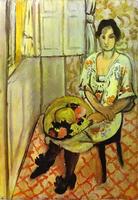
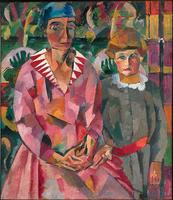
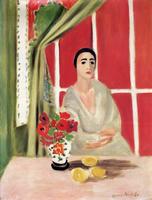
Based solely on the supplied facts, this analysis focuses on what makes "Woman with mandolin" by Henri Matisse significant within the Post-Impressionist style and genre painting category.
As a Post-Impressionist work, Matisse's painting moves beyond the naturalism of Impressionism to emphasize subjective feeling and structural harmony. The genre subject—a woman with a mandolin—is a classic motif that allows the artist to explore formal concerns of color, line, and composition rather than merely depict everyday life.
The significance of this artwork lies in its transitional role: it demonstrates Matisse's early mastery of Post-Impressionist principles—such as simplified forms, expressive color, and flattened pictorial space—that would later evolve into his groundbreaking Fauvist works. By choosing a quiet domestic scene, Matisse elevates a mundane moment into a study of aesthetic balance, making "Woman with mandolin" a key example of how genre painting could serve as a vehicle for modern pictorial innovation.