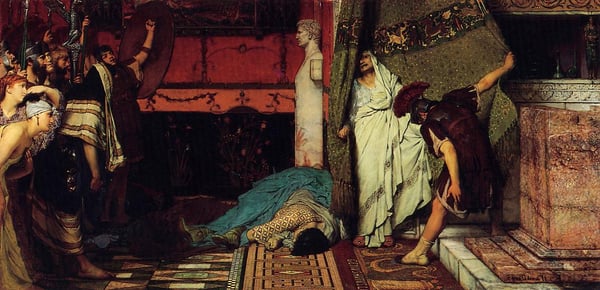
Expertenanalyse zu Sir Lawrence Alma-Tademas A Roman Emperor Claudius
Stil: Romanticism · Genre: history painting
Expert Analysis: "A Roman Emperor Claudius" by Sir Lawrence Alma-Tadema
Within the framework of Romanticism and the genre of history painting, this work achieves a distinctive significance by blending emotional depth with archaeological precision. Alma-Tadema’s portrayal of Emperor Claudius transcends mere historical documentation, channeling the Romantic fascination with the inner life and moral complexity of great figures. The painting captures Claudius not as a heroic ruler but as a nuanced, introspective character—his troubled reign and personal vulnerabilities are rendered with a psychological realism that aligns with Romanticism’s emphasis on individual experience and the sublime.
At the same time, the work honors the history painting tradition through meticulous attention to Roman material culture—costumes, architecture, and decorative details—offering a vivid, almost immersive reconstruction of antiquity. This fusion of Romantic expressiveness with scholarly exactitude makes the painting a landmark example of how 19th-century artists could reimagine historical narratives, granting viewers access to both the grandeur and the humanity of the past.
Museum / Gallery
Genre
Stil
Visuell ähnlich
20 Werke mit ähnlicher Komposition und Farbpalette
The Girl or the Vase
Henryk Siemiradzki
A Roman Art Lover
Sir Lawrence Alma-Tadema
Reading the the death sentence Trazey Pet
Fyodor Bronnikov
Hadrian Visiting a Romano British Pottery
Sir Lawrence Alma-Tadema
Catullus at Lesbia's house
Sir Lawrence Alma-Tadema
The Apostle Paul explains the tenets of faith in the presence of King Agrippa, his sister Berenice, and the proconsul Festus
Vasily Surikov
Jephthah
John Everett Millais
The Soldier of Marathon
Sir Lawrence Alma-Tadema
A Sculpture Gallery in Rome at the Time of Agrippa
Sir Lawrence Alma-Tadema
A Sculpture Gallery
Sir Lawrence Alma-Tadema
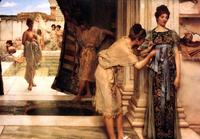
The Frigidarium
Sir Lawrence Alma-Tadema
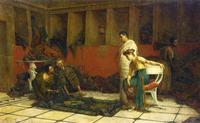
Rug Merchants
Ettore Forti
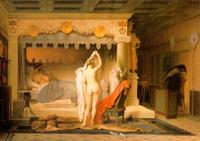
King Candaules of Lydia
Jean-Leon Gerome
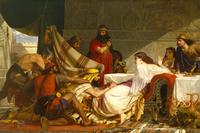
The Festival of Esther
Edward Armitage
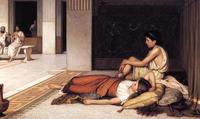
After the Dance
John William Waterhouse
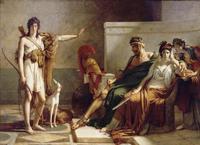
Phaedra and Hippolytus
Pierre-Narcisse Guerin
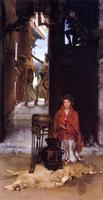
The Way to the Temple
Sir Lawrence Alma-Tadema
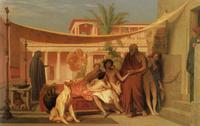
Socrates seeking Alcibiades in the House of Aspasia
Jean-Leon Gerome
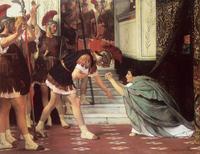
Proclaiming Claudius Emperor
Sir Lawrence Alma-Tadema
Christ Before Pilate
Mihaly Munkacsy