Expert analysis of John Everett Millais’s Jephthah
Style: Romanticism · Genre: religious painting
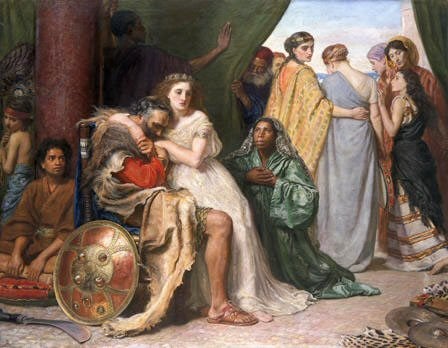
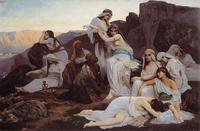
The painting “Jephthah” by John Everett Millais is a compelling example of Romantic religious painting, capturing a moment of profound emotional and moral crisis from the Old Testament. The work depicts the Biblical story of Jephthah, a judge of Israel who, before battle, vows to God that if victorious, he will sacrifice the first person to greet him upon his return—only to be met by his daughter.
Significance within Romanticism and religious painting:
- Emotional Intensity: Millais focuses on the psychological anguish of the moment, a hallmark of Romanticism. The father’s horror and the daughter’s innocent unawareness create a powerful tension between duty and love.
- Naturalistic Detail: True to the Romantic fascination with nature and human expression, Millais renders the figures and setting with meticulous realism—from the texture of armor to the foliage—grounding the biblical narrative in tangible, relatable humanity.
- Moral Ambiguity: Rather than offering a simple moral, the painting invites viewers to grapple with themes of faith, sacrifice, and tragic consequences. This complexity elevates it beyond a mere illustration, making it a significant meditation on the cost of devotion.
As a religious work, “Jephthah” exemplifies how Romantic artists infused traditional subjects with deeply personal, visceral emotion, moving away from idealized compositions toward raw, human drama. The painting stands as a testament to Millais’ ability to blend Pre-Raphaelite precision with Romantic pathos, creating an enduring image of sacrifice and sorrow.
Visually similar
20 works with related composition and palette
Feast of Belshazzar
Ivan Tvorozhnikov
Ulysse Et Télémaque
Lionel Noel Royer
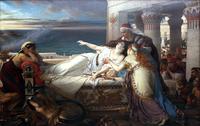
The Death of Dido
Joseph Stallaert
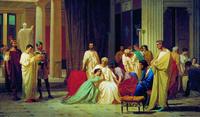
Reading the the death sentence Trazey Pet
Fyodor Bronnikov
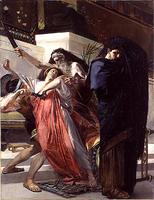
La Mort De Timophane
Paul-Albert Besnard
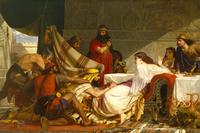
The Festival of Esther
Edward Armitage
The Girl or the Vase
Henryk Siemiradzki
The Apostle Paul explains the tenets of faith in the presence of King Agrippa, his sister Berenice, and the proconsul Festus
Vasily Surikov
Christ Before Pilate
Mihaly Munkacsy
A Roman Emperor Claudius
Sir Lawrence Alma-Tadema
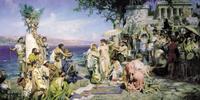
Phryne on the Poseidon's celebration in Eleusis
Henryk Siemiradzki
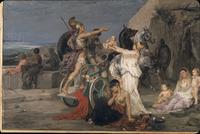
The Departure of Hektor
Albert Maignan
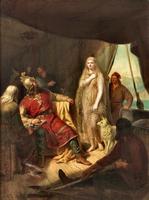
Ragnar Lodbrog meets Kraka
Mårten Eskil Winge
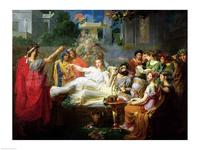
Macbeth
Theodore Chasseriau
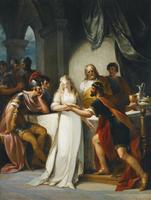
Vortigern and Rowena
William Hamilton
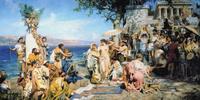
Phryne at the Poseidonia in Eleusis
Henryk Siemiradzki
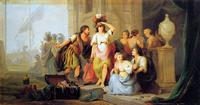
Odysseus discovers Achilles
Jacob van Strij
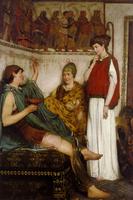
The Soldier of Marathon
Sir Lawrence Alma-Tadema
The Daughter of Jephthah
Edouard Debat-Ponsan
The young Christian neophyte
Diogène Maillart