
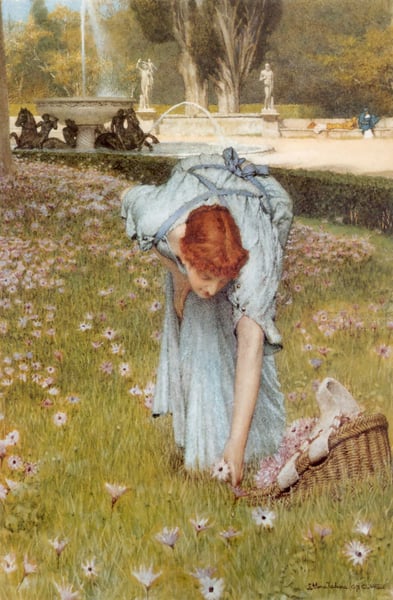
Analisi esperta di Flora Spring in the Gardens of the Villa Borghese di Sir Lawrence Alma-Tadema
Stile: Romanticism · Genere: genre painting
This analysis is based solely on the provided facts—the artwork is assigned to Romanticism and categorized as genre painting, with the title indicating a specific locale and mythological reference.
Analysis of Flora Spring in the Gardens of the Villa Borghese by Sir Lawrence Alma-Tadema
Sir Lawrence Alma-Tadema’s Flora Spring in the Gardens of the Villa Borghese is a remarkable synthesis of Romanticism’s emotional, nostalgic impulses with the intimate, observational quality of genre painting. While Alma-Tadema is often celebrated as a master of Victorian Neoclassicism, the classification here as Romanticism invites us to see the work through a lens of heightened sentiment, longing for a lost golden age, and the celebration of nature’s beauty—key tenets of the Romantic movement.
Genre Painting Meets Romantic Idealism
As a genre painting, this work depicts a scene from everyday life, yet the “everyday” is set in an idealized ancient Roman garden. The choice of the Villa Borghese—a famed Renaissance and Baroque villa with extensive gardens—grounds the scene in a real, historically layered location. However, Alma-Tadema’s Romantic treatment transforms it into a poetic reverie. The figure of Flora, the Roman goddess of spring and flowers, is not a divine apparition but a graceful woman within a garden, blurring the line between mythological allegory and ordinary human experience. This fusion is characteristic of Romantic genre painting: it elevates a domestic or leisurely moment into a vessel for profound feeling.
Significance within Romanticism
The artwork’s significance lies in its evocation of transience and beauty, central Romantic themes. The title explicitly associates the scene with spring—a season of renewal, but also of fleeting loveliness. Alma-Tadema’s meticulous rendering of marble, foliage, and flowing drapery creates a tangible, almost sensual world that invites the viewer to share in a moment of serene contemplation. This aligns with the Romantic desire to connect emotionally with nature and the past. The gardens of the Villa Borghese are not merely a backdrop; they become a Romantic “landscape of the soul,” where the viewer is meant to feel the quiet joy and melancholy of a perfect, ephemeral afternoon.
Romanticism’s Archaeological Feeling
Even within a Romantic framework, Alma-Tadema’s signature archaeological precision serves a deeper purpose: it makes the ancient world feel intimate and accessible, not remote. By placing Flora in a recognizable, human-scaled garden rather than a grandiose temple, he romanticizes the idea that beauty and grace were once woven into daily Roman life. This nostalgia for a harmonious, dignified past is a hallmark of Romantic historicism. The work thus becomes significant as a Romantic meditation on beauty, time, and the enduring allure of classical culture, rendered through the humble lens of genre painting.
Museum / Gallery
Genere
Stile
Visivamente simili
20 opere con composizione e palette affini
Persephone
John William Waterhouse
The Flowers of Venus
John William Godward
Windflowers
John William Waterhouse
Gather Ye Rosebuds While Ye May
John William Waterhouse
Among the Ruins
Sir Lawrence Alma-Tadema
A Difference of Opinion
Sir Lawrence Alma-Tadema

A World of Their Own
Sir Lawrence Alma-Tadema
Woman with a Fan
Alfred Stevens
The princess out of school
Edward Robert Hughes
An Idyll
Albert Joseph Moore

A Roman Offering
John William Waterhouse
In the Bey's Garden
John Frederick Lewis
Isabella and the Pot of Basil
John William Waterhouse
Lady Laura Teresa Gathering
Sir Lawrence Alma-Tadema
Sewing in the Garden at Marquayrol
Henri Martin
Reverie
Marcus Stone
Spring
Noè Bordignon
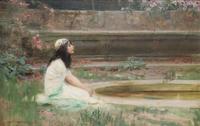
A Young Girl by a Pool
Herbert James Draper
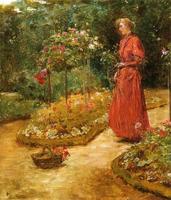
Woman Cutting Roses in a Garden
Childe Hassam
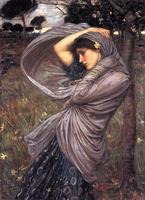
Boreas
John William Waterhouse