Expert analysis of Sir Lawrence Alma-Tadema’s Interior of Caius Martius House
Style: Romanticism · Genre: interior
Artwork Analysis: "Interior of Caius Martius House" by Sir Lawrence Alma-Tadema
Style and Period Context:
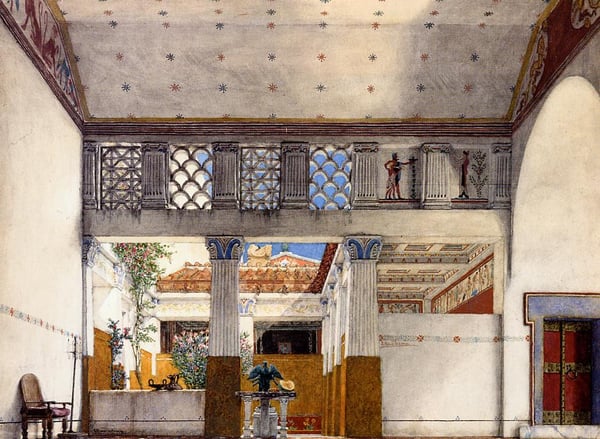
Though often associated with Neoclassical precision, this work is classified here under Romanticism—a style that prized emotion, imagination, and a yearning for the past. Alma-Tadema’s painting embodies Romanticism’s fascination with antiquity by immersing the viewer in an intensely atmospheric, idealized vision of ancient Roman domestic life. Instead of dramatic historical events, he focuses on the intimate, sensory experience of a bygone era, making the past feel tangible and emotionally resonant.
Significance within Romanticism:
- Archaeological Romanticism: Alma-Tadema meticulously reconstructs Roman interiors—veined marble, bronze fixtures, mosaic floors—rendering them with almost photographic clarity. This dedication to historical accuracy serves Romanticism’s desire to resurrect the sublime beauty of lost civilizations, offering a window into a world that feels both distant and achingly real.
- Atmosphere and Mood: The soft, golden light filtering through the space, the cool hues of marble, and the careful placement of everyday objects (a lyre, scrolls, a bronze brazier) evoke a contemplative stillness. This is not a scene of action but of feeling—a Romantic celebration of solitude, memory, and the quiet grandeur of private life in antiquity.
- Interior as Narrative: The genre of interior is elevated beyond mere decoration. The viewer is invited to step into Caius Martius’s home as if into a dream of Rome. Every detail—from the polished stone to the shadowed alcove—whispers of a cultured, refined existence, aligning with Romanticism’s belief that art can transport the soul to other times and places.
Conclusion:
"Interior of Caius Martius House" redefines Romanticism’s engagement with the classical world by merging archaeological precision with poetic nostalgia. It is significant for transforming a domestic interior into a vessel for historical longing, proving that the Romantic spirit can thrive not only in wild landscapes or dramatic battles but also in the silent, marble-laden rooms of a house two millennia past.
Museum / Gallery
Visually similar
20 works with related composition and palette
Horace and Lydia
John Collier
Innocent Amusements
John William Godward
Pompeian interiors
Prospero Piatti
Atrium
Vasily Polenov
Theatrical Rehearsal in the House of an Ancient Roman Poet
Gustave Boulanger
A Hearty Welcome
Sir Lawrence Alma-Tadema
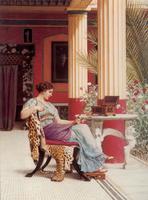
The Jewel Casket
John William Godward
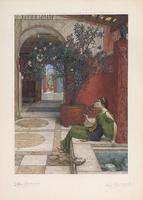
The Oleander
Sir Lawrence Alma-Tadema
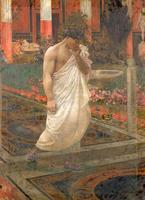
Meditation
William de Leftwich Dodge
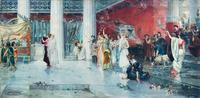
Hymen, oh Hyménée!
Juan Luna
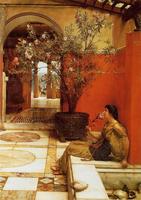
An Oleander
Sir Lawrence Alma-Tadema
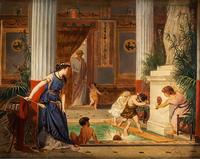
The Bath
Ettore Forti
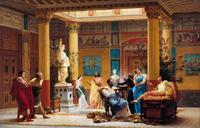
The Flute Concert
Gustave Boulanger
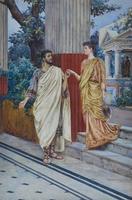
Scene of ancient Rome
Enrico Nardi
Musical afternoon in Pompeii
Enrico Nardi
Transverse and longitudinal sections of the Temple of Isis and adjacent parts
Giovanni Battista Piranesi
Scène mythologique
Raphael Delorme
A Roman Art Lover
Sir Lawrence Alma-Tadema
At the Antiquarian's
Ettore Forti
The Vintage Festival
Sir Lawrence Alma-Tadema